

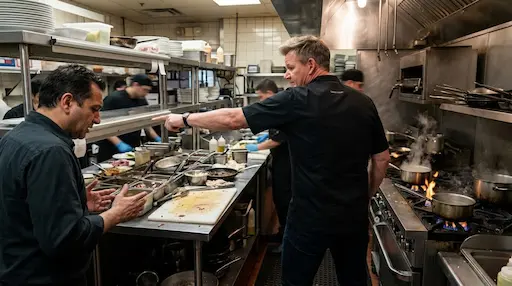
Stepping into a failing restaurant requires more than just culinary expertise; it demands psychological warfare to break through years of stubborn denial. When analyzing Kitchen Nightmares, viewers quickly notice that Gordon Ramsay often uses psychological tricks and covert tests to expose ignorant restaurant owners who refuse to admit their faults. Whether he is staging a surprise undercover audit or testing kitchen staff with frozen ingredients disguised as fresh, these calculated tactics force delusional operators to confront hard truths immediately.
Running a successful hospitality business relies on transparency, strict discipline, and quality control. However, many failing owners prefer to blame the economy, bad reviews, or unhelpful staff rather than looking in the mirror. Therefore, let us explore the masterclass methods Gordon Ramsay uses to dismantle massive egos, expose operational rot, and save stubborn operators from financial ruin.
Deconstructing the Psychology of Denial
Restaurant ownership attracts passionate dreamers, but passion alone cannot compensate for a lack of basic business acumen. When Ramsay enters a failing establishment, he frequently encounters owners trapped in deep denial. They often believe their food is world-class, even when local health inspectors and paying customers are running for the exit.
In addition, ego preservation prevents these individuals from accepting constructive feedback. As a result, Ramsay employs clever investigative traps to bypass their defenses entirely. Instead of arguing point-by-point with a defensive owner, he lets the food and the data speak for themselves through undeniable, shocking demonstrations.
- Undercover Reconnaissance: Ramsay frequently sends local food critics or observes service from a hidden vantage point to capture unfiltered reactions.
- The Menu Audit Challenge: Forcing owners to read their own bloated, 50-item menus out loud exposes the sheer absurdity of attempting to cook everything from frozen stock.
- Blind Taste Tests: Serving pre-packaged or freezer-burned meals back to the owners under the guise of house specialties shatters their illusions of culinary excellence.
“The number one problem in almost every episode of Kitchen Nightmares is that the business owners accept mediocrity. Ego, personal opinion, everything else has to be left at the door.” — Business Insights on Hospitality Management
For additional analysis on real-world hospitality failures and operational benchmarks, you can review expert breakdowns provided via the Entrepreneur Leadership Archives to understand what drives small businesses to collapse.
The Classic Undercover and Menu Reality Checks
One of the most effective tricks in Ramsay’s arsenal is total anonymity during the initial inspection. By sitting incognito in the dining room, he samples the absolute worst dishes the kitchen has to offer without any preferential treatment. This uncovers whether the front-of-house management even knows what is leaving their pass.
Furthermore, Ramsay often attacks bloated, unmanageable menus that drain profit margins. Many struggling operators attempt to please everyone by offering everything from Mexican tacos to Italian risotto, resulting in massive food waste and spoiled inventory.
| Operational Area | The Delusional Owner Mindset | The Ramsay Reality Check |
|---|---|---|
| Menu Structure | 50+ items ensures maximum customer choice. | A massive menu guarantees frozen, low-quality ingredients. |
| Accountability | Blaming lazy staff, bad luck, or local foot traffic. | Taking full financial and operational responsibility. |
| Food Hygiene | “It’s just date labels; the freezer keeps everything safe.” | Cross-contamination risks and health code violations. |
| Quality Control | “Our customers love our signature microwave meals.” | Blind taste tests proving fresh ingredients always win. |
By streamlining the menu down to a handful of core dishes, kitchens dramatically reduce overhead costs. In fact, professional culinary consultants note that inventory simplification accounts for half of a struggling restaurant’s immediate financial turnaround.
Exposing Kitchen Hygiene and Frozen Fraud
Nothing shocks an arrogant owner faster than unearthing weeks-old rotting meat tucked away in the back of a neglected walk-in refrigerator. Ramsay frequently drags owners into their own cold storage units, forcing them to look at moldy produce and expired stock that threatens public safety.
For example, owners who boast about serving “fresh, homemade meals” are routinely caught relying entirely on commercial suppliers for frozen, microwavable entrees. When Ramsay exposes this deceit in front of angry diners, the psychological shock forces the owners to drop their defensive walls permanently.
- Inspect the Walk-In: Expose hidden health violations and unlabelled food storage containers immediately.
- Throw Out the Trash: Physically dump spoiled inventory into bins to demonstrate the true financial waste.
- Enforce Deep Cleaning: Mandate a complete scrub-down of kitchen floors, fryers, and exhaust hoods before service resumes.
- Rebuild the Standards: Train line cooks on proper food rotation, temperature checks, and sanitation protocols.
“Properly reducing ingredients and respecting structural boundaries is the secret to achieving that rich, luxurious mouthfeel without relying on shortcuts or frozen convenience packs.” — Culinary Arts Standard Review
To explore comprehensive case studies regarding restaurant health violations and operational turnarounds, you can visit the Tasting Table Hospitality Insights for deeper data.
Common Pitfalls That Destroy Restaurant Businesses
Even outside of television drama, independent restaurants fail at alarming rates due to a few recurring operational missteps. Recognizing these warning signs early allows struggling entrepreneurs to salvage their investments before facing bankruptcy.
- Refusing Feedback: Disregarding customer complaints and online reviews as mere internet trolling rather than actionable data.
- Poor Cash Flow Management: Failing to track food costs, portion sizes, and daily profit margins accurately.
- Toxic Leadership: Berating employees or fostering a hostile work environment where front and back of house constantly sabotage each other.
Frequently Asked Questions
What is the main reason restaurants fail on Kitchen Nightmares?
The primary reason is a combination of poor financial management, bloated menus, and stubborn owners who refuse to take accountability for declining food quality.
Does Gordon Ramsay actually fix the restaurants for free?
Yes, the production team typically covers the cost of interior renovations, kitchen equipment upgrades, and re-branding efforts during the intense week-long intervention.
Why do restaurant owners resist changing their menus?
Owners often feel emotional attachment to dishes they spent years developing, failing to realize that unprofitable items drain inventory and slow down service.
How can a restaurant owner avoid a kitchen nightmare?
Operators must maintain strict hygiene standards, listen to customer feedback objectively, streamline their menus, and track food costs daily.
Conclusion and Next Steps
Mastering restaurant management requires humility, rigorous discipline, and a relentless commitment to quality control. By observing how Gordon Ramsay breaks through the denial of stubborn operators, modern restaurateurs can identify their own blind spots before minor issues escalate into total business failure.
Are you ready to audit your own operations and eliminate hidden inefficiencies in your business? Streamline your workflows, respect your ingredients, and take total accountability for your success today!