

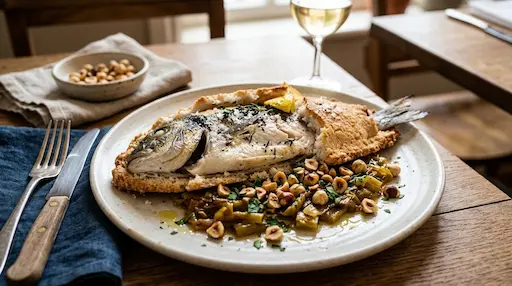
Mastering salt-crusted sea bream with braised leeks and hazelnuts transforms a simple dinner party into an unforgettable fine-dining experience. When home cooks attempt this iconic recipe from Gordon Ramsay’s culinary repertoire, they often worry about overcomplicating the technique. However, sealing a whole fish in a thick layer of salt acts like a natural kiln. As a result, the fish steams gently in its own juices, locking in incredible moisture while infusing delicate aromatics like lemon and fennel.
Professional kitchens rely on salt baking because it eliminates the risk of dry, overcooked seafood. Furthermore, pairing the succulent, flaky white fish with sweet, buttery braised leeks and crunchy toasted hazelnuts creates a stunning textural contrast. Whether you are hosting a special weekend gathering or looking to elevate your seafood repertoire, understanding this masterclass method will build absolute confidence at your stove.
The Science and Art of Salt-Baking Fish
Baking fish inside an airtight shell of coarse salt and water might seem intimidating at first glance. Yet, this ancient culinary technique is surprisingly foolproof once you grasp the underlying principles. The salt crust forms an impenetrable barrier that traps steam inside the cavity. Therefore, the internal flesh remains exceptionally moist and tender, absorbing just the right amount of seasoning without becoming overly salty.
In addition, keeping the scales and skin intact on a whole sea bream is critical. The natural armor protects the delicate meat from direct contact with the heavy sodium layer. According to culinary insights from sources like Mashed Food Archives, home cooks should pack the wet salt tightly around every single inch of the fish. Any exposed gaps will allow steam to escape, ruining the delicate poaching environment inside the oven.
- Select a Fresh Fish: Look for bright, clear eyes, vibrant red gills, and shiny scales to ensure top-tier quality.
- Pack the Cavity: Stuff the cleaned fish with sliced lemons, fresh herbs, and fragrant fennel seeds for aromatic depth.
- Create the Salt Kiln: Mix coarse salt with a small splash of water until it achieves a texture resembling a packed snowball.
- Bake to Perfection: Place the salt-encased fish into a preheated oven and monitor the internal temperature carefully.
“The packed salt creates a kiln, trapping moisture while it gently steams the fish, eliminating one of the most common mistakes when preparing fish — drying it out.” — Culinary Expert Review on Salt Baking
Crafting the Ultimate Accompaniment: Braised Leeks
While the sea bream bakes in its protective crust, you can focus on building the complementary side dish. Braised leeks provide a sweet, melt-in-your-mouth foundation that balances the savory richness of the fish. When cooked slowly in butter, white wine, garlic, and fresh thyme, leeks transform from fibrous stalks into tender ribbons of flavor.
Furthermore, timing is essential when preparing this vegetable component. You want the leeks to soften completely while still holding their structural shape on the plate. If there is excess liquid remaining in your sauté pan during the final minutes of simmering, simply remove the lid to let the broth reduce into a glossy glaze.
| Recipe Component | Key Ingredients | Primary Culinary Goal |
|---|---|---|
| The Main Catch | Whole Sea Bream, Coarse Salt, Fennel Seeds, Lemon | Lock in natural moisture and create flaky, tender meat. |
| The Foundation | White Leeks, Butter, White Wine, Garlic, Thyme | Provide a sweet, herbaceous bed with rich, savory depth. |
| The Crunch Factor | Blanched Hazelnuts, Fresh Parsley | Add essential texture and nutty contrast to soft leeks. |
To deepen your understanding of professional vegetable preparation and flavor balancing, you can explore tutorials via the Gordon Ramsay Restaurants Recipe Collection for inspiration.
Bringing Texture and Balance to the Plate
Every great dish relies on a harmonious balance of flavors, temperatures, and textures. Soft fish and buttery braised leeks taste wonderful, but they need a contrasting element to prevent the palate from growing tired. This is precisely where toasted hazelnuts step in to complete the dish.
By roughly crushing blanched hazelnuts and scattering them over the leeks alongside freshly chopped parsley, you introduce a delightful nutty crunch. Consequently, each bite delivers a sophisticated interplay of velvety fish, succulent vegetables, and toasted warmth.
- Toast the Hazelnuts: Roast blanched hazelnuts gently in a dry pan until golden brown and fragrant.
- Crush Coarsely: Chop the toasted nuts roughly so they provide distinct pockets of crunch rather than a fine powder.
- Combine with Herbs: Toss the crushed hazelnuts with vibrant chopped flat-leaf parsley just before plating.
- Garnish and Serve: Spoon the braised leeks onto warmed plates, top with the flaked sea bream, and finish with the nut mixture.
“Crunchy hazelnuts, soft leeks and firm flavourful fish. It looks difficult but Chef Ramsay shows you how easy it is.” — Ultimate Home Cooking Guide
Common Mistakes to Avoid When Salt-Baking Fish
Even experienced home cooks can run into minor pitfalls when working with salt crusts for the first time. Recognizing these potential errors early will ensure your dinner party goes off without a hitch.
- Using Too Little Water: The salt mixture must hold its shape like wet sand; otherwise, the crust will crumble in the oven.
- Exposing the Fish: Leaving even a small section of the tail or fins uncovered will cause juices to leak and dry out the meat.
- Skipping the Rest Period: Let the baked fish rest for a few minutes so the internal juices redistribute evenly before cracking the shell.
- Cutting Too Deeply: Use the back of a spoon or a heavy knife to gently crack the salt shell without slicing into the delicate fish underneath.
Frequently Asked Questions
Can I use this salt-crusted method with fish other than sea bream?
Yes, this technique works wonderfully with other white fish like sea bass, trout, or red snapper, provided they are cooked whole with scales intact.
Do I need to descale the fish before putting it in salt?
No, you should keep the scales and skin on the fish because they act as a protective shield against the heavy sodium layer.
How do I know when the salt-baked fish is fully cooked?
A digital meat thermometer inserted into the thickest part of the fish should register around $125^\circ\text{F}$ to $130^\circ\text{F}$.
What is the best way to crack open the salt crust?
Tap firmly along the perimeter of the hardened salt crust using the handle of a knife or a spoon to lift the top shell away cleanly.
Conclusion and Next Steps
Mastering Gordon Ramsay’s salt-crusted sea bream with braised leeks and hazelnuts proves that impressive restaurant-quality dishes are entirely achievable at home. By utilizing a salt kiln to trap moisture and pairing the tender fish with sweet leeks and crunchy nuts, you elevate your home cooking to professional standards.
Are you ready to elevate your seafood cooking skills and impress your guests at your next dinner party? Gather your ingredients, prep your salt crust, and take your culinary repertoire to the next level today!