

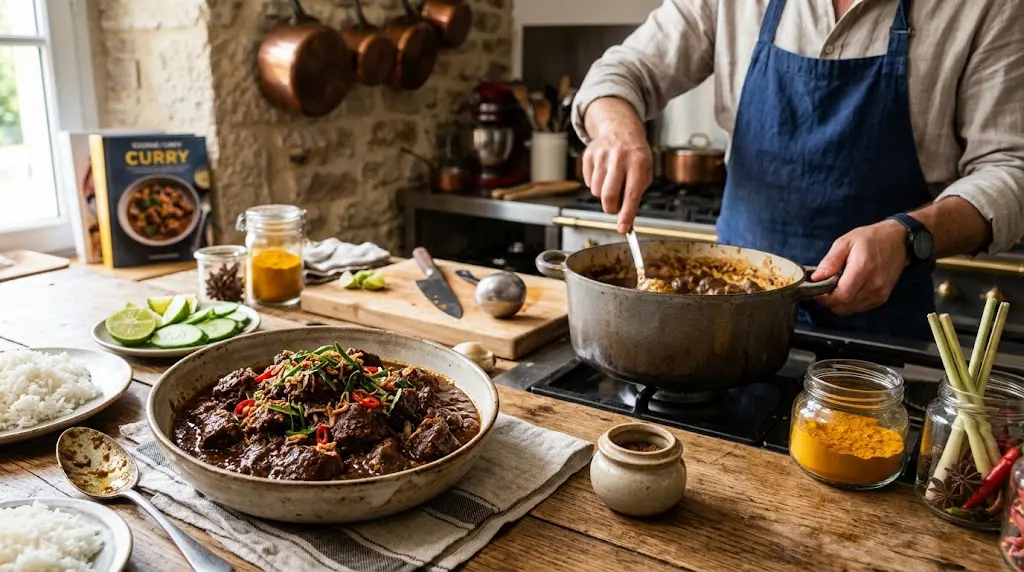
If you want to transform your home cooking into an unforgettable culinary adventure, mastering a traditional beef rendang curry is your ultimate test. Unlike watery westernized sauces, this slow-cooked Indonesian masterpiece relies on patience, fragrant spices, and rich coconut milk that reduces into a deep, caramelized glaze. Whether you discovered this iconic dish through viral cooking videos or long-standing culinary traditions, understanding the precise steps will elevate your skills and impress your guests.
Culinary purists know that rendang is technically a technique rather than just a standard recipe. As the liquid slowly evaporates over several hours, the beef braises in its own aromatics before frying gently in its separated coconut oils. Consequently, the meat becomes meltingly tender while absorbing layers of galangal, lemongrass, and toasted coconut.
The Science and Art of the Rempah Spice Paste
Every legendary curry starts with a powerful foundation, and rendang is no exception. The heart of the dish is the rempah, a fresh spice paste made by pounding or blending shallots, garlic, ginger, galangal, turmeric, and dried chilies. According to traditional West Sumatran culinary heritage, thoroughly frying this paste in coconut oil unlocks complex volatile compounds that build the dish’s signature depth.
Furthermore, balancing heat and sweetness requires careful attention to detail. Skipping steps or rushing the frying process will leave a raw, pungent edge on your aromatics. Therefore, you must take your time sautéing the paste until it darkens and releases its aromatic oils.
“Rendang is all about deep, complex flavors that come from slowly cooking spices, aromatics, and coconut milk until they transform into a thick, caramelized sauce that clings to the beef.” — Culinary Expert Review
Choosing Your Cut and Managing the Slow Simmer
Selecting the right cut of meat is crucial for achieving that melt-in-your-mouth texture. Tougher cuts with ample connective tissue, such as beef chuck or beef shin, work best because collagen breaks down during the long cooking cycle. As you dive deeper into global cooking tutorials, such as those found via the Jamie Oliver Recipe Collection, you will notice that patience remains the single most important ingredient.
Once you add the coconut milk and water, the dish enters a gentle braising phase. During this stage, the beef poaches slowly while absorbing the surrounding flavors. You should stir the pot periodically to prevent sticking, ensuring that the bottom does not burn as the liquid level drops.
| Cooking Stage | Primary Action | Key Objective |
|---|---|---|
| The Paste Phase | Sautéing the Rempah | Cook out raw flavors and caramelize aromatics. |
| The Braise Phase | Simmering in Coconut Milk | Break down tough collagen in the beef chuck. |
| The Reduction Phase | Frying in Coconut Oil | Create a rich, dark, dry coating around the meat. |
To expand your culinary techniques further, you can explore professional insights through resources like The Curry Guy Masterclass for additional inspiration.
The Magic of Kerisik and Final Reduction
What sets an authentic Indonesian rendang apart from standard curries is the inclusion of kerisik—freshly grated coconut that is dry-roasted until deeply browned and pounded into a paste. This ingredient introduces a nutty, caramelized richness that elevates the sauce from simple to extraordinary.
As the final stage approaches, the liquid completely evaporates, leaving behind a thick, glossy coat of oil and spices. At this point, you must stir frequently to let the beef fry gently in its own rendered fats until it achieves a deep, dark brown hue.
“Unlike saucy curries, rendang is simmered for hours until the liquid reduces and the flavors intensify, leaving behind a rich, almost caramelized coating around the beef.” — Global Gastronomy Guide
Frequently Asked Questions
What cuts of beef work best for a traditional rendang?
Beef chuck, beef shin, or short ribs are ideal because their high collagen content breaks down into tender, juicy bites during long simmering.
Is beef rendang considered a spicy dish?
Yes, traditional rendang features a noticeable kick from dried chilies and ginger, though you can adjust the heat level to suit your palate.
Can I make beef rendang ahead of time?
In fact, rendang tastes even better the next day after the complex spices have had time to meld and deepen overnight.
How do I store leftover curry safely?
Let the dish cool completely before storing it in an airtight container in the refrigerator for up to four days or freezing it for later enjoyment.
Conclusion and Next Steps
Mastering a homemade beef rendang curry proves that great cooking rewards patience and attention to detail. By building a rich rempah paste, selecting tough cuts of beef, and simmering the dish until every drop of liquid caramelizes, you create a masterpiece that rivals any fine-dining establishment.
Are you ready to test your culinary skills and bring authentic Indonesian flavors to your dining table? Gather your spices, prepped aromatics, and heavy cookware to start your slow-cooking journey today!