

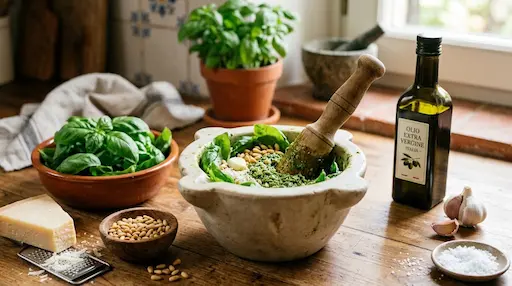
If you want to know how to make pesto gennaro contaldo style, you are about to unlock the secret to vibrant, restaurant-quality Italian flavor right in your own kitchen. Italian culinary icon Gennaro Contaldo reminds us that great cooking is all about respecting fresh ingredients, balancing textures, and avoiding the trap of rushed shortcuts. Whether you are tossing this emerald green sauce through freshly boiled pasta or spreading it over toasted artisanal bread, mastering this technique transforms simple pantry staples into an unforgettable culinary masterpiece.
Traditional Italian comfort food requires more than just following steps; it demands an understanding of how aromatic herbs interact with high-grade oils and cheeses. Therefore, this comprehensive guide breaks down everything you need to know about preparing Chef Contaldo’s signature method. From selecting tender young basil leaves to balancing pecorino with rich extra-virgin olive oil, let us dive deep into the art of making the ultimate homemade pesto.
Why Gennaro Contaldo’s Pesto Approach Stands Out
Italian culinary traditions feature dozens of regional variants for green sauces, yet the Contaldo formulation remains a gold standard for home cooks. By combining fresh Genovese basil with a vibrant blend of pine nuts, garlic, and aged cheese, this recipe bridges the gap between traditional rustic heritage and modern execution. According to culinary heritage insights, mastering pestle-and-mortar techniques highlights a cook’s ability to preserve essential oils without overheating or bruising the delicate leaves.
Furthermore, the secret lies in the precise balance of everyday pantry staples, elevated by the rich aroma of high-quality extra-virgin olive oil. When executed correctly, each spoonful releases a burst of concentrated flavor that complements warm pasta, grilled meats, or roasted vegetables seamlessly. You can explore more culinary inspiration directly through resources like Jamie Oliver’s Official Partner Network for professional tips.
“The magic of authentic Italian sauces rests entirely on the quality of your ingredients and the love you put into crushing them together.” — Italian Culinary Heritage Archives
Essential Ingredients for Authentic Pesto
To recreate the authentic taste of Chef Contaldo’s masterclass recipe, ingredient selection is paramount. You want to source fresh, glossy, and fragrant basil leaves that are free of blemishes and bruising. Here is a breakdown of what you will need in your kitchen before you begin prepping.
- Fresh Basil Leaves: 2 generous bunches of tender Genovese basil, washed and thoroughly dried.
- Pine Nuts: 1 handful of sweet Italian pine nuts (pignoli) for that signature buttery depth.
- Garlic: 1 small clove of fresh garlic, peeled and gently crushed.
- Cheeses: A balanced mix of freshly grated Parmigiano-Reggiano and Pecorino Romano.
- Cooking Medium: Premium extra-virgin olive oil for traditional richness and silky texture.
For a deeper dive into regional variations, you can explore the official Sacla UK Culinary Hub for alternative jarred pairings and authentic serving suggestions.
Step-by-Step Cooking Method
Precision is key when preparing traditional pestle-and-mortar sauces. Follow these step-by-step instructions carefully to ensure your sauce maintains its vibrant green color and complex aroma.
- Prep the Mortar: Place the peeled garlic clove and a pinch of coarse sea salt into a traditional marble mortar, then grind them gently using a wooden pestle.
- Add the Basil: Add the washed and thoroughly dried basil leaves a few at a time, grinding them in a circular motion against the sides of the mortar.
- Incorporate Pine Nuts: Toss in the pine nuts and continue to pound gently until a smooth, integrated paste begins to form.
- Stir in the Cheeses: Gradually fold in the freshly grated Parmigiano-Reggiano and Pecorino Romano cheeses, blending them evenly into the green paste.
- Drizzle Olive Oil: Slowly stream in premium extra-virgin olive oil while stirring continuously to create a rich, emulsified consistency.
- Serve Immediately: Toss the freshly prepared sauce directly through hot pasta with a splash of starchy cooking water for a glossy finish.
Comparison: Traditional Mortar vs. Modern Food Processor
Depending on your time constraints and kitchen equipment, preparation methods can vary significantly. Review this comparison table to decide which approach suits your cooking style best:
| Methodology | Equipment Needed | Texture & Flavor Profile | Best Suited For |
|---|---|---|---|
| Traditional Pestle & Mortar | Marble mortar and wooden pestle | Coarse, aromatic, vibrant green oils preserved | Weekend cooking and authentic flavor purists |
| Modern Food Processor | Electric blender or food processor | Smooth, uniform paste, slightly heated blades | Quick weeknight dinners and large batches |
As you can see, both variations offer unique characteristics while maintaining the core philosophy of fresh ingredient pairing. You can easily switch between them depending on whether you value historical authenticity or quick convenience.
Expert Tips for Flawless Results Every Single Time
Even seasoned home cooks occasionally run into oxidation issues when blending fresh greens. Keep these expert strategies in mind to guarantee success:
- Dry the Basil Thoroughly: Always ensure your basil leaves have zero residual moisture before pounding to prevent dilution and browning.
- Control the Speed: If using a machine, pulse in short bursts to avoid heating up the blades and oxidizing the bright green pigments.
- Quality Over Quantity: Invest in high-end extra-virgin olive oil, as its flavor profile forms the backbone of the entire sauce.
“Patience is the ultimate ingredient in Italian cooking. Allowing your herbs to release their natural oils slowly creates textures that high-speed blending can never replicate.” — Global Gastronomy Insights
Frequently Asked Questions
How do I prevent my pesto from turning brown?
Ensure your basil is completely dry, avoid overheating the ingredients during processing, and always top your stored pesto with a thin layer of olive oil.
Can I freeze homemade pesto for later use?
Yes, you can freeze pesto successfully in small airtight containers or ice cube trays for up to three months, omitting the cheese and adding it fresh later.
What is the best way to store leftover pesto?
Store leftovers in a glass jar covered with a thin film of olive oil in the refrigerator for up to five days to maintain freshness and color.
Conclusion
Mastering how to make pesto gennaro contaldo style elevates your everyday cooking into a true Italian art form. By combining thoughtful ingredient selection, proper herb handling, and patient blending, you can recreate restaurant-standard magic right in your home kitchen. Embrace these techniques, experiment with your favorite pasta shapes, and enjoy the wonderful compliments that will follow.
Ready to impress your family with a stellar dining experience? Head to your kitchen, gather your fresh ingredients, and start crafting your ultimate batch of homemade pesto today!