

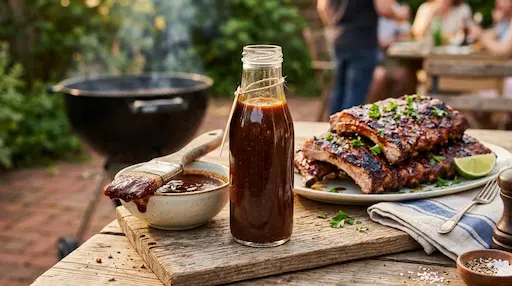
In this comprehensive guide, we will break down the exact professional techniques, essential aromatics, and precise simmering methods required to elevate your homemade barbecue game. Whether you are prepping smoky pork ribs, charring grilled chicken thighs, or glazing sliders, mastering this recipe changes how you approach outdoor cooking forever.
Ketchup serves as the reliable tomato body, providing a thick foundation. However, unmanaged ketchup tastes flat and overly sugary. Therefore, sharp apple cider vinegar cuts directly through heavy meat fats, while molasses and brown sugar introduce a sticky, deep caramelization that anchors the flavor profile. Furthermore, the strategic addition of fresh aromatics like sautéed onions and garlic separates amateur kitchen attempts from true professional standards.
“Balance is non-negotiable. You should taste sweet, tangy, salty, and smoky notes in every single bite — not just pure sugar.” — Professional Kitchen Standard
As a result, home cooks can achieve extraordinary depth without relying on artificial flavorings. Understanding these core components is the vital first step toward mastering the stove.
Let us examine the core components used by professional chefs:
- The Tomato Foundation: Approximately 350g to 360g of quality tomato ketchup for a rich, smooth base.
- The Acidic Bite: 45g to 80g of apple cider vinegar or cider vinegar to provide essential sharpness and brightness.
- The Depth Elements: 50g of soft brown sugar and rich molasses to build a slow-burning, sticky sweetness.
- The Umami Booster: 30g of Worcestershire sauce for deep, savory complexity.
- The Spice Blend: Smoked paprika, garlic powder, onion powder, and a precise pinch of cayenne pepper for subtle heat.
- The Aromatics: Finely diced white onions and freshly chopped garlic cloves gently sautéed in olive oil.
Each ingredient contributes a specific chemical reaction when heated, ensuring the final glaze clings perfectly to grilled proteins.
| Sauce Attribute | Standard Commercial Bottle | Chef-Crafted Homemade Glaze |
|---|---|---|
| Flavor Profile | One-note sweetness with artificial smoke | Complex layers of sweet, tangy, and smoky notes |
| Texture & Cling | Overly watery or artificially gummed-up | Naturally glossy, thick, and sticky consistency |
| Ingredient Quality | High-fructose corn syrup and artificial colors | Real tomatoes, cider vinegar, and whole spices |
Consequently, investing twenty-five minutes into crafting your own sauce transforms an ordinary weeknight dinner into an exceptional culinary event.
Phase 1: Sautéing the Aromatics
First, heat a heavy-bottomed saucepan over medium heat with a splash of olive oil. Add finely diced white onions and minced garlic, cooking them gently until they become soft and translucent. However, ensure the garlic does not burn, as overcooked garlic introduces unwanted bitterness into the sauce base.
Phase 2: Combining Liquid and Spice Elements
Next, stir in the smoked paprika, allowing the spice to bloom in the warm oil and release its natural aromatic oils. Immediately pour in the apple cider vinegar, Worcestershire sauce, and tomato ketchup, stirring continuously to prevent any lumps from forming in the mixture.
Phase 3: Simmering for Flavor Development
Add the brown sugar, molasses, and a splash of water or espresso coffee if desired for extra depth. Bring the entire mixture to a gentle boil, then immediately reduce the heat to low. Cover the saucepan with a lid and let it simmer for roughly fifteen to thirty minutes, stirring occasionally so nothing sticks to the bottom.
“The secret to a rich glaze lies in the slow simmer. It melds the sharp vinegar and sweet sugar into a unified, velvety texture.” — Culinary Arts Review
For additional barbecue ideas and grilling inspirations, you can explore expert cooking tips on Food and Travel Digital Archives for global dining ideas.
Conversely, if the mixture is too thin, let it simmer uncovered for an extra five minutes to evaporate excess moisture. Always taste the sauce after simmering to check the balance. If it tastes too sharp, a tiny pinch of brown sugar corrects the acidity. If it feels too sweet, a splash of vinegar brings back the necessary tang. Store your finished sauce in an airtight glass jar in the refrigerator, where the flavors will continue to meld and deepen overnight.
Can I use tomato paste instead of ketchup?
You can use tomato paste, but you will need to add extra water, vinegar, and sugar to replicate the sweetness and volume normally provided by ketchup.
How do I prevent my barbecue sauce from burning?
Because barbecue sauces contain high sugar content, they burn easily over high heat. Always cook your sauce on low or medium heat and stir frequently.
Should I store the sauce in the freezer?
Freezing is generally not recommended because the emulsion can separate when thawed. Instead, keep your fresh homemade sauce in an airtight container in the refrigerator.