

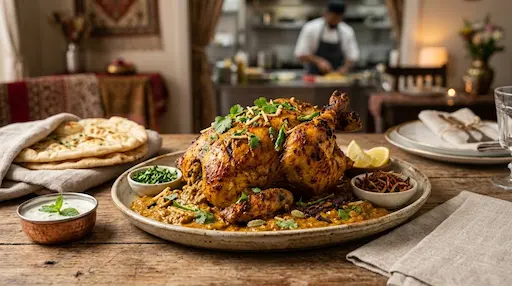
In this comprehensive guide, we will unpack the rich history, intricate preparation steps, specialized marinades, and expert plating secrets associated with this legendary dish. Whether you are planning a grand weekend feast or hosting an exclusive dinner party, learning this recipe elevates your cooking expertise immediately.
The Royal Heritage of Mughlai Cuisine
Mughlai cuisine represents an era of culinary opulence where royal khansamas (master chefs) experimented with exotic spices, rich dry fruits, and delicate aromas. Historically prepared for emperors, dishes like Murgh Musallam required hours of meticulous labor and complex layering of flavors.
According to culinary historians, the word “Musallam” translates to whole or intact, highlighting the presentation of an entire stuffed chicken cooked slowly in a rich, aromatic gravy. Modern adaptations popularized by platforms like Sanjeev Kapoor Khazana bridge historical authenticity with simplified home kitchen execution.
“Mughlai cooking is a celebration of patience, aromatic spices, and royal presentation that transforms simple poultry into an imperial masterpiece.” — Culinary Heritage Quarterly
As a result, modern home cooks can achieve restaurant-quality results without losing the soulful depth of traditional recipes. Furthermore, understanding the spice profile is the first crucial step toward culinary success.
Essential Ingredients for Master Chef’s Murgh Musallam
Creating an authentic royal preparation requires precise ingredients that work harmoniously together. Unlike quick weekday curries, this dish relies on a dual-stage marination process and a flavorful stuffing.
Let us review the core components required for the modern khansama version:
- The Base Protein: A 1.75 kg whole chicken, skinned and cleaned thoroughly.
- The First Marination: A fragrant blend of pure saffron infused in screwpine essence (kewra water).
- The Spice Paste: Dry-roasted coriander seeds, cumin, black peppercorns, cloves, green cardamoms, desiccated coconut, poppy seeds, and chironji.
- The Gravy Foundation: Rich thick yogurt, browned onion paste, ginger paste, garlic paste, turmeric, and red chili powder.
- The Rich Stuffing: Flavorful chicken mince, chopped hard-boiled eggs, almonds, fresh mint leaves, and aromatic garam masala.
Each ingredient plays a specific role in locking in moisture and delivering a multilayered flavor explosion with every single bite.
Comparison of Traditional vs. Modern Khansama Preparation
Kitchen techniques have evolved significantly over the decades. The table below outlines how traditional royal methods compare with the streamlined techniques found in modern khansama guides.
| Cooking Aspect | Traditional Royal Method | Modern Khansama Approach |
|---|---|---|
| Preparation Time | 6 to 8 hours of intensive labor | 2.5 to 3 hours total execution time |
| Cooking Vessel | Deep clay ovens (Tandoor) or open copper degs | Heavy-bottomed handi sealed with dough |
| Stuffing Composition | Complex dry fruit and rice fillings | Savory minced chicken and spiced boiled eggs |
Consequently, home cooks can save valuable time while retaining the majestic taste profile expected from a royal feast.
Step-by-Step Cooking Instructions
Executing this recipe demands careful attention to timing and heat management. Follow these structured steps to ensure your dish turns out exceptionally tender and flavorful.
Phase 1: Saffron Marination
First, prick the entire whole chicken deeply using a clean fork to allow flavors to penetrate the meat. Soak a generous pinch of saffron in screwpine essence, then rub this fragrant mixture evenly over the inside and outside of the chicken. Refrigerate it for thirty minutes to let the color and aroma set.
Phase 2: Preparing the Roasted Spice Paste
Heat a non-stick pan over medium flame and dry roast desiccated coconut until golden brown. Repeat the dry roasting process with poppy seeds and chironji, transferring each to a bowl. Next, roast your whole spices including coriander seeds, cumin, cinnamon, peppercorns, cloves, and cardamoms until fragrant. Blend these roasted items with water into a smooth paste.
Phase 3: Secondary Marination and Stuffing
In a large mixing bowl, combine fresh yogurt, the ground spice paste, browned onion paste, ginger-garlic paste, red chili powder, and turmeric. Coat the saffron-marinated chicken thoroughly with this rich mixture and refrigerate again. Meanwhile, prepare your minced chicken stuffing with boiled eggs, almonds, and aromatic spices. Stuff the cavity securely and tie the legs with kitchen thread.
Phase 4: Dum Cooking in a Handi
Heat ghee in a large heavy-bottomed handi and sear the stuffed chicken until golden on all sides. Pour the remaining marinade around the chicken, cover the vessel, and seal the edges tightly with a refined flour dough. Place a tawa underneath the handi and let it cook on low heat for forty-five minutes to an hour.
“The secret to a tender whole chicken lies in the dam cooking technique, which traps steam and infuses every fiber with spice.” — Gourmet Cooking Journal
For additional modern culinary insights and video demonstrations, you can explore resources on Food and Travel Digital Archives for global dining inspiration.
Expert Plating and Presentation Tips
Presentation is half the battle when serving an imperial dish like Murgh Musallam. When the cooking time concludes, carefully break the dough seal and lift the steaming chicken onto a grand serving platter.
Pour the luscious, glossy gravy generously over and around the bird. Garnish the dish with crisp fried onions, vibrant fresh mint leaves, and neat rounds of hard-boiled eggs. For an authentic royal touch, apply a delicate sheet of edible silver warq on top before serving it hot with fresh butter naan or saffron pulao.
Frequently Asked Questions
Can I use chicken pieces instead of a whole chicken?
While traditional recipes strictly require a whole chicken to honor the name Musallam, you can adapt the marinade and gravy for bone-in chicken leg quarters if you are pressed for time.
What makes the modern khansama version unique?
It streamlines the laborious royal preparation by incorporating smart dry-roasting techniques, pre-browned onion pastes, and a savory minced chicken stuffing.
How long should I marinate the chicken?
Two distinct marination phases of thirty minutes each ensure that the saffron essence and yogurt spice blend penetrate deeply into the meat.
Conclusion
Mastering the art of cooking royal poultry using expert techniques elevates your home cooking capabilities to professional standards. By following this guide on murgh-musallam-modern-khansama-sanjeev-kapoor-khazana, you bring centuries of culinary tradition straight to your table.
Ready to impress your guests with an imperial feast? Gather your fresh ingredients, fire up your kitchen stove, and start crafting this magnificent royal dish today!