

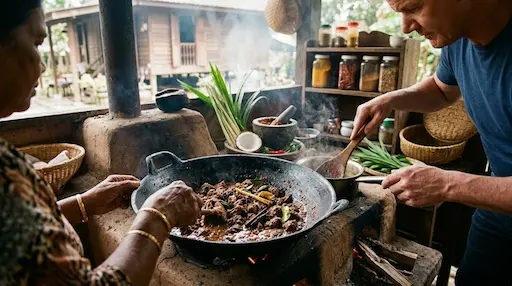
When the world-renowned Michelin-starred chef traveled across Southeast Asia for his hit television series, few moments captivated food lovers quite like watching beef rendang being prepared in local kitchens. Gordon Ramsay is famous for his high-energy, precision-driven Western cooking style. However, stepping into authentic Malaysian kitchens humbled him. He discovered that traditional cooking requires patience, intricate spice blending, and a deep respect for heritage.
If you have ever attempted to recreate this rich, complex dish at home, you know it is far more than a standard curry. It is a slow-cooked masterpiece where moisture slowly evaporates, leaving behind intensely concentrated spices and tender meat. Let us explore how Ramsay’s journey transformed his perspective on Southeast Asian comfort food and how you can replicate those exact techniques in your own kitchen.
The Cultural Significance and Heritage of Malaysian Rendang
Before examining the exact culinary techniques, understanding the origins of this dish provides essential context. Originally, this culinary marvel was developed by the Minangkabau people of West Sumatra. Over generations, it became deeply woven into Malaysian culinary culture, served during weddings, festivals, and major celebrations like Hari Raya.
Traditionally, this preparation served a vital preservation purpose. In a hot tropical climate without modern refrigeration, slow-cooking beef with coconut milk, aromatic herbs, and spices until completely dry allowed families to store the meat for weeks. Today, refrigeration is widespread, but people continue cooking it the traditional way because the flavor profile is simply unmatched.
- Long Shelf Life: The reduction of moisture and antimicrobial properties of garlic, ginger, and turmeric naturally preserved the meat.
- Deep Caramellization: As the coconut milk reduces entirely, the natural fats separate and fry the meat paste, creating a rich, toasted exterior.
- Ceremonial Value: Preparing this dish is a communal labor of love, often taking hours of dedicated stirring over an open fire.
“Flavorless water evaporates when you reduce a pan sauce, like we are doing here, but fat doesn’t, nor does flavor, which is what makes this such a unique and deliciously addictive dish.” — Culinary Experts on Rendang Reduction
Breaking Down the Essential Ingredients
Achieving authentic flavor relies on a meticulous balance of fresh aromatics and dry spices. Unlike western gravies that rely on stock, this preparation builds its entire flavor body from a freshly pounded spice paste, known locally as *rempah*.
During his travels, Ramsay observed local cooks utilizing fresh ingredients straight from local markets. Every component plays a distinct role in building the layered flavor profile that makes the dish world-famous.
| Ingredient Category | Key Components | Primary Culinary Function |
|---|---|---|
| Aromatics | Shallots, garlic, ginger, galangal | Provides the pungent, earthy foundation of the paste. |
| Chilies & Heat | Fresh red chilies, dried chili flakes | Delivers vibrant color and a warming, lingering spice. |
| Richness & Fat | Thick coconut milk (santan) | Renders natural oils during reduction to fry the meat. |
| Herbs & Spices | Lemongrass, turmeric leaf, coriander | Infuses a refreshing citrus and herbal complexity. |
For home cooks looking to explore authentic recipes, you can reference guides like the Gordon Ramsay Recipe Archive to find precise ingredient breakdowns and step-by-step preparation guidelines.
The Science Behind the Invisible Sauce Technique
One of the most profound realizations Ramsay shared during his Malaysian adventure was the concept of the invisible sauce. Western culinary training often teaches cooks to look for a glossy pool of gravy on the plate. However, an authentic dry curry behaves entirely differently.
As the coconut milk cooks down, the water content evaporates completely. The remaining coconut cream breaks down into pure oil. The beef then essentially fries in its own spiced coconut oil, coating every muscle fiber in an intense, concentrated crust of flavor. This technique requires patience and constant attention to prevent burning.
When cooking this dish, you must manage your heat levels carefully. High heat will scorch the coconut solids before the beef becomes fork-tender, whereas low, steady heat ensures the collagen breaks down smoothly while the exterior achieves a rich, dark mahogany hue.
Step-by-Step Cooking Insights Inspired by Ramsay’s Journey
Recreating this dish requires a structured approach. If you rush the process, you miss out on the deep caramelization that defines true Malaysian comfort food.
- Prepare the Rempah: Blend or pound your shallots, garlic, ginger, galangal, and chilies into a smooth, vibrant paste.
- Sauté the Aromatics: Fry the spice paste in a heavy-bottomed pan with a little oil until fragrant and the raw smell dissipates entirely.
- Incorporate the Beef: Add well-marbled beef chuck cut into uniform chunks, stirring to coat every piece in the spiced paste.
- Introduce Coconut Milk: Pour in fresh coconut milk along with bruised lemongrass stalks and whole spices, bringing it to a gentle simmer.
- Simmer and Reduce: Lower the heat and let the mixture bubble away slowly, stirring occasionally as the liquid reduces into a thick coating.
- Dry Fry (Kering): Once the sauce disappears, keep stirring continuously over low heat until the meat turns dark brown and tender.
“Properly reducing the coconut milk until the oil separates is the definitive secret to achieving that authentic, caramelized texture without any artificial thickeners.” — Traditional Southeast Asian Cooking Guidelines
For more details on how global television series document these traditional techniques, you can explore episodes on platforms like U.co.uk Gordon’s Great Escape Series to see how local culinary masters pass down these generational methods.
Common Troubleshooting Tips for Home Cooks
Even experienced kitchen enthusiasts can run into challenges when attempting complex regional dishes. Here are a few troubleshooting tips to keep your dish on track:
- Meat is Tough: If the liquid evaporates before the beef is tender, add a splash of warm water, cover the pan, and let it braise longer.
- Burned Bottoms: Always use a heavy-bottomed Dutch oven or cast-iron wok to distribute heat evenly during the dry-frying stage.
- Lack of Depth: Ensure you use fresh galangal instead of substituting regular ginger entirely, as galangal provides an essential piney note.
Frequently Asked Questions
Why is beef rendang called a dry curry?
It is classified as a dry curry because all the cooking liquid and coconut milk completely reduce down during preparation, leaving the meat coated in concentrated spices and its own rendered oils rather than a watery gravy.
Can I make this dish ahead of time?
Yes, traditional wisdom suggests that this dish actually tastes better the next day after the spices have fully penetrated the beef fibers and rested overnight.
What cut of beef works best for traditional rendang?
Beef chuck or brisket works exceptionally well because the abundant fat marbling and connective tissue break down during the long cooking process, keeping the meat moist and tender.
Is this recipe extremely spicy?
The heat level depends entirely on the type and quantity of chilies you use. You can easily adjust the spice level by removing the seeds from your fresh chilies before blending them into the paste.
Conclusion and Next Steps
Gordon Ramsay’s exploration of Malaysian cuisine demonstrated that true culinary excellence requires humility, patience, and respect for tradition. Mastering this dish expands your kitchen repertoire and connects you to a rich cultural heritage.
Are you ready to test your kitchen skills and recreate this legendary dish at home? Gather your fresh aromatics, stock up on quality coconut milk, and start your culinary adventure today!