

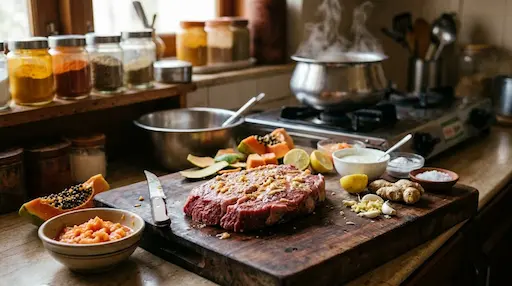
Are you tired of spending hours waiting for your beef or mutton curries to cook, only to find the meat remaining tough and chewy? Mastering the right gosht galane ka tareeqa in urdu is essential for anyone who loves traditional South Asian cooking like nihari, korma, and biryani. Whether you are preparing a grand Eid feast or a simple weeknight family dinner, knowing how to properly soften tough cuts of meat transforms your cooking experience completely. Therefore, let us explore the most effective chemical, mechanical, and natural techniques used by professional chefs to achieve melt-in-the-mouth perfection.
Traditional culinary science tells us that toughness in meat originates from tightly bound connective tissues and collagen fibers. When heat is applied too quickly without proper preparation, these proteins tighten up and squeeze out vital moisture. However, by incorporating tried-and-tested tenderizing agents—ranging from raw papaya paste to yogurt marinades—you can break down these stubborn protein structures efficiently. In addition, understanding the underlying science ensures that your meat retains its juicy succulence while cooking.
The Culinary Philosophy Behind Quick Tenderizing
Great cooking starts with understanding texture and timing. According to professional insights highlighted in Masala TV Culinary Archives, different cuts of meat require specific handling to unlock their maximum flavor potential. For instance, chuck and shoulder cuts contain higher amounts of collagen, which demand either slow simmering or active enzymatic breakdown.
Furthermore, relying exclusively on pressure cookers can sometimes strip the meat of its natural texture if not monitored carefully. As a result, combining traditional kitchen hacks with modern food science gives you total control over your final dish. Every home chef can benefit from mastering these time-honored methods.
“Proper meat tenderization is the ultimate bridge between a mediocre home-cooked meal and an authentic restaurant-quality delicacy.” — Desi Culinary Expert Review
Natural Enzymes and Traditional Totkay
What sets authentic South Asian kitchens apart is the clever use of natural ingredients to speed up cooking times. Instead of relying on artificial chemicals, grandmothers across the region have passed down powerful home remedies. For example, adding a small amount of raw papaya paste or powdered papaya skin to your mutton marinade acts as an instant catalyst. As noted in food science literature regarding Meat Tenderization Techniques, proteolytic enzymes like papain and bromelain actively dissolve tough animal protein chains.
Moreover, kitchen staples such as curd, lemon juice, and vinegar provide mild acidity that relaxes tough surface fibers. When combined with aromatic spices, these marinades penetrate deep into the cuts, ensuring flavor and tenderness go hand in hand.
| Tenderizing Agent | Primary Mechanism | Recommended Time |
|---|---|---|
| Raw Papaya | Enzymatic breakdown via papain | 30 minutes to 2 hours |
| Yogurt Marinade | Mild lactic acid and calcium interaction | 2 to 4 hours (or overnight) |
| Mechanical Mallet | Physical disruption of muscle fibers | Immediate before cooking |
To expand your culinary repertoire further, you can explore professional kitchen masterclasses for additional inspiration on spice blending and heat control.
Step-by-Step Guide to Using Tenderizers Effectively
Applying tenderizers requires careful attention to proportion and timing. If you leave raw papaya paste on delicate meat for too long, the texture can become unpleasantly mushy. Therefore, moderation is the absolute key to success. Balancing your marinade ingredients ensures that the meat remains firm yet remarkably tender.
Furthermore, tasting and adjusting your preparation steps will prevent common kitchen mistakes. By following a structured approach, you guarantee consistent results every single time you step into the kitchen.
“The secret to a flawless mutton korma lies not just in the spices, but in how gently and thoroughly the meat has been prepped before hitting the pot.” — Global Gastronomy Guide
Frequently Asked Questions
What is the fastest gosht galane ka tareeqa for beef?
Using raw papaya paste or a balanced yogurt marinade is widely considered the fastest and most effective way to tenderize beef naturally.
Can I use yogurt instead of papaya for tenderizing mutton?
Yes, yogurt contains lactic acid which gently softens protein fibers, making it a wonderful alternative if you prefer a milder tenderizing effect.
How long should I marinate meat with papaya paste?
For standard cuts of beef or mutton, 30 to 60 minutes is usually sufficient. Leaving it longer can cause the meat to become overly soft.
Does vinegar help in tenderizing tough meat?
Acidic components like vinegar and lemon juice break down surface connective tissues, though they work best when combined with oil and spices.
Conclusion and Next Steps
Mastering the art of tenderizing meat proves that restaurant-quality dining is entirely achievable at home. By utilizing natural enzymes, proper acidic marinades, and mindful cooking techniques, you elevate everyday ingredients into an absolute masterpiece.
Are you ready to test your culinary skills and bring these incredible tenderizing secrets to your family dining table? Gather your spices, prepped meats, and heavy cookware to start your cooking journey today!