

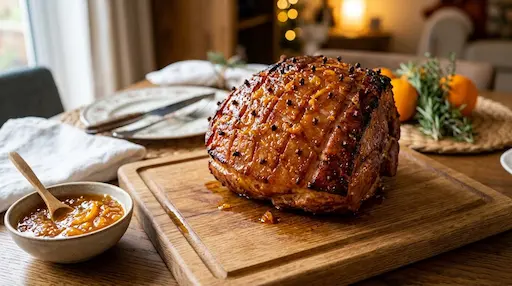
If you want to completely transform your next holiday feast or family Sunday dinner, learning how to prepare a perfect roast ham with marmalade glaze jamie oliver style is your ticket to culinary greatness. Famous for taking humble cuts of gammon and elevating them into deeply satisfying centerpieces, this iconic approach balances savory saltiness with a bittersweet, sticky citrus crust. Whether you are hosting a winter dinner party or planning your Christmas spread, this foolproof guide will show you how to achieve mouth-watering results.
Why This Marmalade Glaze Technique Works Every Time
Traditional holiday hams often suffer from dryness or heavy, overly cloying sweetness that masks the natural flavor of the meat. However, the Jamie Oliver method relies on a clever two-stage process. First, simmering the raw gammon joint in an aromatic vegetable broth removes excess salt while infusing deep savory layers. As a result, the interior stays exceptionally juicy, tender, and warm pink.
Furthermore, the magic happens during the final roasting phase. By scoring the fat and slathering on a generous coat of quality orange marmalade—often thinned with a splash of fresh citrus juice or rum—the sugars caramelize under high heat. Consequently, you get an incredible, sticky crust that clings to the crispy edges, offering a magnificent contrast in texture and taste.
Essential Ingredients for Your Centerpiece Ham
To recreate this masterpiece accurately, gathering the right components is essential. Here is what you will need for a standard family-sized joint:
- The Meat: 1kg to 2kg of quality boneless smoked or unsmoked gammon joint (remember, it officially becomes ham once cooked!).
- Aromatics for the Boil: 1 carrot, 1 stick of celery, 1 onion, a bay leaf, and 1 tablespoon of black peppercorns.
- The Glaze Base: 1 generous jar of quality Seville orange marmalade.
- Finishing Touches: Fresh rosemary sprigs, whole cloves for studding, and a splash of fresh orange juice or rum to loosen the glaze.
“The contrast of gorgeous juicy ham with the outer crust of incredible flavours and the sweet rummy marmalade glaze that finishes it off is just brilliant.” — Jamie Oliver’s Kitchen Insights
Step-by-Step Cooking Instructions
Success relies heavily on patience, timing, and careful temperature control. Follow these structured steps to ensure your roast turns out flawlessly.
- The Simmer (Day One or Morning Prep): Place your gammon joint in a large pot, cover it with cold water, and add your chopped carrots, celery, onion, bay leaves, and peppercorns. Bring to a boil, then lower the heat and simmer gently for about 1 hour and 15 minutes.
- Cooling and Skinning: Turn off the heat and let the ham rest in its own flavorful broth for 30 minutes. Transfer it to a cutting board, carefully slice away the tough outer skin, and score the remaining layer of fat into a neat diamond pattern.
- Studding and Seasoning: Push whole cloves into the center of each diamond cross-section for a classic festive look and aromatic warmth, then season generously with cracked black pepper.
- Initial Roast: Preheat your oven to 180°C (350°F). Place the ham in a roasting tray and bake for 20 minutes to render the fat and begin crisping the edges.
- Glazing and Caramelizing: Mix your marmalade with a splash of fresh orange juice to make it easily spreadable. Remove the ham, rub the glaze all over, scatter fresh rosemary on top, and return to the oven for 30 to 45 minutes, basting frequently until dark, sticky, and caramelized.
Comparing Traditional Baking vs. Jamie’s Simmer-and-Glaze Method
| Cooking Stage | Traditional Direct Oven Method | Jamie Oliver Simmer-and-Glaze Method |
|---|---|---|
| Salt Level Control | High risk of being overly salty | Controlled via initial aromatic broth simmer |
| Moisture Retention | Can dry out during long roasting times | Stays exceptionally juicy and tender inside |
| Flavor Complexity | Flat sugary coating | Bittersweet citrus depth with aromatic undertones |
| Stock Bonus | None generated | Produces rich, flavorful liquid gold for soups |
As shown in the table above, incorporating the initial simmer step drastically improves both the moisture level of the meat and the overall flavor profile.
Pro-Tips for Achieving Maximum Stickiness
Even experienced home cooks occasionally encounter issues with glaze sliding right off the meat. Therefore, always ensure you loosen thick marmalade with a bit of fresh orange juice or citrus zest before applying it. Furthermore, frequent basting every 10 to 15 minutes during the final roasting window guarantees a deeply lacquered, professional-grade finish.
“One-pan wonders and smart roasting techniques change the game for busy households, turning budget cuts into absolute showstoppers.” — Culinary Expert Review
Frequently Asked Questions
Should I use smoked or unsmoked gammon for this recipe?
You can use either option depending on your flavor preference. Smoked gammon delivers a deeper, more robust flavor that pairs exceptionally well with sweet citrus glazes, while unsmoked offers a cleaner, milder pork taste.
Can I prepare the boiled gammon ahead of time?
Yes, you can easily complete the initial boiling step the day before, store the cooled gammon in the fridge overnight, and apply the glaze and roast it right before your dinner party.
What are the best ways to serve leftovers?
Leftover marmalade-glazed ham makes incredible sandwiches on crusty bread with sharp English mustard, or can be diced into morning hashes, frittatas, and hearty winter soups.
Conclusion and Next Steps
Mastering the perfect roast ham with marmalade glaze jamie oliver technique opens the door to stress-free, show-stopping holiday entertaining. By combining a gentle aromatic simmer with a sticky, bittersweet citrus lacquer, you can serve a restaurant-quality centerpiece that delights every guest.
Ready to upgrade your dinner rotation? Grab your roasting tray, pick up a quality jar of marmalade, and try this incredible recipe out this weekend. Let us know how your crispy, sticky ham turns out in the comments below!