

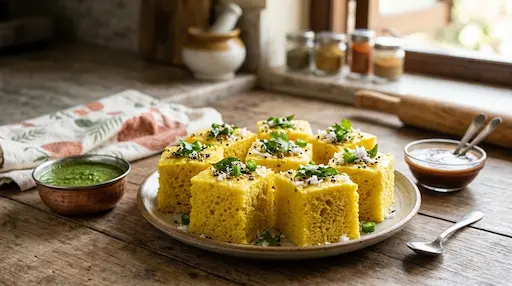
If you have ever craved a spongy, melt-in-your-mouth Gujarati snack that bursts with tangy and sweet flavors, the legendary nylon khaman dhokla recipe by Tarla Dalal is your absolute gold standard. Traditional Indian street food holds a special place in our hearts, yet few delicacies achieve the feather-light, silky texture characteristic of authentic nylon khaman. Whether you are hosting a weekend gathering or seeking a delightful tea-time companion, this instant recipe guarantees bakery-quality results right from your home kitchen.
Many home cooks struggle to replicate the porous sponge and vibrant yellow hue found in local sweet shops. However, mastering this classic dish becomes simple once you understand the precise chemical reaction between gram flour, citrus, and a leavening agent like fruit salt. Therefore, let us dive deep into the ultimate culinary guide, exploring expert tips, precise measurements, and secret techniques that elevate your cooking game instantly.
Why the Nylon Khaman Dhokla Remains an Iconic Snack
Originating from the vibrant state of Gujarat, khaman dhokla has evolved from a humble breakfast staple into a global phenomenon. Unlike traditional heavy snacks, nylon khaman stands out due to its ultra-fine texture, earning its poetic “nylon” moniker because of its smooth, slippery, and delicate mouthfeel. According to culinary archives and cultural food studies, savory steamed cakes have sustained communities for generations due to their high protein content derived from chickpea flour.
Furthermore, this instant variation eliminates the tedious overnight fermentation process required for traditional batters. As a result, busy professionals and home chefs can whip up a fresh batch in under thirty minutes. In addition, the signature tempering liquid—infused with mustard seeds, green chilies, curry leaves, and a dash of lemon sugar syrup—infuses every single bite with an irresistible juicy moisture.
“The secret to a perfect nylon khaman dhokla lies in the delicate balance of besan, citric acid, and the effervescent lift of fruit salt added right before steaming.” — Culinary Expert Insight
Essential Ingredients for Instant Nylon Khaman Dhokle
Precision is key when preparing batter-based Indian delicacies. Gathering your components beforehand ensures a seamless cooking experience. Here is everything you need to recreate Tarla Dalal’s famous nylon khaman dhokla:
Step-by-Step Instructions: How to Make Spongy Khaman at Home
Achieving bakery-level results requires strict adherence to technique. Follow these sequential steps to ensure your nylon khaman dhokla turns out flawlessly light and airy every single time.
Nutritional Profile and Quick Comparison Table
Understanding the nutritional breakdown of traditional snacks helps maintain a balanced diet while indulging in cultural favorites. Because gram flour is naturally gluten-free and rich in plant-based proteins, khaman serves as a wholesome alternative to deep-fried appetizers.
| Nutritional Aspect | Traditional Fried Snack (Samosa) | Instant Nylon Khaman Dhokla |
|---|---|---|
| Cooking Method | Deep-frying in oil | Steaming |
| Calorie Density | High (approx. 250-300 kcal per serving) | Moderate (approx. 150-180 kcal per serving) |
| Protein Content | Low to Moderate | High (rich in lentil/chickpea protein) |
| Digestibility | Heavy and oily | Light, easily digestible, gut-friendly |
As illustrated in the comparison above, choosing a steamed delicacy like nylon khaman significantly reduces unnecessary saturated fat intake while keeping your taste buds fully satisfied. For more healthy recipe inspirations, visit Tarla Dalal Official Recipe Portal.
The Magic Tempering (Tadka) and Garnishing Secret
The cooking process does not end when you turn off the steamer. In fact, the tempering (known as vaghar or tadka) is what transforms a dry sponge cake into a juicy, flavor-packed masterpiece. Without this final step, your dhokla will lack the signature moisture that defines authentic Gujarati street food.
To prepare the tempering, heat two tablespoons of oil in a small pan. Add one teaspoon of mustard seeds and allow them to crackle. Next, toss in a generous pinch of asafoetida (hing), fresh curry leaves, and split green chilies. Pour in half a cup of water along with a tablespoon of sugar and a squeeze of fresh lemon juice. Bring this mixture to a quick boil so the sugar dissolves completely.
“Pour the warm tempering syrup slowly over the warm, freshly sliced khaman squares. Let it rest for ten minutes so the sponge absorbs every drop of flavor.” — MasterChef Technique Guide
Pro Tips for Flawless Spongy Khaman Every Time
Even experienced home cooks occasionally encounter dense or rubbery dhoklas. To ensure absolute perfection, keep these expert tips in mind:
Frequently Asked Questions
Why did my nylon khaman dhokla turn out dense and flat?
A dense dhokla usually results from stale fruit salt, overmixing the batter after adding Eno, or letting the batter sit on the counter too long before steaming. Always steam immediately after mixing.
Can I use lemon juice instead of citric acid?
While lemon juice adds great natural flavor, authentic nylon khaman relies on a small amount of citric acid to achieve that sharp, distinct tang and ultra-smooth texture characteristic of commercial sweet shops.
How long can I store leftover khaman dhokla?
You can store leftover khaman in an airtight container in the refrigerator for up to two days. Reheat gently in a microwave with a damp paper towel to restore its moisture before serving.
Conclusion
Mastering the art of making nylon khaman dhokla at home is a rewarding culinary journey that brings authentic Gujarati flavors straight to your dining table. By following precise measurements, respecting the chemical leavening process, and finishing with a vibrant tempering syrup, you can easily impress your family and friends with bakery-quality snacks.
Ready to test your cooking skills? Head to your kitchen today, whip up a warm batch of this spongy delicacy, and share your delicious creations with us in the comments below!