

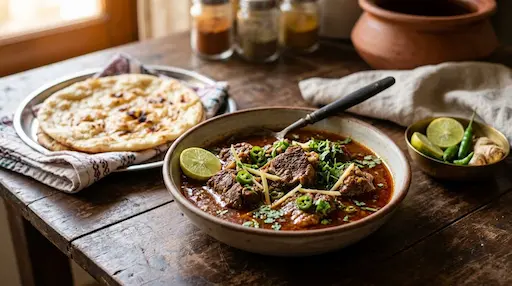
“Nihari is more than just a stew; it is a slow-cooked culinary tradition that demands patience, robust spices, and an appreciation for deep, comforting flavors.” — Culinary Heritage Journal
Essential Ingredients Breakdown
Every great dish relies on a harmonious balance of fresh components and trusted spice blends. To execute this recipe successfully, you need to gather high-quality produce and butcher cuts. Here is a comprehensive overview of what goes into the cooking pot:
- Meat Base: 1 kg of beef shank (bong part) cut into generous chunks, paired with 1 kg of beef bones containing rich bone marrow.
- Fats & Aromatics: 300 grams of clear butter (ghee) for authentic richness, finely sliced onions, and fresh garlic paste.
- The Spice Foundation: National Nihari spice mix, fennel seed powder, ginger powder, cumin powder, and long pepper.
- The Thickener: A quarter cup of wheat flour (atta) dissolved smoothly in water to create that signature glossy gravy.
| Component | Traditional Approach | National Foods Shortcut Method |
|---|---|---|
| Spice Blending | Grinding dozen rare herbs and seeds from scratch | Using pre-balanced National Nihari masala for instant depth |
| Cooking Fat | Heavy mustard oil or generic cooking oil | Traditional clear butter (ghee) to lock in rich aromas |
| Texture Agent | Raw wheat flour stirred directly | Slow-simmered wheat slurry for a smooth, velvety finish |
Step-by-Step Cooking Guide for Ultimate Beef Nihari
Precision during preparation ensures your stew achieves that signature silky consistency. Follow these structured steps carefully to get restaurant-quality results every single time:
- Simmer the Bones: In a deep bottom stockpot, boil beef bones with ample water on low flame for 1 to 1.5 hours until the marrow separates and a rich stock forms.
- Build the Tempering: Heat clear butter in a heavy-bottomed pot. Once hot, add sliced onions and fry them until they turn golden brown and crisp.
- Sear the Meat: Add the beef shank pieces and fry for 1 to 2 minutes, then stir in the garlic paste and National Nihari masala.
- Incorporate the Stock: Pour in the prepared beef stock, cover tightly, and cook on very low heat for about 1 hour until the meat starts becoming tender.
- Thicken with Flour: Dissolve the wheat flour in water completely to avoid lumps. Gradually add it to the simmering gravy while stirring continuously.
- Simmer to Perfection: Let the stew simmer on low heat for another hour. Once the natural oils (tarri) float to the top, your dish is ready to serve.
“The secret to authentic nihari lies in the patience of the final simmer, allowing the wheat flour and marrow to create a naturally glossy body.” — Food & Flavor Magazine
Expert Tips for Achieving Restaurant-Style Perfection
Recreating authentic comfort food requires understanding the subtle tricks professional chefs use. Therefore, pay close attention to heat management and fat separation. For instance, skimming off the initial chili oil layer before adding the flour slurry ensures you can garnish the bowl with vibrant red oil at the end.
Additionally, never rush the slow-cooking phase. Traditional beef shank requires gentle heat over an extended period to break down connective tissues into gelatin. You can explore more cooking insights directly on National Foods Official Website to refine your kitchen skills further.
Frequently Asked Questions
Can I use regular cooking oil instead of ghee?
Yes, you can use regular oil, but clear butter (ghee) provides the authentic traditional richness and distinct flavor profile that defines classic nihari.
Why is my flour slurry forming lumps in the gravy?
To prevent lumps, always whisk your wheat flour thoroughly in cold water before pouring it slowly into the hot stew while stirring continuously.
How should I serve beef nihari for the best experience?
Serve it piping hot alongside freshly baked tandoori naans, garnished generously with julienned ginger, fresh cilantro, lime wedges, and green chilies.
Conclusion
Mastering this classic comfort dish at home is a rewarding culinary adventure that brings family and friends together. By following trusted spice blends and proper slow-cooking techniques, you can easily recreate magic in your kitchen.
Ready to elevate your cooking game? Try this recipe tonight, gather your loved ones around the table, and share your delicious culinary creations with us in the comments below!