

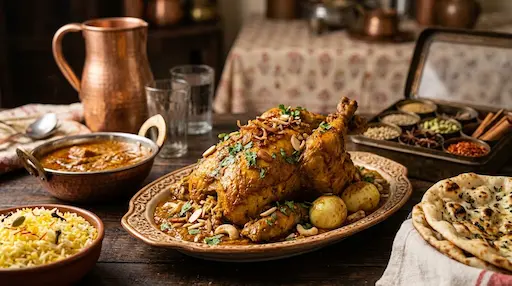
Few dishes command a dinner table quite like an aromatic, golden whole chicken smothered in a velvety, spiced gravy. If you are searching for the ultimate murgh musallam recipe tarka desi food style, you are about to embark on a magnificent culinary journey through royal Mughal heritage. This classic centerpiece is more than just a meal; it is an absolute celebration of deep traditions, complex whole spices, and meticulous cooking techniques that transform simple ingredients into an unforgettable feast.
Whether you are planning a grand weekend gathering or seeking to impress your family with authentic festive cooking, mastering this regal dish elevates your culinary skills instantly. Let us explore the rich history, essential ingredients, and exact step-by-step blueprint required to achieve restaurant-quality perfection right in your own kitchen.
The Fascinating Royal History of Murgh Musallam
To truly appreciate every bite of this majestic dish, we must look back at its storied origins. The term “Murgh Musallam” translates from Persian to mean “whole chicken” or “completely cooked.” According to historical records like the Ain-i-Akbari penned by Abul Fazl during Emperor Akbar’s reign, early variations of this recipe—often referred to as Musamman—were prized fixtures at royal banquets.
Even renowned 14th-century Moroccan traveler Ibn Battuta documented similar royal fowl preparations at the court of Sultan Muhammad bin Tughluq. Over the centuries, khansamas across Delhi, Lucknow, and Lahore refined the recipe, incorporating precious aromatics like saffron, kewra water, and hand-ground spice pastes. When modern culinary platforms like Masala TV’s Tarka archives showcase this dish, they honor a centuries-old legacy of patience and hospitality.
“Murgh Musallam stands as a monumental pillar of Mughlai cuisine, engineered to balance deep, warming spices with succulent, tender meat that falls away effortlessly at the touch of a fork.” — Culinary History Review
Consequently, preparing this dish connects modern home cooks with the grand kitchens of the subcontinent’s most legendary emperors.
Essential Ingredients for Authentic Station and Tarka-Style Flavor
Achieving that distinct, robust flavor profile relies heavily on sourcing the right components. Unlike quick weeknight curries, this recipe demands a dual-stage process: an intensive yogurt marinade and a deeply aromatic onion-tomato masala base.
Let us break down the essential components needed for your pantry:
- The Whole Chicken: One clean, medium-sized whole chicken (approximately 1.2 to 1.5 kg) with deep gashes cut into the flesh for maximum flavor penetration.
- The Yogurt Marinade: Thick whole-milk yogurt, fresh ginger and garlic paste, Kashmiri red chilli powder, turmeric, and freshly squeezed lime juice.
- The Cavity Stuffing: Hard-boiled eggs and spiced potato cubes to absorb internal juices and offer a delightful textural surprise.
- The Whole Spice Blend: Green and black cardamoms, cinnamon sticks, cloves, bay leaves, and whole black peppercorns.
- The Royal Finishing Touches: Saffron strands dissolved in warm milk, a few drops of kewra water, and toasted nuts like almonds and cashews for garnish.
Each ingredient plays a crucial chemical role during cooking, ensuring the gravy develops a rich, glossy sheen without relying on artificial thickeners.
Comparison of Standard Chicken Curry vs. Royal Murgh Musallam
Understanding what sets this recipe apart from everyday cooking helps explain why it requires dedicated preparation time. The table below highlights the core differences.
| Culinary Attribute | Standard Home Chicken Curry | Royal Murgh Musallam |
|---|---|---|
| Meat Preparation | Chopped chicken pieces simmered directly | Intact whole chicken, deep-gashed, marinated, and lightly seared |
| Flavor Foundation | Basic onion-tomato paste with standard curry powder | Complex blend of whole spices, yogurt, saffron, and nut pastes |
| Presentation & Serving | Served in a communal bowl with standard gravy | Plated whole as a centerpiece, garnished with boiled eggs and vark |
Therefore, investing extra time into marinating and braising yields an entirely superior dining experience compared to routine meals.
Step-by-Step Execution: How to Cook Murgh Musallam Like a Pro
Executing this recipe demands careful attention to heat management and timing. Follow these structured phases to ensure absolute success.
Phase 1: Deep Marination and Cavity Stuffing
First, pat your cleaned whole chicken completely dry with paper towels. Rub the interior and exterior cavities thoroughly with lemon juice, salt, and ginger-garlic paste. Next, coat the chicken generously with your yogurt and spice mixture, ensuring it fills every gash. Stuff hard-boiled eggs inside the cavity, tie the legs securely with kitchen twine, and let it rest in the refrigerator for at least four hours—or preferably overnight.
Phase 2: Searing and Building the Masala
Heat ghee or oil in a heavy-bottomed Dutch oven over medium heat. Lightly brown the marinated chicken on all sides until golden, then remove it temporarily. In the same aromatic pan, sauté sliced onions until golden brown, add your pureed tomatoes, and stir in your ground coriander, cumin, and garam masala. Let the mixture simmer until the oil separates cleanly from the edges.
Phase 3: Slow Braising to Tender Perfection
Return the seared chicken to the simmering masala base. Pour in any remaining marinade, cover tightly with a heavy lid, and let it braise on low heat for forty-five to fifty minutes, turning once halfway through. Alternatively, transfer the covered pot to a preheated oven at 180°C (350°F) for deep, even roasting.
“Patience is the ultimate secret to tender poultry; allowing the bird to braise slowly in its own juices guarantees melt-in-your-mouth tenderness.” — Master Chef Insight
For additional visual demonstrations and expert tips, you can explore tutorials on Nish Kitchen’s Whole Chicken Recipe Archives for foolproof roasting techniques.
Pro Tips for Flawless Presentation and Texture
Professional chefs always rely on subtle finishing techniques to elevate a home-cooked dish to restaurant quality. If your gravy becomes too thick during the braising process, splash in a couple of tablespoons of warm chicken stock or water to maintain a smooth, velvety consistency.
Always let the chicken rest for ten to fifteen minutes before slicing into portions. This resting period allows the internal juices to redistribute evenly throughout the muscle fibers. Garnish your serving platter with sliced hard-boiled eggs, toasted almonds, and fresh coriander leaves to complete the magnificent presentation.
Frequently Asked Questions
Can I make murgh musallam without an oven?
Yes, traditional stovetop cooking in a heavy-bottomed Dutch oven or deep skillet works wonderfully. Just ensure the pot is tightly covered to trap steam and heat evenly.
How long should I marinate the whole chicken?
While a minimum of four hours is acceptable, marinating the chicken overnight in the refrigerator yields the deepest flavor and most tender texture.
What is the best side dish to serve with murgh musallam?
This rich dish pairs exceptionally well with flaky butter naans, aromatic saffron pulao, or traditional taftan bread to soak up the luxurious gravy.
Conclusion
Mastering this classic recipe brings the timeless elegance of royal kitchens right into your dining room. By combining thorough marination, whole spice tempering, and slow braising, you create an extraordinary meal that delights both family and guests.
Ready to elevate your cooking game? Gather your spices, prepare your marinade, and start crafting your magnificent murgh musallam today!