

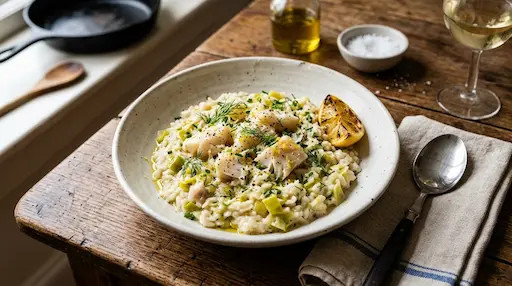
If you want to transform humble pantry ingredients into a five-star dining experience, look no further than the legendary leek-and-smoked-haddock-risotto-gordon-ramsay method featured on The F Word. Unlike traditional Italian risottos that rely purely on shallots and garlic, this brilliant British twist combines buttery, melting leeks with smoky, milk-poached fish to create unmatched depth of flavor.
However, many home cooks struggle to capture that signature restaurant texture without turning their rice into mush. Fortunately, mastering this dish comes down to a few precise culinary techniques, from milk-infusion stocks to the critical final mantecato stage. In this comprehensive guide, we will break down every step required to recreate Gordon Ramsay’s masterclass recipe in your own kitchen.
Why This British-Italian Fusion Works
At first glance, pairing delicate Italian Arborio rice with traditional Scottish smoked haddock might seem unconventional. However, the culinary logic behind the recipe is bulletproof. Standard fish risottos often suffer from a disconnect where the seafood flavor sits only on top of the rice grains.
To solve this, Ramsay utilizes a signature milk-poaching technique found across several of his acclaimed cookbooks. By gently poaching undyed smoked haddock in whole milk with bay leaves, you draw out a gentle, sweet smokiness. Crucially, that nutrient-rich poaching milk is reserved and blended directly into your warm stock.
“The poaching milk goes into the stock, which means the smokiness is in every grain of rice, not just sitting on top.” — Culinary Archives & Kitchen Field Notes
In addition, substituting sharp onions with finely sliced leeks introduces a natural sweetness. Leeks cook down until they practically melt into the starches, providing a silky backdrop that complements the bold, savory notes of the fish.
Essential Ingredients for Success
Quality ingredients dictate the final outcome of any risotto. Because this recipe features a short ingredient list, every component must pull its weight. Here is what you will need on your counter before turning on the stove:
- 300g Undyed Smoked Haddock Fillets: Always choose undyed fillets to avoid artificial yellow food coloring and harsh chemical tastes.
- 300ml Whole Milk: Essential for keeping the fish incredibly moist and building your smoky stock foundation.
- 2 Whole Bay Leaves: Infuse aromatic herbal notes during the fish-poaching phase.
- 1 Large Leek: Use only the white and light green parts, sliced paper-thin so they soften into the rice.
- 250g Arborio or Carnaroli Rice: High-amylopectin Italian short-grain rice that releases starch gradually to create a creamy texture.
- 125ml Dry White Wine: Deglazes the pan and cuts through the richness of the dairy and fish.
- 500ml Hot Stock: Combined with your reserved poaching liquid to maintain a steady cooking temperature.
- 50g Cold Unsalted Butter & 50g Grated Parmesan: The dynamic duo required for the final butter-beating finish.
Step-by-Step Cooking Instructions
Executing a flawless risotto requires your undivided attention. Do not walk away from the stove once the rice hits the pan. Follow this structured timeline to achieve perfection.
Step 1: Poaching the Haddock
Begin by placing your undyed smoked haddock fillets skin-side down in a wide, shallow pan. Pour over the 300ml of whole milk and drop in your two bay leaves. Bring the liquid to a gentle, rolling simmer over medium-low heat.
Allow the fish to poach for four to five minutes until the flesh flakes apart easily under a fork. Carefully lift the fillets out of the pan, discard the skin, and break the fish into large, rustic chunks. Most importantly, strain and reserve the remaining milk in a jug.
Step 2: Softening the Leeks
In the same wide pan used for poaching, wipe it clean and heat two tablespoons of olive oil over medium heat. Add your finely sliced leeks and cook them gently for three to four minutes. You want them soft and translucent without taking on any brown color.
Toss in a finely sliced garlic clove during the final thirty seconds of cooking. The garlic should become fragrant immediately without burning, setting a sweet and savory aromatic base for your grains.
Step 3: Toasting and Building the Risotto
Pour your Arborio rice directly into the leek and garlic mixture. Stir continuously for one to two minutes until the outer edges of the grains become translucent. This crucial step seals the exterior, preventing the rice from disintegrating into porridge later.
Next, pour in the dry white wine and stir vigorously until the pan is nearly dry and you can no longer smell raw alcohol. Meanwhile, whisk your reserved smoky poaching milk into your hot chicken or vegetable stock, keeping it warm in a separate saucepan.
Comparative Breakdown: Risotto Styles
To understand why this specific recipe stands out, review how it compares to other classic variations:
| Risotto Variation | Aromatic Base | Primary Protein | Key Secret Technique |
|---|---|---|---|
| Leek & Smoked Haddock | Sweet sliced leeks & garlic | Undyed smoked haddock | Milk-poaching stock infusion |
| Classic Mushroom | Shallots & wild mushrooms | Porcini or chestnut mushrooms | Mushroom soaking liquid reduction |
| Traditional Seafood | Onion & garlic | Prawns, squid, or mussels | Shellfish stock made from scratch |
The Critical Mantecato Finish
Even the best-cooked rice can fall flat if it lacks the proper finish. When your rice reaches the al dente stage—offering a slight, pleasant chew in the center—remove the pan from the heat entirely.
This is where you execute the mantecato technique. Add your cubed cold unsalted butter and finely grated Parmesan cheese directly into the hot rice. Beat the mixture vigorously off the heat until a glossy, lava-like emulsion forms.
“Beat in the cold butter and Parmesan off the heat, put the lid on for two minutes, and let the starches settle into a wave-like consistency.” — Professional Kitchen Masterclass Guidelines
Finally, fold in your flaked smoked haddock chunks with extreme care to keep them intact. Scatter freshly snipped chives over the top, cover with a lid for two minutes, and serve immediately in warm bowls.
Frequently Asked Questions
Can I use regular fresh haddock instead of smoked haddock?
Fresh haddock lacks the curing and smoking process that gives this dish its iconic flavor profile. If you must use fresh fish, you will need to heavily season your stock with smoked paprika or bacon lardons to replicate the taste.
Why does Gordon Ramsay insist on undyed smoked haddock?
Dyed haddock uses artificial yellow food colorings that offer zero flavor enhancement and can sometimes leave an unpleasant chemical aftertaste. Undyed fish provides a clean, natural flavor and appearance.
Can I make this risotto ahead of time for dinner parties?
Risotto is famously impatient and cannot be fully prepared ahead of time. However, you can prep your leeks, measure your rice, and poach your fish up to four hours in advance to streamline final assembly.
How do I store and reheat leftover risotto?
Store leftovers in an airtight container in the refrigerator for up to two days. When reheating, add a splash of milk rather than water to restore its creamy, velvety texture over gentle heat.
Conclusion and Next Steps
Mastering the leek-and-smoked-haddock-risotto-gordon-ramsay technique proves that restaurant-grade cooking relies on smart preparation rather than complicated equipment. By infusing your stock with milk-poached fish aromatics and honoring the final butter-beating ritual, you unlock a masterclass in comfort food elegance.
Ready to impress your guests at your next dinner party? Gather your ingredients, pick up some fresh undyed fillets from your local fishmonger, and try this iconic recipe tonight!