

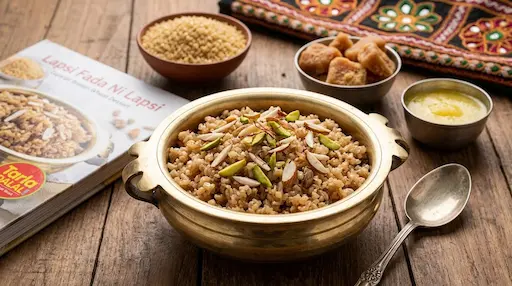
Tradition often carries a comforting aroma, and few dishes embody warmth quite like a classic bowl of lapsi fada ni lapsi gujarati broken wheat dessert recipe. For generations, this rich, aromatic sweet has anchored auspicious celebrations, weddings, and family gatherings across Gujarat. While broken wheat traditionally demands patience, modern culinary adaptations—popularized by legendary experts like Tarla Dalal—have transformed it into a quick, foolproof pressure cooker delight. Whether you are celebrating a festival or craving a nourishing homemade treat, mastering this golden delicacy unlocks a deeply rewarding culinary experience.
Understanding the Heritage of Fada Ni Lapsi
Every regional sweet carries a profound cultural story. In Gujarati households, lapsi is never treated as a mere dessert. Instead, it serves as a symbol of auspicious beginnings, often prepared during pujas, Diwali, and joyous family milestones. The core ingredient, broken wheat or dalia, brings a rustic, nutty profile that pairs harmoniously with pure ghee and jaggery or sugar. Therefore, understanding the heritage of this dish helps cooks appreciate why precise roasting techniques remain vital for achieving its signature flavor.
Furthermore, culinary historians note that broken wheat has long been valued for its nutritional density. Unlike refined flours, cracked wheat retains essential dietary fibers and minerals. As a result, when combined with healthy fats like ghee, it provides sustained energy and comforting warmth. Industry insights from culinary institutions indicate that traditional whole-grain desserts are experiencing a massive resurgence among modern home cooks seeking wholesome comfort food.
“A great traditional recipe is more than a list of ingredients; it is a bridge connecting our present kitchens to the rich culinary wisdom of our ancestors.” — Culinary Heritage Guild
Essential Ingredients for Traditional Lapsi
Achieving perfection in any traditional recipe relies heavily on ingredient quality. Because this dish features a remarkably short ingredient list, each component plays a starring role. Traditional preparations require just a handful of pantry staples that work in absolute harmony.
- Broken Wheat (Fada / Dalia): The foundation of the dish, providing texture and a nutty grain depth.
- Pure Ghee: The essential fat that roasts the wheat and imparts a rich, glossy aroma.
- –Sugar or Jaggery: Sweetening agents that caramelize gently during cooking.
- Dry Fruits: Chopped cashews and raisins add a delightful textural contrast.
- Cardamom Powder (Elaichi): The quintessential aromatic spice finishing touch.
Step-by-Step Pressure Cooker Method
Traditionally, lapsi required hours of slow-cooking in heavy-bottomed pots. However, utilizing a pressure cooker streamlines the process significantly without compromising texture. Follow these precise steps to achieve restaurant-quality results in under thirty minutes.
- Heat three tablespoons of pure ghee in a heavy-bottomed pressure cooker on a medium flame.
- Add half a cup of broken wheat and sauté continuously for 5 to 7 minutes until it transforms into a light pink color and releases a nutty aroma.
- Toss in chopped raisins and cashew nuts, stirring gently for one minute until the cashews turn golden.
- Carefully add half a cup of sugar and one and a half cups of hot water, mixing thoroughly to dissolve the sugar crystals.
- Secure the lid and pressure cook on a high flame for precisely 4 whistles.
- Allow the pressure to release naturally before opening the lid to ensure the grains swell to absolute perfection.
| Cooking Method | Preparation Time | Texture & Consistency | Best Suited For |
|---|---|---|---|
| Traditional Open-Pot | 45 to 60 Minutes | Dense, chewy, highly caramelized | Slow weekend cooking |
| Modern Pressure Cooker | 20 Minutes | Fluffy, tender, perfectly swollen grains | Quick festive preparations |
Expert Tips for Flawless Results
Even simple recipes demand attention to detail. To elevate your homemade dessert, keep these professional tips in mind:
- Roasting Patience: Never rush the roasting phase. Sautéing the broken wheat in ghee until it turns light pink is the secret to preventing a raw, starchy taste.
- Water Temperature: Always use hot water when adding liquids to the hot roasted wheat. Cold water can shock the grain and harden its texture.
- Pressure Release: Opt for natural pressure release whenever possible. This allows the broken wheat to absorb remaining moisture evenly.
“Mastering texture is the hallmark of a true home chef. When cooking whole grains, patience during the initial roasting stage dictates the final success.” — Master Chef Insights
The Evolution of Comfort Desserts in Modern Kitchens
As modern lifestyles accelerate, home cooks increasingly look for authentic recipes that respect time constraints. The adaptation of classic sweets like fada ni lapsi for pressure cookers demonstrates how heritage cooking adapts to contemporary needs. Through digital platforms and culinary blogs inspired by pioneers like Tarla Dalal’s timeless archives, traditional Indian sweets remain accessible to global audiences.
Furthermore, many contemporary home chefs experiment with alternative sweeteners such as organic jaggery or coconut sugar, tailoring traditional flavor profiles to modern dietary preferences. However, the soul of the dish—the fragrant ghee-roasted broken wheat—remains entirely untouched.
Frequently Asked Questions
What is fada ni lapsi made of?
Fada ni lapsi is made primarily from broken wheat (dalia), pure ghee, sugar or jaggery, cardamom powder, and nuts like cashews and raisins.
Can I use jaggery instead of sugar in this recipe?
Yes, organic jaggery is a traditional alternative that adds a deeper, earthy sweetness to the broken wheat dessert.
How long does pressure cooking take for broken wheat lapsi?
Typically, cooking on high flame for 4 whistles followed by natural pressure release yields perfectly tender and fluffy broken wheat.
Conclusion
Mastering this traditional delicacy allows you to bring authentic Gujarati warmth straight to your dining table. By combining time-honored roasting techniques with modern pressure-cooking efficiency, you can prepare a wholesome, aromatic treat with ease.
Ready to try this comforting recipe in your own kitchen? Gather your ingredients, fire up your stove, and subscribe to our culinary blog for more expert-tested traditional recipes!