

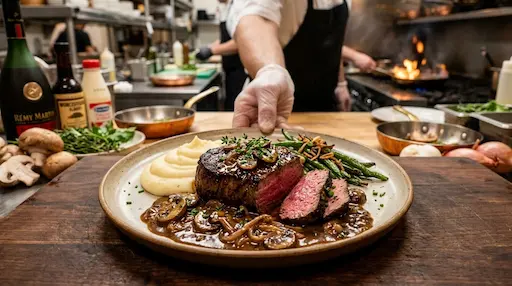
If you want to elevate your home cooking with a legendary bistro classic, learning how to prepare steak diane gordon ramsay style is an absolute game-changer. This iconic dish swaps heavy, complicated gravies for a lightning-fast pan sauce featuring sweet shallots, earthy cremini mushrooms, sharp Dijon mustard, Worcestershire sauce, and a dramatic Cognac flambé. However, turning basic pantry staples into a five-star dining experience requires knowing the exact techniques behind Ramsay’s high-heat culinary mastery. Therefore, let us explore the precise ingredients, safety rules, and expert steps needed to bring this creamy masterpiece to life in your own kitchen.
Why This Retro Bistro Classic Dominates Modern Kitchens
Traditional steak diane became famous in mid-century restaurants for its dramatic tableside preparation. Nevertheless, modern culinary icons like Gordon Ramsay flip the script by tightening the flavor profile and focusing heavily on meat temperature and fond development. When you sear high-quality beef tenderloin or sirloin over blistering heat, the pan collects delicious caramelized juices known as sucs. In addition, incorporating aromatic shallots and cremini mushrooms builds a robust savory foundation that perfectly balances the rich dairy.
Expert Insight: “The secret to an unforgettable pan sauce lies entirely in utilizing the residual fond left behind by properly seared meat. Deglazing with Cognac lifts those flavors instantly.” — The Kitchn Culinary Archive
According to recent culinary trend analytics, home cooks are actively seeking retro fine-dining recipes that can be executed in under thirty minutes. People love dishes that look complex yet rely on straightforward, accessible ingredients. As a result, this classic flambé traybake has quickly become a favorite for weekend dinner parties and romantic evenings at home.
Core Ingredients Breakdown for the Masterclass
Success with this recipe starts at your local butcher. To replicate the exact flavor profile from professional masterclasses, you need a precise balance of fresh produce, high-end spirits, and quality dairy. Let us examine the essential components required for a standard portion serving four hungry guests.
- The Beef: 4 small sirloin or beef tenderloin steaks, roughly 6 to 7 ounces each, brought completely to room temperature.
- The Aromatics: 3 peeled shallots, 4 ounces of sliced cremini or button mushrooms, and 2 fresh garlic cloves.
- The Sauce Foundation: 1/3 cup of Cognac or brandy, 1 tablespoon of Dijon mustard, 1 tablespoon of Worcestershire sauce, and 1 cup of heavy cream.
- Pantry Essentials: Extra virgin olive oil, unsalted butter, sea salt, freshly cracked black pepper, and fresh flat-leaf parsley.
Step-by-Step Cooking Method: From Searing to Flambé
Cooking like a professional chef means embracing efficiency, safety, and bold flavor pairings. Follow these structured steps to ensure your steaks remain tender while your pan sauce achieves absolute perfection.
- Flatten and Season: Place your steaks between sheets of plastic wrap and gently pound them with a rolling pin until about half an inch thick. Season both sides generously with sea salt and freshly cracked black pepper.
- Sear to Perfection: Heat olive oil in a heavy skillet over high heat. Quickly sear the steaks for 1 to 2 minutes per side depending on thickness, then transfer them to a resting rack to preserve their juices.
- Build the Mushroom Base: In the same skillet, toss in your sliced shallots and cremini mushrooms along with a tablespoon of butter. Sauté until golden brown, then add your minced garlic for roughly 30 seconds.
- The Cognac Flambé: Remove the pan temporarily from the flame for safety. Pour in your Cognac, tilt the pan to ignite the alcohol safely, and let the flames burn off completely before reducing the liquid.
- Finish the Sauce and Serve: Stir in the Dijon mustard, Worcestershire sauce, and heavy cream. Simmer until thickened, reintroduce your resting steaks to coat them in the luxurious sauce, and garnish with fresh parsley.
Nutritional Profile and Dietary Considerations
Understanding the nutritional breakdown of rich bistro meals helps you maintain a balanced diet. A standard serving of this decadent creation provides a deeply satisfying energy boost packed with premium protein.
| Nutritional Component | Amount Per Serving | Percentage of Daily Guide |
|---|---|---|
| Energy (Calories) | 668 kcal | 33% |
| Total Fat | 50.4g | 65% |
| Saturated Fat | 21.4g | 91% |
| Carbohydrates | 8.9g | 3% |
| Protein | 36.9g | 32% |
| Dietary Fiber | 1.6g | 6% |
If you need to cater to specific dietary preferences, this recipe offers great flexibility. For instance, you can substitute heavy cream with a rich cashew cream blend for a dairy-reduced option. Similarly, selecting grass-fed beef cuts ensures higher omega-3 fatty acid content without altering the core cooking method.
Pro Tips for Flawless Results Every Time
Even simple pan sauces benefit from professional kitchen secrets. Here are three expert adjustments that will elevate your homemade steak dinner from standard to extraordinary.
- Temper Your Meat: Always let your steaks sit at room temperature for at least 30 minutes before cooking. Cold meat hits a hot pan and drops the temperature, ruining your sear.
- Prioritize Safety During Flambé: Never pour liquor directly from the bottle over an active, roaring flame. Always remove the pan from the heat source before introducing the Cognac.
- Rest the Beef: Let your cooked steaks rest on a wire rack over a tray to capture precious juices. Pour those accumulated juices right back into your pan sauce for maximum flavor.
Pro Tip: “Flattening the tenderloin slightly with a rolling pin ensures rapid, even cooking and creates a larger surface area for your creamy mustard sauce to cling to.” — Rouxbe Professional Kitchen Academy
Frequently Asked Questions
Can I substitute brandy if I do not have Cognac?
Yes, any good quality brandy or even a dry sherry works remarkably well as a direct substitute for Cognac during the pan deglazing step.
What cut of beef works best for this recipe?
Beef tenderloin or premium sirloin steaks are traditional choices because they stay exceptionally tender when pounded thin and cooked quickly.
Is the flambé step mandatory?
The flambé step burns off the harsh alcohol burn while leaving behind deep fruit notes. However, you can simply simmer the alcohol off without ignition if you prefer.
What side dishes complement this dish best?
Crispy pan-seared baby potatoes, steamed French green beans, or buttered egg noodles make fantastic pairings to soak up the extra sauce.
Conclusion and Next Steps
Mastering a restaurant-quality meal at home is one of the most rewarding culinary achievements. By combining proper meat resting techniques, rich cremini mushrooms, and a bold Cognac cream reduction, you can recreate elite bistro flavors in your own kitchen. Therefore, gather your ingredients, fire up your skillet, and treat your guests to an unforgettable dinner tonight.
Ready to transform your weeknight cooking? Head to your local butcher for fresh tenderloin steaks today, and share your culinary masterpiece with family and friends!