

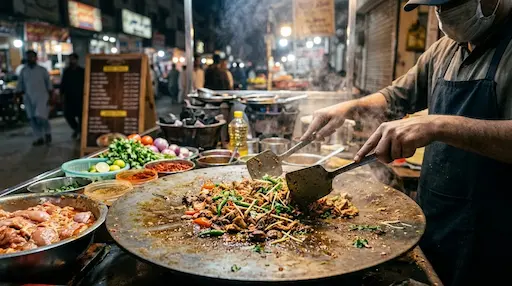
If you want to bring the electrifying energy of South Asian night markets straight to your kitchen, learning how to master chicken katakat is an absolute game-changer. This iconic dish transforms simple chicken cuts and rich organs into a sizzling, high-heat symphony of spices, tomatoes, and butter. However, capturing that authentic dhaba flavor requires understanding the precise rhythm of the heavy griddle and spice layering. Therefore, let us explore the cultural origins, essential ingredients, and expert techniques needed to recreate this legendary street food masterpiece at home.
The Fascinating Origin of the Sizzling Sound
Traditional katakat earned its famous onomatopoeic name from the rhythmic, rapid-fire sound of twin metal spatulas hitting a massive flat iron griddle, known locally as a tawa. Originally born in the vibrant food streets of Karachi, this dish was traditionally crafted using a variety of offal like kidneys, brain, and chops. Over time, home cooks and modern chefs adapted the concept, making chicken katakat one of the most beloved and accessible variations across the globe.
Expert Insight: “The magic of katakat lies in the relentless chopping and folding action right on the hot tawa. It fuses the spices, meat juices, and aromatics into a uniform, rich paste.” — Masala TV Culinary Archives
According to recent culinary trend analytics, global food enthusiasts actively seek high-energy, experiential street food recipes that can be replicated at home. People love dishes that tell a story through sound, aroma, and vibrant colors. As a result, this dynamic skillet preparation has quickly become a favorite for weekend gatherings and family dinner parties.
Core Ingredients Breakdown for the Masterclass
Success with this recipe starts with fresh, quality components. To replicate the exact flavor profile from professional food street masterclasses, you need a precise balance of juicy chicken pieces, aromatic herbs, and bold spices. Let us examine the essential items required for a standard portion serving four hungry guests.
- The Protein Base: 500 grams of boneless chicken or a mix of chicken liver and tender thigh meat, cleaned thoroughly.
- The Aromatics: 3 finely chopped medium onions, 4 ripe tomatoes, and 2 fresh green chilies sliced into thin rounds.
- The Flavor Boosters: 1 tablespoon of fresh ginger-garlic paste, 1/2 cup of creamy plain yogurt, and fresh julienned ginger.
- Pantry Spices: Red chili powder, turmeric powder, crushed coriander seeds, cumin, and warm garam masala.
Step-by-Step Cooking Method: From Tawa to Table
Cooking like a professional street vendor means embracing speed, precision, and high-heat management. Follow these structured steps to ensure your chicken stays tender while your masala achieves absolute perfection.
- Heat the Griddle: Place a heavy-duty cast-iron skillet or flat griddle over high heat. Melt generous amounts of butter and cooking oil together.
- Build the Onion Base: Toss in your finely chopped onions and sauté until translucent and golden brown around the edges.
- Incorporate the Chicken: Add your chicken pieces and ginger-garlic paste. Sear vigorously, breaking the meat down into smaller bite-sized morsels using sharp spatulas.
- Layer the Spices and Tomatoes: Stir in the chopped tomatoes, red chili powder, turmeric, and crushed coriander. Let the natural juices meld under high heat.
- Finish with Yogurt and Garnish: Pour in the beaten yogurt to create a velvety gravy, then garnish generously with fresh cilantro and julienned ginger before serving hot.
Nutritional Profile and Dietary Considerations
Understanding the nutritional breakdown of rich street food meals helps you maintain a balanced diet while indulging. A standard serving of this decadent creation provides a deeply satisfying energy boost packed with high-quality protein.
| Nutritional Component | Amount Per Serving | Percentage of Daily Guide |
|---|---|---|
| Energy (Calories) | 485 kcal | 24% |
| Total Fat | 28.5g | 36% |
| Saturated Fat | 9.2g | 46% |
| Carbohydrates | 12.4g | 4% |
| Protein | 42.1g | 84% |
| Dietary Fiber | 2.1g | 8% |
If you need to cater to specific dietary preferences, this recipe offers great flexibility. For instance, you can substitute traditional butter with clarified ghee or plant-based alternatives for a dairy-conscious option. Similarly, selecting lean chicken breast cuts ensures a lighter protein profile without losing the core street-style essence.
Pro Tips for Flawless Results Every Time
Even rapid skillet meals benefit from professional kitchen secrets. Here are three expert adjustments that will elevate your homemade chicken dinner from standard to extraordinary.
- Chop as You Cook: Use two metal spatulas or sturdy spoons simultaneously to chop the meat into smaller pieces while it fries on the surface.
- Control Your Heat: Keep your skillet blistering hot during the initial sear, then lower it slightly when adding yogurt to prevent curdling.
- Fresh Garnishes Matter: Always finish your dish with a generous shower of fresh ginger juliennes and crushed green chilies for an authentic kick.
Pro Tip: “The secret to deep flavor in fast tawa dishes is letting the tomatoes break down completely until the oil separates from the masala paste.” — Global Street Food Chronicles
Frequently Asked Questions
Can I make this dish using regular chicken pieces instead of minced meat?
Yes, many home cooks prefer small bite-sized chicken chunks or finely diced thighs that cook rapidly on the griddle.
What makes the signature sound during cooking?
The distinctive sound comes from the metal blades or spatulas rapidly chopping and scraping against the iron tawa surface.
Is this recipe extremely spicy?
You can easily control the heat level by adjusting the amount of red chili powder and green chilies used in the masala mix.
What breads pair best with chicken katakat?
Freshly baked tandoori naan, crisp parathas, or soft dinner rolls make fantastic pairings to soak up the rich, savory sauce.
Conclusion and Next Steps
Mastering a high-energy street food classic at home is one of the most rewarding culinary achievements. By combining proper high-heat searing techniques, aromatic spices, and a velvety tomato-yogurt reduction, you can recreate elite food street flavors in your own kitchen. Therefore, gather your ingredients, fire up your skillet, and treat your guests to an unforgettable dinner tonight.
Ready to transform your weeknight cooking? Head to your local market for fresh chicken and spices today, and share your culinary masterpiece with family and friends!