

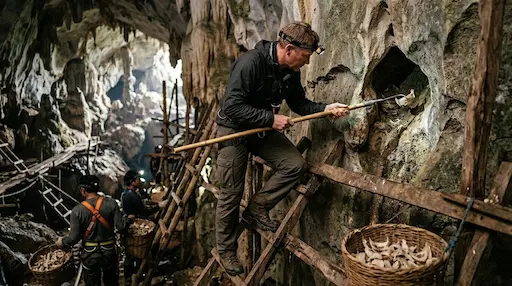
When Michelin-starred chef Gordon Ramsay traveled to Southeast Asia for his hit television series, fans expected high-intensity kitchen arguments and precise culinary critiques. However, nothing could prepare viewers for the staggering height and absolute danger when gordon-ramsay-harvests-birds-nests-from-a-cave-gordons-great-escape became an unforgettable reality in Malaysian Borneo. This breathtaking expedition revealed the incredible physical sacrifice behind one of the most expensive and exclusive ingredients in global gastronomy: edible bird’s nest soup.
Luxury food items often come with a hidden story of intense human labor and risk. While most diners enjoy their meals in pristine restaurants, the journey of edible bird’s nests begins in pitch-black, towering limestone chambers. Scaling these sheer subterranean drops requires nerves of steel and generations of local expertise. Let us explore the mechanics, the dangers, and the cultural legacy behind this extraordinary culinary tradition.
The Quest for Asia’s Most Elusive Culinary Luxury
Edible bird’s nests have commanded astronomical prices across international markets for centuries. Derived entirely from the hardened saliva of swiftlets, these nests are built deep within massive subterranean caverns. Because these natural limestone vaults feature vertical drop-offs and complex architectural overhangs, gathering the nests demands fearless climbers who scale rickety bamboo poles.
During his travels for Gordon’s Great Escape, Ramsay faced this perilous environment head-on. Rather than observing safely from the cavern floor, the world-renowned chef climbed high into the dark abyss. Consequently, he experienced firsthand the intense physical toll and absolute danger demanded by traditional harvesting methods.
“Scaling dark, vertical limestone cliffs to collect swiftlet nests is not just about culinary exploration; it is an incredible test of raw nerve, ancestral tradition, and physical endurance.”
Understanding the Mechanics of Swiftlet Nest Harvesting
Harvesting bird’s nests is a delicate science that balances ecological sustainability with commercial demand. Swiftlets build their nests using specialized salivary glands that harden rapidly upon exposure to air. Local harvesters must time their climbs with absolute precision to ensure the breeding cycle is complete before any nests are removed.
To put this intense process into perspective, let us examine how commercial harvesting compares to traditional cave gathering:
| Harvesting Method | Environment | Primary Risk Factor | Market Value Impact |
|---|---|---|---|
| Cave Harvesting | Wild limestone caverns | Extreme heights and total darkness | Extremely high due to rarity and severe labor |
| House Farming | Purpose-built swiftlet structures | Controlled acoustic and climate management | More accessible, standardized market pricing |
As a result of these divergent environments, wild cave nests remain deeply prized by connoisseurs who believe the unique cave minerals enhance the final flavor profile of the soup.
The Reality Behind Bird’s Nest Soup
Once gathered, the raw nests undergo an intensive cleaning process. Workers must meticulously pluck tiny feathers and debris using fine tweezers, a job that demands remarkable patience. When finally simmered into a rich broth, the dissolved saliva proteins create a gelatinous texture prized for its traditional health and wellness benefits.
Although Western audiences often find the concept unusual, Asian food culture embraces these functional ingredients. Ramsay himself had to navigate his initial skepticism, ultimately respecting the deep cultural heritage tied to the dish. For further reading on global culinary traditions, you can explore archival insights on Prime Video or check regional travel guides.
“Behind every bowl of luxury soup lies an arduous journey of human grit, breathtaking heights, and centuries-old harvesting traditions that few Western chefs ever witness.”
Conclusion and Next Steps
The moment when gordon-ramsay-harvests-birds-nests-from-a-cave-gordons-great-escape remains one of the most remarkable highlights of his global travels. It reminds food enthusiasts that gourmet dining often begins far away from pristine kitchen counters, rooted instead in extreme landscapes and brave local communities.
Are you ready to explore more extraordinary food stories from around the globe? Dive into our latest culinary features, share your thoughts in the comments, and join our newsletter for more behind-the-scenes deep dives!
Frequently Asked Questions
Where did Gordon Ramsay harvest bird’s nests?
Gordon Ramsay explored and climbed deep inside dark limestone caves located in Malaysian Borneo during his series Gordon’s Great Escape.
Why are edible bird’s nests so expensive?
These nests are made from swiftlet saliva and require dangerous climbs up rickety bamboo poles in vertical caves, followed by meticulous hand-cleaning.
What does bird’s nest soup taste like?
When prepared traditionally, the soup features a gelatinous, smooth texture and is often infused with rock sugar or chicken broth for flavor.