

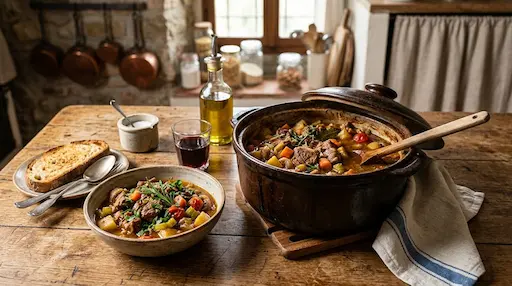
There is nothing quite like a steaming pot of gennaros-classic-italian-lamb-stew to transform an ordinary evening into a cozy Italian feast. Imagine tender chunks of lamb shoulder simmering slowly with sweet onions, aromatic herbs, and a splash of crisp white wine until the meat practically melts on your tongue. Developed by the legendary Chef Gennaro Contaldo, this rustic dish captures the absolute essence of Southern Italian home cooking. Whether you are planning a special family weekend dinner or craving deep, comforting flavors, this traditional recipe brings Mediterranean warmth straight to your dining table.
Traditional Italian stews are celebrated for their simplicity and reliance on high-quality, fresh ingredients. Instead of heavy chemical thickeners or complicated spice blends, this iconic recipe builds its rich, velvety sauce through patience and a few surprising flavor enhancers. Let us explore the secrets behind preparing this masterpiece, from selecting the ideal cuts of meat to mastering the precise cooking timeline.
The Philosophy Behind Authentic Italian Stewing
In Italy, stews like this are more than just a meal; they represent a deep cultural heritage rooted in resourcefulness and seasonal eating. Cuts like lamb shoulder or neck are traditionally used because they become wonderfully tender during long, gentle simmers. As the meat cooks, its natural collagen breaks down, enriching the broth without requiring flour or cornstarch.
Furthermore, Italian cooking relies heavily on the technique of *soffritto*—a slow-cooked base of onions, celery, and carrots. However, Chef Gennaro elevates this foundation by introducing an unexpected secret ingredient: anchovies. When melted down in warm olive oil, anchovies do not make the dish taste fishy. Instead, they provide a deep, savory umami backbone that elevates the natural gaminess of the lamb.
“Anchovies might seem like a surprising addition to a lamb dish, but instead of tasting fish, you simply get a deep, salty flavor which complements the lamb perfectly.” — Chef Gennaro Contaldo
Essential Ingredients for Your Kitchen
Gathering fresh, wholesome ingredients is the first step toward culinary success. Because this recipe uses a relatively short list of components, each item plays a critical role in the final flavor profile.
- Lamb Shoulder: Approximately 2 pounds cut into bite-sized, even chunks for uniform cooking.
- Extra Virgin Olive Oil: Use a high-quality oil to sauté the aromatics and finish the dish.
- Anchovy Fillets: 2 to 4 fillets that melt away during the initial sauté to build umami.
- Aromatics: Diced white onions, carrots, celery, and freshly sliced garlic cloves.
- Deglazing Liquids: One cup of dry white wine balanced with a splash of white wine vinegar.
- Tomatoes & Vegetables: Ripe plum or cherry tomatoes, cubed potatoes, and fresh green peas.
- Herbs & Seasoning: Fresh thyme sprigs, sea salt, freshly cracked black pepper, and chopped parsley.
Step-by-Step Cooking Method
Creating gennaros-classic-italian-lamb-stew requires patience, but the process itself is straightforward and deeply rewarding. Follow these steps carefully to achieve restaurant-quality results at home.
- Sealing the Meat: Heat olive oil in a heavy-bottomed Dutch oven over medium heat. Season your lamb chunks generously with salt and pepper, then brown them on all sides until golden. Remove the meat and set it aside.
- Building the Flavor Base: In the same pot with the rendered lamb fat, add the anchovy fillets, onions, celery, and carrots. Sauté gently until the vegetables soften and the anchovies dissolve completely. Stir in the garlic and fresh thyme for the final minute.
- Deglazing with Wine: Return the browned lamb to the pot. Pour in the dry white wine, allowing it to bubble and reduce by half, scraping up any delicious browned bits stuck to the bottom of the pan. Add a splash of white wine vinegar for a bright, tangy lift.
- The Slow Simmer: Add your chicken stock and plum tomatoes. Cover the pot with a lid, reduce the heat to low, and let the mixture simmer gently for about 35 to 40 minutes so the lamb becomes tender.
- Adding Potatoes and Peas: Toss in the cubed potatoes and fresh green peas. Continue cooking uncovered for another 20 to 25 minutes until the potatoes are fork-tender and the sauce has naturally thickened. Garnish with fresh parsley and a drizzle of extra virgin olive oil before serving.
Comparison of Traditional vs. Modern Stew Variations
While purists swear by the stovetop method, home cooks often adapt recipes to fit modern lifestyles. The table below compares traditional preparation with popular modern adjustments.
| Feature | Traditional Stovetop Method | Modern Pressure Cooker Method |
|---|---|---|
| Cooking Time | 1 hour 30 minutes to 2 hours | 30 minutes under pressure |
| Texture & Tenderizing | Gradual collagen breakdown; rich, reduced sauce | Rapid softening of meat and root vegetables |
| Flavor Depth | Exceptional caramelization from slow reduction | Good flavor concentration, though less surface reduction |
“Rustic stews are all about sharing, savoring, and enjoying that comforting taste that folks keep coming back for time and time again.” — Culinary Tradition Expert
Serving Suggestions and Accoutrements
A masterpiece like this deserves proper accompaniment to ensure no drop of sauce goes to waste. In many rural Italian households, this stew is served directly in shallow bowls alongside thick, crusty rustic bread. The bread acts as a sponge, soaking up the rich wine-and-tomato reduction.
Alternatively, you can serve the stew over a bed of creamy polenta or soft egg noodles. For professional culinary inspiration, you can review classic cooking techniques on Jamie Oliver or explore regional Italian gastronomy guides on Serious Eats.
Frequently Asked Questions (FAQs)
Can I substitute lamb shoulder with another cut of meat?
Yes, lamb neck slices or boneless leg of lamb work wonderfully as alternatives. However, shoulder remains the top choice because its fat content keeps the meat moist during long cooking times.
Why do the instructions include anchovies in a meat stew?
Anchovies melt completely during the sauté process and act as a natural flavor enhancer. They dissolve into an invisible umami boost that deepens the savory flavor profile without tasting fishy at all.
How should I store leftover lamb stew?
Allow the stew to cool completely, then transfer it to an airtight container. It will keep safely in the refrigerator for up to three days, and the flavors often taste even better the next day after melding together.
Conclusion
Mastering gennaros-classic-italian-lamb-stew allows you to bring authentic Italian warmth and craftsmanship into your home kitchen. By combining tender lamb, aromatic vegetables, and that signature touch of anchovy and white wine, you create a dish that nourishes both body and soul.
Ready to elevate your cooking skills? Gather your ingredients, fire up your Dutch oven tonight, and experience the timeless comfort of true Italian home cooking!