

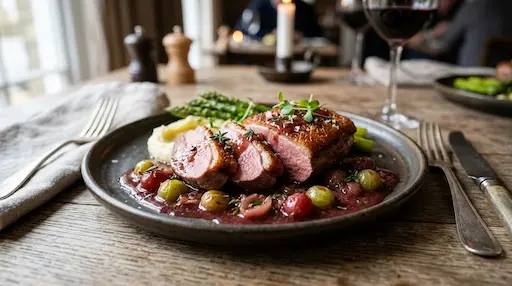
“Treat the duck skin with patience; a slow, cold-pan start is the absolute secret to rendering fat completely and achieving an incredible, shatteringly crisp crunch.” — Professional Culinary Standards Review
Once the fat renders out and the skin turns golden, flip the breasts and sear the flesh side briefly before transferring the skillet to a hot oven. This dual-cooking method guarantees precise temperature control, ensuring your duck remains medium-rare and tender.
| Sauce Component | Culinary Purpose | Pro Preparation Tip |
|---|---|---|
| Fresh Gooseberries | Provides vibrant acidity and tart contrast | Use a mix of firm and ripe berries for balanced sweetness |
| Red Wine Reduction | Adds deep aromatic notes and sophisticated color | Simmer slowly until alcohol completely evaporates |
| Shallots and Garlic | Builds an aromatic foundation for the sauce | Sauté gently in leftover duck fat for maximum depth |
Furthermore, balancing the tartness of the fruit with a small touch of honey or sugar ensures the sauce never overpowers the palate. This careful interplay between sweet, sour, and savory defines the very essence of modern British and French bistro cooking popularized by elite chefs.
- Preparation: Score the duck skin diagonally, season generously with flaky sea salt and freshly cracked black pepper, and bring the meat to room temperature.
- The Cold Pan Searing: Place breasts skin-side down in a cold skillet over medium heat, allowing the fat to render for approximately 8 to 10 minutes until golden and crisp.
- Oven Finishing: Flip the breasts, add a pat of butter and smashed garlic to the pan, and roast in a preheated oven at 200°C (400°F) for 4 to 6 minutes.
- Resting Period: Transfer the cooked duck to a warm cutting board and let it rest undisturbed for at least 5 to 7 minutes to redistribute the natural juices.
Meanwhile, utilize the remaining pan drippings to build your luscious gooseberry reduction. Sauté finely diced shallots, deglaze with a splash of quality red wine, toss in the fresh gooseberries, and let the mixture simmer until syrupy and rich.
“The difference between an amateur plate and a professional dish often rests in patience—giving your meat time to rest and your sauce time to reduce slowly.” — Restaurant Management Insights
By respecting these fundamental kitchen rules, you ensure that every component of your meal shines with exceptional texture, brilliant color, and unforgettable flavor.
Can I substitute frozen gooseberries if fresh ones are out of season?
Yes, frozen gooseberries work well in reductions, though you should thaw and drain them slightly before adding them to your red wine reduction to avoid excess liquid.
What internal temperature should duck breast reach for medium-rare?
For an optimal medium-rare texture, remove the duck from the oven when the internal temperature registers between 54°C to 57°C (130°F to 135°F) on a digital meat thermometer.
What side dishes pair best with this duck recipe?
Earthy sides such as creamed spinach, garlic potato mash, or roasted spring greens complement the rich duck meat and tart fruit sauce beautifully.
How do I store and reheat leftover duck breast?
Leftover duck is best stored in an airtight container in the refrigerator for up to two days. Reheat gently in a warm pan, though duck is always superior when enjoyed fresh.
Ready to take your culinary skills even further? Subscribe to our global foodie newsletter today for exclusive chef-tested recipes, seasonal produce guides, and professional technique masterclasses delivered straight to your inbox!