

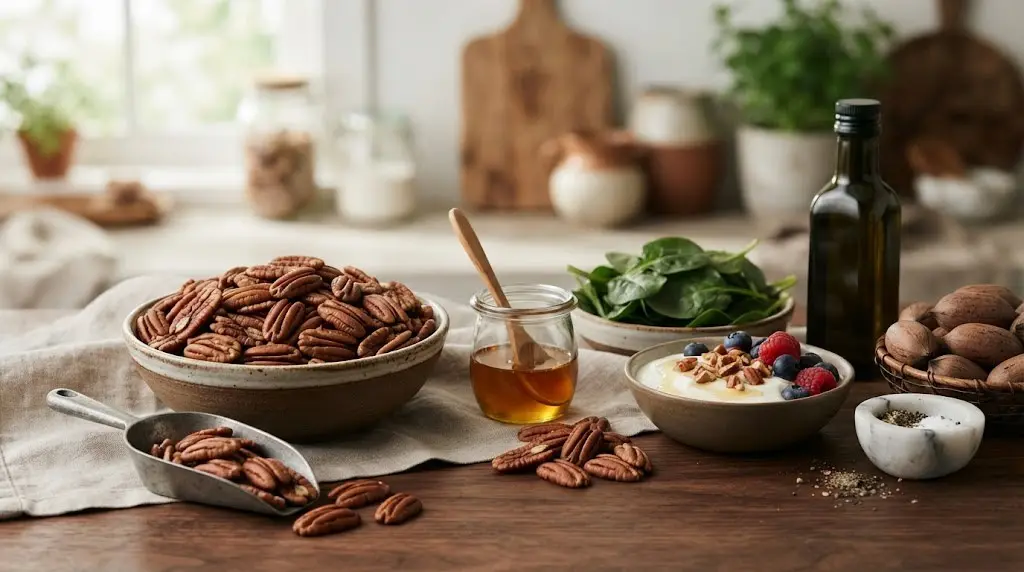
When you think of a healthy snack, do you immediately picture a crunchy, buttery pecan? If not, you might be missing out on one of nature’s most potent superfoods. The benefits of pecan consumption extend far beyond their delicious flavor in holiday pies. Recent scientific reviews from 2026 have solidified these nuts as a powerhouse for cardiovascular wellness, metabolic health, and antioxidant defense.
Whether you are looking to improve your heart health or simply want a satisfying snack that keeps you full, pecans offer a unique nutritional profile. In this article, we explore the latest research on why adding a handful of these nuts to your routine could be one of the smartest dietary decisions you make this year.
Understanding the Nutritional Profile of Pecans
Before diving into specific health outcomes, it helps to understand what is inside a standard serving. A single one-ounce serving—roughly 20 halves—is packed with essential nutrients that support various bodily functions. Unlike processed snacks that offer empty calories, pecans provide a high-quality mix of healthy fats, fiber, and plant-based protein.
According to current nutritional data, a one-ounce serving contains approximately 196 calories. However, these are “nutrient-dense” calories. You gain access to over 19 different vitamins and minerals, including vitamin E, potassium, and zinc. Most importantly, nearly 60 percent of the fats in pecans are monounsaturated, which are widely recognized for their heart-healthy properties.
| Nutrient | Amount per 1oz Serving |
|---|---|
| Calories | 196 kcal |
| Total Fat | 20.4g |
| Dietary Fiber | 2.7g |
| Protein | 2.6g |
| Cholesterol | 0mg |
Pecans and Cardiovascular Wellness
The most compelling benefits of pecan intake lie in the realm of heart health. A comprehensive 2026 review published in Nutrients synthesized over two decades of research, confirming that regular consumption of pecans can significantly improve blood lipid profiles. When included as part of a balanced diet, they help lower “bad” LDL cholesterol and triglycerides.
“Across the human studies evaluated in the review, regular pecan consumption was associated with improvements in total cholesterol, LDL cholesterol, and triglycerides when included as part of a healthy eating pattern.”
Why does this happen? The secret lies in the synergy of their bioactive compounds. The combination of unsaturated fats, polyphenols, and vitamin E works to reduce oxidative stress in the arteries. By preventing the oxidation of LDL cholesterol, pecans help maintain healthy blood vessels and support overall cardiovascular function.
Antioxidant Powerhouse: The Research Perspective
If you are searching for the nut with the highest antioxidant capacity, your search ends with the pecan. Research conducted by the USDA Arkansas Children’s Nutrition Center found that pecans rank number one among all nuts in terms of antioxidant content. These substances are critical because they protect your cells from the “rusting” process caused by free radicals.
Antioxidants are linked to a lower risk of chronic diseases, including certain types of cancer and neurodegenerative conditions. Specifically, pecans are rich in gamma-tocopherol, a form of vitamin E that has been shown to bolster the body’s natural defenses. By regularly consuming these antioxidants, you are providing your body with the tools it needs to fight inflammation at a cellular level.
Weight Management and Satiety
One of the common myths about nuts is that their calorie density leads to weight gain. However, the latest findings suggest the exact opposite. Because pecans are rich in protein, healthy fats, and fiber, they are incredibly satiating. When you swap a processed, low-fiber snack for a handful of pecans, you stay fuller for longer.
“Research shows that replacing snacks with pecans can improve overall diet quality without causing weight gain. In fact, adults who added pecans to their daily diet showed better appetite control and maintained their weight.”
This “satiety advantage” means you are less likely to overeat later in the day. Furthermore, observational studies indicate that frequent nut eaters tend to have lower body weights and smaller waistlines compared to those who rarely consume them. As a result, incorporating a measured, one-ounce portion into your daily routine is an effective way to manage your hunger hormones.
Are Pecans Good for Brain Health?
Beyond the heart and waistline, emerging research is beginning to look at the link between pecans and cognitive function. Given the high polyphenol content, some experts believe that pecans may play a role in protecting the nervous system. While human clinical trials are ongoing, early animal studies suggest that the nutrients found in pecans may help delay the progression of age-related cellular degeneration.
This “brain-protective” potential makes them an excellent addition to the diet for aging adults. When you combine their heart-health benefits with potential neurological support, it is clear that these nuts offer a comprehensive approach to long-term wellness.
How to Incorporate Pecans into Your Daily Diet
Enjoying the benefits of pecan nutrition does not require complex recipes. The simplest way to start is by replacing empty-calorie snacks with a plain, raw, or dry-roasted portion of pecans. Here are a few practical ways to boost your intake:
- Sprinkle them over your morning oatmeal or yogurt for a boost of fiber.
- Use crushed pecans as a healthy, gluten-free crust for baked chicken or fish.
- Add them to your salads to provide a satisfying crunch that replaces cheese or croutons.
- Stir them into your favorite grain bowls or roasted vegetable medleys.
Remember to keep an eye on portion sizes. Because they are nutrient-dense, you only need about an ounce—or 20 halves—to reap the rewards. Furthermore, try to avoid versions heavily coated in sugars, salts, or oils, as these additions can detract from the natural nutritional profile.
Frequently Asked Questions
How many pecans should I eat a day for health benefits?
Research typically points to a one-ounce serving, which is roughly 20 halves, as the optimal daily amount to experience improvements in heart health and cholesterol levels without exceeding your daily calorie requirements.
Do pecans cause weight gain?
No, clinical studies show that pecans support satiety and appetite control. When eaten in moderation as a substitute for less healthy snacks, they are associated with stable weight maintenance rather than weight gain.
Are raw pecans better than roasted ones?
Both are healthy, but raw or dry-roasted pecans are preferred because they avoid the excess sodium and refined oils often found in processed or honey-roasted varieties.
Can pecans help lower cholesterol?
Yes. Multiple studies have shown that the unsaturated fats and polyphenols in pecans help lower “bad” LDL cholesterol and improve overall blood lipid metabolism.
Conclusion
The science is clear: the benefits of pecan consumption are vast, ranging from improved heart health to superior antioxidant capacity. By integrating this native American nut into your diet, you are not just choosing a snack—you are investing in your long-term cardiometabolic well-being. Whether you are looking to manage your weight or simply want to optimize your nutrient intake, pecans are a simple, delicious, and highly effective solution.
Ready to upgrade your snacking habits? Start by grabbing a small bag of raw, unsalted pecans today. Try adding them to your next meal or keeping them handy for a mid-afternoon boost. Your heart and your health will thank you for it!