

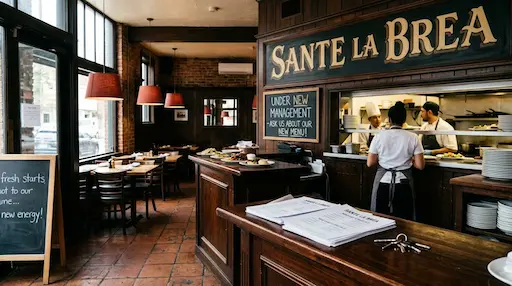
When reality television collides with the unforgiving realities of the Los Angeles restaurant scene, dramatic fireworks are inevitable. Among the most talked-about episodes in Gordon Ramsay’s hit series is the intense saga of Sante La Brea, a vegetarian eatery that struggled with management chaos, mounting debt, and family friction. For years, dedicated fans have whispered about the shock-change-in-ownership-at-sante-le-brea-kitchen-nightmares-revisited story arc and what truly transpired after the cameras stopped rolling.
Navigating the cutthroat culinary landscape of Southern California is no small feat for any independent business owner. However, when internal dysfunction, passive leadership, and plummeting food quality collide, even the most promising venues face rapid ruin. Therefore, examining this classic case study gives us a fascinating look into how restaurant leadership, or the complete lack thereof, seals a venue’s ultimate fate.
Unpacking the Chaos: The Pre-Ramsay State of Sante La Brea
Before any conversation about restructuring or leadership shifts can take place, we must examine the precarious state of the restaurant during its infamous 2008 appearance on Season 2 of Kitchen Nightmares. Owned by Dean Hamoui, alongside his sons Arthur and Sammy acting as front-of-house servers, the establishment was drowning in approximately $200,000 of debt. Furthermore, an eccentric manager named Mark and a chronically late chef named Aurelio added fuel to an already volatile fire.
Dean came across as a well-meaning father trapped in a nightmare of his own making. Because he struggled to confront his staff and enforce basic accountability, expenses mounted while customer satisfaction plummeted. Patrons routinely complained about bizarre menu items like “fake duck” and “unfish,” while back-of-house hygiene conditions deteriorated to alarming levels. Consequently, the establishment stood on the brink of complete bankruptcy before Ramsay even stepped through the door.
“The primary challenge in struggling eateries is rarely just the food; it is an absolute vacuum of accountability at the top where owners refuse to take charge.” — Restaurant Industry Analyst Report
Let us explore how these deep-seated operational flaws necessitated a dramatic intervention and why leadership stability remains the ultimate anchor for any dining establishment.
Gordon Ramsay’s Intervention and the Rocky Relaunch
When Gordon Ramsay arrived at the Los Angeles location, he immediately identified that Dean’s inability to manage his team was destroying the business. The chef was hours late, the host was more focused on interior aesthetics than service, and the owner was emotionally paralyzed by debt and family dynamics. Ramsay famously ordered a deep clean of the facility, replacing the failing health inspection grade with a warning until standards drastically improved.
In addition to revamping the menu to highlight fresh, vibrant vegetarian dishes, Ramsay forced Dean to confront his employees directly. Though explosive arguments erupted—including Chef Aurelio walking out mid-service only to return shortly after—the relaunch night showed a temporary glimmer of hope. However, real-world longevity requires far more than a single week of television makeover magic.
To better understand the trajectory of restaurants featured on the show, let us review a comparative breakdown of common pitfalls faced by struggling independent eateries:
| Operational Area | Pre-Intervention Status | Post-Intervention Goal | Long-Term Impact |
|---|---|---|---|
| Leadership & Management | Passive owner avoiding conflict | Firm, decisive executive control | Essential for staff retention |
| Menu Quality | Pre-packaged “fake” ingredients | Fresh, locally sourced dishes | Boosts customer repeat rate |
| Financial Oversight | Mounting $200k+ debt | Strict inventory and cost control | Prevents sudden bankruptcy |
The Untold Story Behind the Ownership Transition
Despite the emotional embrace between Dean and Ramsay at the end of the episode, sustaining momentum proved exceptionally difficult. Transitioning a failing business model requires unwavering discipline, consistent cash flow, and often a structural ownership shift or heavy financial recapitalization. When Ramsay returned for a follow-up visit in Season 3 (Episode 10, which aired in April 2010), viewers witnessed a dramatic shift.
During this revisit, it was revealed that Dean had officially retired from the business and passed operations entirely to his sons, Arthur and Sammy, while moving back to his home country of Syria. Furthermore, the toxic original management and delinquent chef were long gone, replaced by new leadership including Sammy’s partner Dawn. For a brief period, the brothers reported that business had noticeably increased, highlighted by customer favorites like the “Unchicken” dish.
“A television makeover can fix a dining room’s aesthetic in 48 hours, but resetting years of deeply ingrained financial habits and operational dysfunction takes years of ruthless dedication.” — Hospitality Management Review
Operating a high-end health food restaurant on La Brea Avenue demanded steep overhead costs. Rent, wages, and vendor supplies put relentless pressure on a business that was already starting from a massive historical deficit.
The Final Chapter: Permanent Closure and Legacy
Ultimately, despite the positive progress under the sons’ management and a respectable 4-star average rating on Yelp, Sante La Brea closed its doors permanently in June 2011, roughly three years after its televised rescue. The brothers ultimately decided to step away, leading to a property sale that transitioned the historic location into a popular German restaurant named Wirsthaus.
For aspiring entrepreneurs, the saga remains a powerful cautionary tale. Passion and good intentions are admirable traits, but without strict financial acumen, bulletproof systems, and operational adaptability, even unique culinary concepts will struggle to survive in major metropolitan markets.
Frequently Asked Questions
What was Sante La Brea?
Sante La Brea was a vegetarian and vegan restaurant located in Los Angeles, California, which gained widespread fame after being featured on Season 2 of Gordon Ramsay’s Kitchen Nightmares.
Did Sante La Brea experience a true ownership change?
Yes. While the initial episode focused on forcing original owner Dean to take control, he officially retired and passed full ownership and operations to his sons, Arthur and Sammy, prior to the Season 3 revisit.
Why did Sante La Brea ultimately close down?
Despite increased customer traffic and positive reviews following the family management transition, the high operating overhead in Los Angeles, long-standing debt, and owner burnout led to its permanent closure in June 2011.
When did the Sante La Brea Kitchen Nightmares episode air?
The original episode aired in November 2008 as part of Season 2 of the popular FOX reality television series, followed by a revisit episode in April 2010.
Conclusion and Next Steps
The journey of Sante La Brea demonstrates that while television interventions can provide a temporary spark, long-term restaurant survival depends entirely on relentless operational discipline and financial foresight. If you are fascinated by business turnaround strategies or want to explore more post-show updates from classic restaurant makeovers, browse our archives today or subscribe to our newsletter for weekly industry deep-dives.