

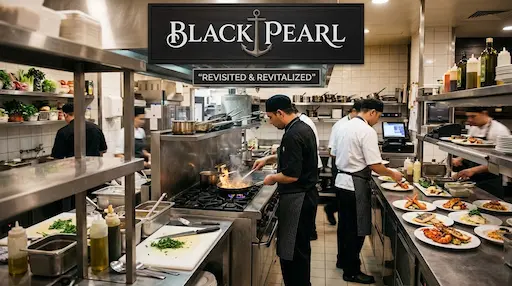
When Gordon Ramsay stepped into Midtown Manhattan’s seafood restaurant, he had no idea he was walking onto a sinking ship. The infamous episode featuring the ramsay-back-at-black-pearl-kitchen-nightmares-revisited storyline remains one of the most explosive chapters in reality television history. However, behind the dramatic editing and fiery shouting matches lay a grim business reality that ultimately led to a spectacular failure.
Operating a restaurant in New York City is notoriously difficult. Therefore, when three co-owners—David, Brian, and Greg—found themselves drowning in a quarter-million dollars of debt, they turned to reality television as a last-ditch lifeline. Unfortunately, as history would prove, television exposure cannot fix deep-seated management dysfunction.
A Rudderless Ship: Diagnosing the Chaos at Black Pearl
Right from the start, Ramsay identified major systemic flaws within the establishment. Unlike successful kitchens that thrive on unified leadership, the Black Pearl suffered from severe managerial fragmentation. None of the three owners ever seemed to be present at the same time, leading to total operational confusion.
Furthermore, the food quality was entirely subpar. When Ramsay ordered dishes like mussels Bangkok and lobster mac and cheese, he discovered glaring culinary errors. For instance, the seafood chowder tasted watery, while other dishes lacked basic seasoning and balance. In addition, customer service was atrocious; one co-owner even argued aggressively with a diner who complained about sandy mussels.
“You’re so full of s— that you should be a politician.” — Gordon Ramsay, evaluating the fractured leadership structure at the Black Pearl.
The Overhaul: Menu Redesigns and Marketing Stunts
True to form, Ramsay attempted to salvage the restaurant by implementing drastic changes. He streamlined the seafood menu to focus on fresh, crisp flavors and appointed Greg as the new general manager to restore order. In addition, to drive foot traffic in competitive Midtown Manhattan, the crew deployed a marketing gimmick featuring a performer in a bright red lobster suit named Louis.
Despite these interventions, internal resentment festered. The owners clashed over every single creative direction. While Greg attempted to embrace the professional structure, David openly mocked the process and resisted accountability. Consequently, the temporary boost from filming failed to translate into long-term operational stability.
Comparing the Numbers: The Downward Spiral
To understand why the restaurant ultimately collapsed, we can examine the financial pressure points facing the business during and after production:
| Metric / Factor | Pre-Intervention Status | Post-Filming Reality |
|---|---|---|
| Accumulated Debt | Over $250,000 in losses | Mounting unpaid lease and vendor bills |
| Management Structure | Three disconnected owners | Greg installed as GM amidst heavy friction |
| Operational Lifespan | Struggling to survive | Closed permanently shortly after air date |
As illustrated in the data above, structural debt and interpersonal conflict created an impossible environment for recovery. Even expert guidance could not bridge the chasm between the partners.
The Explosive Aftermath and Closure
The aftermath of the episode is where the narrative takes a truly bitter turn. The Black Pearl permanently closed its doors just months after filming wrapped—and a mere four days after the episode actually aired on television. As a result, fans often wonder if a proper follow-up revisit ever took place.
Rather than accepting responsibility, the owners published a scathing open letter blaming Ramsay entirely for their demise. They claimed that his menu changes alienated regular patrons and triggered a fifty percent drop in revenue. Furthermore, they criticized the network’s production timeline, arguing that the delayed broadcast sealed their financial fate. You can read more about reality television restaurant outcomes on Gordon Ramsay Restaurants or explore comprehensive archival write-ups on Reality TV Updates.
“The sad fact is, from the beginning, it was clear that the show was a joke… We were never able to recover financially.” — Co-owners’ official closing statement.
Where Are They Now?
Decades after the cameras stopped rolling, the individuals involved have moved on to vastly different paths. Greg transitioned into successful general management roles at prominent New York dining institutions like Hakkasan. Meanwhile, Steven, the memorable waiter who served Ramsay during the episode, successfully pivoted into the film and casting industry in Los Angeles.
Ultimately, the saga of the Black Pearl stands as a cautionary tale. While reality television thrives on dramatic confrontations, sustainable restaurant success requires genuine teamwork, financial discipline, and mutual respect.
Frequently Asked Questions
Did Gordon Ramsay ever officially revisit the Black Pearl?
No traditional revisit episode occurred because the restaurant closed permanently shortly after the original episode aired.
How long did the Black Pearl stay open after filming?
The restaurant managed to stay open for roughly three and a half months after production wrapped before folding completely.
What is the old Black Pearl location used for today?
The original Midtown Manhattan space has since been occupied by other successful ventures, most notably The Flatiron Room.
Conclusion
The story of the Black Pearl remains one of the most fascinating failures in culinary television history. Although the partnership disintegrated and the restaurant shut its doors, the episode offers timeless lessons about leadership and accountability in the hospitality industry.
Are you fascinated by behind-the-scenes restaurant transformations? Subscribe to our newsletter today for more exclusive updates and deep dives into your favorite culinary shows!