

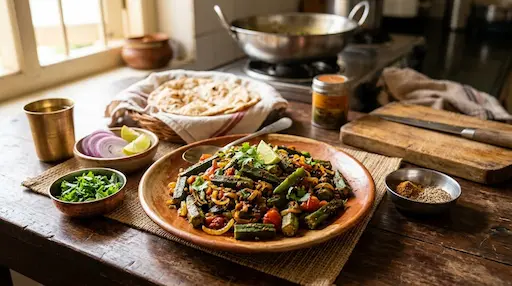
Home cooks often struggle with okra because excess moisture turns the vegetable into a sticky paste. However, renowned culinary expert Chef Shireen Anwar solves this common kitchen dilemma through precise pre-frying techniques and bold spice blending. Consequently, your finished dish achieves optimal texture while absorbing rich regional flavors.
In addition, her choice of pantry staples creates a deeply comforting flavor profile that pairs effortlessly with hot chapatis or ghee-laden parathas. Each spice ingredient plays a distinct chemical and sensory role, ensuring that your palate experiences savory, tangy, and earthy notes in every single bite.
“Mastering traditional vegetable dishes requires respecting each ingredient’s unique moisture content and timing the spice addition to perfection.” — Culinary Insights
Each component contributes structurally to the final dish. Therefore, never skip drying your okra completely after washing, as surface moisture is the primary culprit behind a soggy preparation.
| Performance Metric | Flash-Fried Masala Style | Water-Boiled Stew Style |
|---|---|---|
| Textural Integrity | Firm, non-slimy, distinct pieces | Soft, highly viscous, mushy |
| Flavor Retention | High absorption of toasted spices | Diluted flavor profile |
| Visual Appeal | Vibrant green with rich red masala | Dull olive-green appearance |
As demonstrated in the comparison table, flash-frying the okra preserves its natural bite while allowing the rich tomato masala to coat the exterior evenly.
Following these sequential steps guarantees a fragrant, non-soggy dish with separated pieces and robust flavor. Patience during the simmering phase makes all the difference.
“Allowing the finished curry to rest on dum for ten minutes locks in the aroma of fresh green chilies and fried onions.” — Master Chef Tip
Additionally, avoid covering the pan while initially frying the raw okra, as trapping steam during the early stage causes unwanted sliminess. Uncovered high-heat searing is your absolute best defense against stickiness.
Finally, let your finished wok rest for five minutes off the heat before serving. This brief resting period allows residual steam to distribute the seasoning evenly across every single piece.
How do I prevent my okra from becoming slimy while cooking?
Always wash and dry your okra completely before cutting, and fry it uncovered in hot oil until the surface stickiness disappears.
Can I substitute lemon juice for tomatoes in this recipe?
While tomatoes form the core gravy base, a dash of lemon juice can be added at the end for an extra tangy kick.
What is the best accompaniment for this Punjabi okra dish?
This dish pairs exceptionally well with hot wheat rotis, buttered naans, or traditional parathas.
Why is resting the dish on dum important at the end?
Resting on dum allows the fried okra to absorb the tomato masala and green chili aromas without losing its structural crunch.