

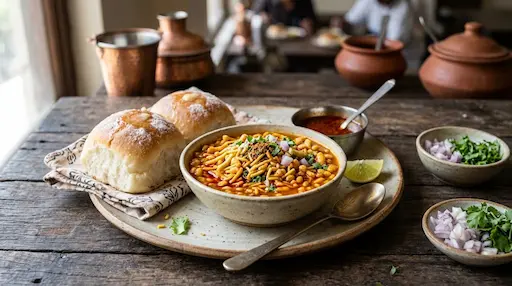
If you crave a flavor-packed, fiery culinary experience, authentic misal-pav-maharastrian-misal-pav-by-tarla-dalal style is the ultimate comfort street food to conquer. Originating from the vibrant heart of Maharashtra, this iconic dish brings together sprouted moth beans, a blazing hot curry known as tarri or kat, and crisp, crunchy farsan served with soft, buttery pav bread. Whether you choose the intense spice of Kolhapuri styles or the balanced, tangy warmth popularized by culinary legends like Tarla Dalal, mastering this dish at home is an absolute game-changer for your weekend menu.
The Rich History and Cultural Heritage of Misal Pav
Misal translates directly to “mixture” in Marathi, perfectly describing the magnificent amalgamation of textures and flavors in every single bite. Historically, this dish emerged a century ago as a cheap, highly nutritious, and energizing meal for hardworking laborers, farmers, and mill workers across rural Maharashtra. Because moth beans (matki) are packed with protein and easy to sprout, they provided sustainable, long-lasting energy for grueling physical work.
Over the decades, this humble rural breakfast transformed into a beloved urban street food staple across Mumbai, Pune, and beyond. In fact, its global appeal was cemented when it ranked among the top traditional breakfasts worldwide, celebrated for its complex spice profile and unique multi-layered assembly.
“Misal pav is not just a breakfast dish; it is a cultural celebration of texture, fiery spice, and resourceful home cooking that unites communities across Maharashtra.” — Culinary Heritage Insights
Understanding the Essential Anatomy of Misal Pav
To recreate a restaurant-grade dish at home, you must understand its distinct components. Each element plays a crucial role in creating the signature harmony of crunch, heat, tang, and softness.
- Usal: The core base made from boiled and lightly spiced sprouted moth beans (matki) or mixed sprouts.
- Tarri or Kat: The fiery, oil-floating spicy red gravy that gives the dish its legendary kick and rich color.
- Farsan / Chivda: A generous handful of crunchy fried savory snacks added right before serving to provide textural contrast.
- Accompaniments: Finely chopped raw onions, fresh coriander leaves, lemon wedges, and sometimes cooling curds or yogurt to balance the heat.
- Pav: Soft, pillowy white or ladi bread buttered and toasted on a hot griddle.
Comparison of Regional Misal Styles
While the core ingredients remain similar, different regions in Maharashtra boast unique interpretations of this iconic recipe. Reviewing these regional differences helps you customize your home cooking.
| Region | Spice Level | Key Characteristics & Garnishes |
|---|---|---|
| Kolhapuri Misal | Very High / Fiery | Uses a robust, onion-coconut-garlic-heavy masala with deep red Bedgi chili oil floating on top. |
| Puneri Misal | Mild to Moderate | Often incorporates a tangy, slightly sweet jaggery-tamarind twist, paired with boiled potato cubes and yogurt. |
| Mumbai Street Style | Moderate | Balanced heat, loaded with crunchy farsan, extra raw onions, and served with buttery soft pav. |
For more inspiration on regional Indian street foods, you can explore the Tarla Dalal Official Recipe Portal to discover classic vegetarian snack ideas.
Step-by-Step Guide to Making Authentic Misal Pav
Creating this masterpiece involves two main preparation phases: making the aromatic spice paste (watana/gravy base) and assembling the final dish.
1. Crafting the Aromatic Spice Paste (Tarri Base)
The secret to a great tarri lies in roasting the dry coconut and whole spices until they release their natural aromatic oils. Heat a tablespoon of oil in a pan, sauté chopped onions until golden brown, and add ginger, garlic, and grated dry coconut until deeply browned.
Allow this mixture to cool completely before blending it into a smooth paste. This paste is divided: a small portion is used to flavor the usal, while the rest forms the base of your spicy tarri gravy.
2. Cooking the Sprouted Usal
In a pressure cooker or heavy-bottomed pot, temper mustard seeds and asafoetida in hot oil. Add curry leaves, chopped onions, and a spoonful of your reserved spice paste. Toss in the clean sprouted moth beans along with turmeric, red chili powder, and salt. Pressure cook for two whistles so the beans remain tender yet hold their shape.
“Always ensure your sprouted beans are fresh and soaked properly. Overcooking them will destroy the structural integrity required for a satisfying misal bowl.” — Professional Kitchen Notes
Expert Tips for Perfecting Your Dish
Achieving the perfect balance of flavor requires attention to detail. Follow these professional tips to elevate your cooking:
- Choose the Right Chilies: Use Kashmiri or Bedgi chili powder to get that vibrant, restaurant-style crimson red color without overwhelming your palate with unbearable heat.
- Control the Oil Float: The floating oil layer (tarri) is traditional, but you can easily adjust the quantity to suit your dietary preferences while maintaining authentic flavor.
- Serve Immediately: Always add the crunchy farsan at the very last second before serving, otherwise, the crispy snacks will become soggy in the hot gravy.
Frequently Asked Questions
Can I use moong bean sprouts instead of moth beans (matki)?
Yes, green gram or moong bean sprouts make an excellent alternative if moth beans are unavailable, though traditional Maharashtrian misal relies heavily on matki for its earthy flavor.
What is Goda Masala and can I substitute it?
Goda masala is a traditional Maharashtrian spice blend containing roasted spices, coconut, and sesame seeds. If you cannot find it, you can substitute it with standard garam masala mixed with a pinch of desiccated coconut.
How do I make the dish less spicy?
You can reduce the amount of chili powder, omit extra red chili paste in the tarri, and serve the dish with a generous side of beaten cool yogurt to cut through the heat.
Conclusion and Call to Action
Bringing the authentic, robust flavors of Maharashtrian street food into your own kitchen is a deeply rewarding culinary adventure. By balancing the fiery spice of the tarri with protein-packed sprouts and crunchy toppings, you create an unforgettable dining experience for family and friends.
Ready to get cooking? Gather your spices, sprout your beans today, and let us know how your homemade misal pav turns out in the comments below!