

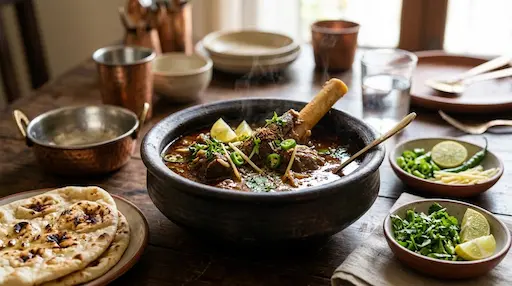
There is something magical about the crisp winter mornings in Awadh, especially when the air carries the rich, earthy aroma of simmering spices and tender marrow bones. If you have ever wanted to recreate that royal magic in your own kitchen, mastering the lucknow-special-nihari-recipe-नल्ली-निहारी-ranveer-brar is your ultimate culinary gateway. Traditionally cooked overnight as a humble breakfast stew for laborers before evolving into a delicacy of the Nawabs, authentic Nihari relies on patience, precise spice blending, and slow-cooked mutton shanks (nalli) that melt on your tongue.
The Royal Heritage and Evolution of Awadhi Nihari
Historically, Nihari originated in the grand kitchens of Old Delhi and Lucknow during the late 18th century, transitioning from a breakfast staple into a celebratory feast. According to historical culinary notes from Chef Ranveer Brar’s official culinary archives, the dish was originally designed to provide workers with sustained energy throughout the day. However, the royal khansamas of Awadh refined the technique, replacing coarse elements with a delicate balance of aromatic roots, flower petals, and slow-rendered marrow.
Furthermore, the term “Nihari” stems from the Arabic word “Nahar,” meaning morning. Eating this slow-cooked stew at dawn became a ritual among nobility and commoners alike. As a result, the dish developed a distinct regional character in Uttar Pradesh, setting it apart from its Hyderabadi or Kolkata counterparts through its unique inclusion of fragrant kewra water and a specialized spice blend.
“Winters bring back memories of winter special food in Lucknow, especially Nahari, slow-cooked overnight allowing the meat to fall off the bone.” — Chef Ranveer Brar
Breaking Down the Secret Nihari Masala Blend
The soul of any authentic Lucknowi stew lies entirely in its spice mix. Unlike standard curry powders, a genuine Nihari masala incorporates rare botanical roots and aromatic flowers that impart a distinct, complex fragrance. When preparing this dish, getting the spice ratio right ensures your gravy achieves depth without bitterness.
To prepare your bespoke Nihari masala, you will need a precise combination of whole spices. You can easily source these components from traditional spice merchants:
- Green Cardamom and Mace: Provide an essential sweet and pungent floral top note.
- All Spice (Kabab Cheeni) and Long Pepper (Peepli): Add a warm, throat-warming kick unique to Awadhi cooking.
- Stone Flower (Pathar Ka Phool) and Shahi Jeera: Contribute an earthy, forest-floor aroma.
- Dried Galangal (Pan ki Jad) and Vetiver Roots (Khus ki Jad): Deliver rare woody undertones characteristic of authentic Lucknow preparations.
- Cinnamon and Black Peppercorns: Balance the heavy richness of the meat with sharp warmth.
- Dried Rose Petals: Soften the robust spices with a subtle floral sweetness.
Step-by-Step Cooking Technique for Nalli Nihari
Cooking this masterpiece requires approximately 15 minutes of preparation and about 1.5 hours of active simmering time. By following a strict sequence, you ensure that every cut of mutton retains its moisture while enriching the broth.
- Smoked Oil Base: Heat mustard oil in a deep non-stick handi until it reaches its smoking point, then temper with bay leaves, cloves, and black cardamom.
- Roasting the Meat: Add sliced onions and sauté until golden brown. Introduce the lamb shanks (nalli), salt, and fresh garlic juice, roasting them thoroughly to lock in juices.
- Curd and Spice Incorporation: Whisk red chili powder, turmeric, and coriander powder into fresh yogurt. Pour this mixture into the handi along with necessary water, covering tightly to simmer on low flame.
- The Wheat Flour Slurry: Mix wheat flour with prepared Nihari masala, black pepper, and kewra water. Stir this slurry into the simmering pot to achieve a glossy, velvety thickness.
Nutritional Comparison of Traditional Stews
When evaluated against modern quick-fix curries, slow-cooked bone broths offer distinct nutritional profiles. Review the structured breakdown below to understand how traditional Nalli Nihari compares to other regional preparations.
| Dish Variety | Primary Cooking Fat | Key Thickener | Nutritional Focus |
|---|---|---|---|
| Lucknowi Nalli Nihari | Mustard Oil & Ghee (Tira) | Wheat Flour Slurry | Collagen-rich bone marrow and warming spices |
| Standard Mutton Curry | Refined Vegetable Oil | Onion-Tomato Paste | General protein source with minimal connective tissue |
| Hyderabadi Haleem | Pure Ghee | Broken Wheat & Lentils | Heavy fiber, high calorie density, grain-heavy |
To explore more heritage recipes and authentic cooking guidelines from Uttar Pradesh, you can visit resources like Tarla Dalal Recipe Portal for additional culinary inspiration.
“One of the ultimate comfort foods that warms you from the inside out, perfected with the skimming of Tira and fresh Khamiri Roti.” — Culinary Expert Review
Frequently Asked Questions
Can I use boneless mutton instead of traditional nalli shanks?
While you can use boneless cuts, traditional Nalli Nihari relies heavily on the bone marrow (nalli) to melt into the gravy and give the stew its signature glossy texture.
What is Tira and why is it added at the end?
Tira is the crimson-hued spiced oil layer that separates during cooking. Chefs skim it off before thickening the gravy and pour it back over the dish right before serving to maintain a brilliant sheen.
How should Lucknowi Nihari be served for an authentic meal?
It is traditionally served piping hot alongside freshly baked Khamiri Roti, garnished with julienned ginger, chopped coriander, fresh mint, and lemon wedges.
Can I prepare the Nihari masala in advance?
Yes, you can dry-roast and grind the specialty roots, flowers, and whole spices in large batches, storing them in an airtight glass jar for up to three months.
Conclusion and Final Serving Advice
Mastering this royal stew proves that patience remains the ultimate ingredient in traditional Indian gastronomy. By honoring the slow-cooking process and balancing rare roots with tender mutton shanks, you bring centuries of Awadhi heritage straight to your dining table. Are you ready to impress your family with this restaurant-quality masterpiece? Gather your ingredients, fire up your stove, and recreate this legendary dish tonight!