

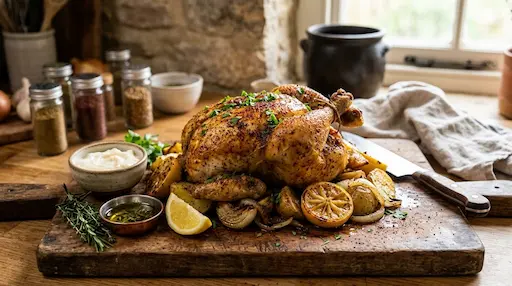
Middle Eastern cuisine relies heavily on spices like cumin, coriander, and sumac to build complex layers of flavor. Therefore, mastering this specific preparation allows home cooks to experience authentic street food vibes without leaving the kitchen. Let us explore the core ingredients, expert techniques, and insider secrets behind this viral dish.
The Anatomy of Flavor: What Makes This Recipe Special
Understanding the flavor profile helps you execute the recipe with total confidence. The combination of warm cumin, zesty lemon, and fresh tarragon creates a magnificent contrast against the savory chicken juices. As a result, every single bite offers a brilliant balance of tanginess, spice, and comforting warmth.
Furthermore, professional chefs prioritize textural diversity on every plate. The tender, roasted poultry pairs effortlessly with fluffy couscous and creamy chickpeas. Consequently, your palate experiences a masterclass in modern comfort food.
“Bold spices and fresh citrus elevate a standard roast bird into an extraordinary culinary experience.” — Mediterranean Culinary Review
| Ingredient Component | Preparation Method | Role in the Dish |
|---|---|---|
| Whole Chicken (1.6 kg) | Seasoned, roasted with olive oil and spices | Provides succulent, tender protein with a crisp skin |
| Couscous & Chickpeas | Rehydrated with stock, mixed with fresh herbs | Acts as an aromatic, protein-rich bed for the chicken |
| Fresh Herbs (Tarragon & Coriander) | Finely chopped and folded into grains | Delivers a vibrant, fresh green punch |
| Lemon & Sumac | Squeezed and dusted over the final dish | Cuts through the richness with bright acidity |
As illustrated in the breakdown table, every element plays a precise role. Moreover, sourcing fresh ingredients ensures that your final dinner tastes authentic and vibrant.
Step-by-Step Cooking Instructions
Execution is everything when working with poultry. To achieve that signature golden skin without drying out the meat, follow these precise steps inspired by professional techniques found across the Jamie Oliver Food Tube Archives.
First, preheat your oven and prepare your 1.6-kilo chicken. Rub the bird generously with olive oil, salt, pepper, and a good punch of dried cumin and coriander. Next, roast the chicken until the skin turns golden and the juices run clear, allowing the aromatic fats to render naturally.
While the chicken roasts, prepare your couscous base. Pour hot chicken stock over the grains, cover, and let them fluff up nicely. Stir in drained chickpeas, finely chopped fresh tarragon, coriander, and baby spinach. Finally, carve the juicy meat and serve it directly over your herbaceous couscous bed, finishing with a squeeze of fresh lemon juice and a dusting of sumac.
“The secret to great Middle Eastern roasting lies in balancing earthy spices with bright, fresh citrus notes.” — Global Gastronomy Journal
Serving and Presentation Tips
Presentation elevates a simple home-cooked meal into an unforgettable dining experience. Spoon your warm, herb-infused couscous and chickpea mixture onto a wide platter. Nestle the carved, succulent pieces of chicken right on top so they absorb all the flavorful juices.
For more inspiration on cooking hearty meals like a master, you can explore the Jamie Oliver Inspiration Collection. Ultimately, your family and dinner guests will marvel at the restaurant-grade quality you achieved at home.
As a result, this recipe deserves a permanent spot in your weekly dinner rotation. Gather your ingredients, fire up your oven, and bring this legendary Middle Eastern dish to life today!
Frequently Asked Questions
What spices are essential for lebanese roast chicken by aaron craze?
The core spice profile relies on ground cumin, coriander, and a finishing dust of tangy sumac to create an authentic Middle Eastern taste.
Can I substitute couscous with another grain?
Yes, if couscous is unavailable, fluffy quinoa, bulgur wheat, or white rice work wonderfully as a base for absorbing the cooking juices.
How do I prevent the chicken breast from drying out?
Ensure you rub olive oil thoroughly under and over the skin, and let the meat rest for ten minutes after roasting before carving.
What wine pairs best with this dish?
A crisp, dry white wine like Sauvignon Blanc or an unoaked Chardonnay complements the citrus notes and earthy spices.