

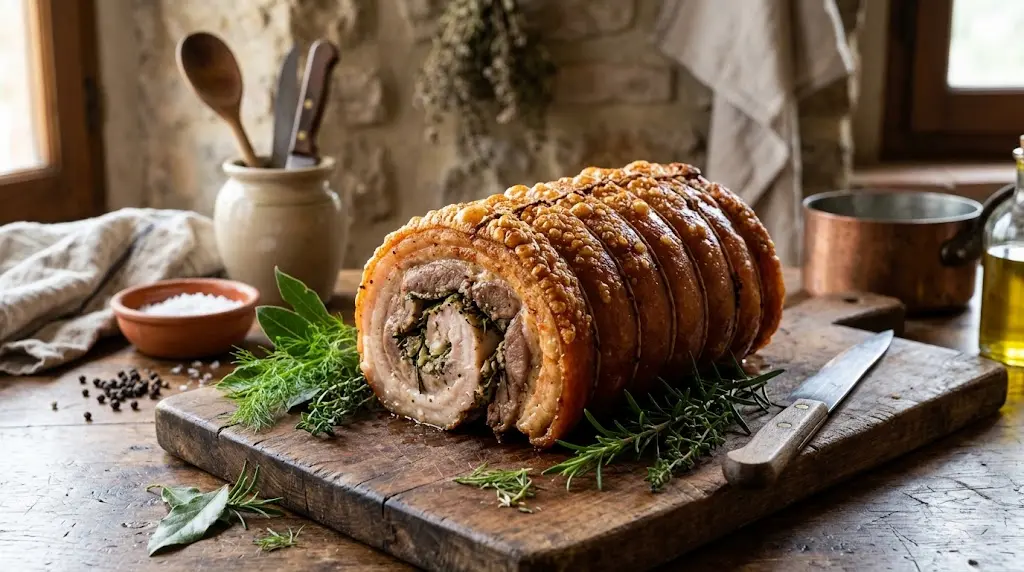
If you want to bring authentic Italian comfort food into your kitchen, learning how to make porchetta gennaro contaldo style is an absolute game-changer. Traditionally celebrated across Italy as a festive masterpiece or street-food icon, this dish transforms humble pork belly into a sensory triumph loaded with fresh rosemary, garlic, and fennel seeds. However, achieving that melt-in-your-mouth tenderness alongside a crackling golden exterior requires patience and proper technique. Therefore, let us walk through the exact steps, expert tips, and precise ingredient breakdowns needed to recreate this legendary culinary classic at home.
Understanding the Anatomy of Authentic Porchetta
Traditional Italian porchetta involves a whole young pig stuffed with aromatic herbs and slow-roasted to perfection. Since sourcing a whole pig is rarely practical for home cooks, culinary master Gennaro Contaldo adapts this method using a magnificent boned pork belly and loin joint. Typically, a 3kg to 5kg free-range joint serves a large gathering of 12 to 14 guests, making it an ideal centerpiece for holidays, Sunday lunches, or celebratory feasts. In addition, the slow-cooking process allows the fat to render completely, infusing every single layer with earthy sweetness and savory richness.
“Traditionally in Italy, porchetta is a whole young pig filled with lots of fresh herbs and slow-roasted, but adapting it with a magnificent pork belly delivers the exact same incredible flavors and textures.” — Culinary Expert Insight
Essential Ingredients for Your Italian Masterpiece
To replicate Gennaro’s famous recipe, you will need to gather fresh, high-quality components. Quality matters immensely when working with pork, so always opt for British free-range or locally sourced cuts with well-scored skin.
- The Pork: 5kg British free-range whole pork belly (yielding a trimmed weight of around 3kg with bones removed).
- Aromatics & Seasoning: 25g coarse sea salt, lots of freshly ground black pepper, and 2 tbsp extra-virgin olive oil.
- The Herb Blend: Large handfuls of fresh thyme, rosemary, and sage leaves, all roughly chopped.
- Flavor Enhancers: 1 tbsp fennel seeds and 8 finely chopped garlic cloves.
- The Accompanying Veg: 6 baking potatoes (unpeeled and cut into chunks) and 8 small carrots.
- The Finishing Touch: 6 tbsp clear honey to brush over the skin during the final stages.
Furthermore, preparation is key. Ensuring your herbs are freshly chopped rather than dried will release essential oils that penetrate deeply into the meat fiber.
Step-by-Step Guide on How to Make Porchetta Gennaro Contaldo
Mastering this recipe is all about front-loading your effort during preparation, then letting the oven do the hard work. Follow these core execution steps carefully to guarantee success.
- Prep the Pork: Lay your pork belly flat on a clean work surface, skin-side down. Sprinkle half of your coarse salt and ground black pepper directly onto the meat, rubbing it in thoroughly. Leave it to rest for 10 minutes.
- Layer the Aromatics: Scatter your chopped rosemary, thyme, sage, crushed fennel seeds, and garlic evenly across the seasoned meat.
- Roll and Tie Securely: Carefully roll the pork belly tightly from one of the long ends. Use about 10 lengths of 30cm string to tie the roll tightly at regular intervals, ensuring the filling stays securely inside.
- Initial Sear: Preheat your oven to 220°C/200°C fan/gas 7. Grease a large roasting tin with 1 tbsp of olive oil, place the pork seam-side up for 15 minutes, then turn it seam-side down for another 15 minutes.
- Slow Roast: Turn the oven down to 150°C/130°C fan/gas 2. Cover the pork loosely with foil and roast for 3 hours, adding your rough-cut potatoes and carrots after the first 1.5 hours.
- Glaze and Rest: Remove the foil, brush clear honey over the pork, and roast briefly until golden. Let it rest for 5 minutes before slicing.
Comparison of Cooking Methods and Variations
Depending on the season or occasion, you can adapt your approach to suit your menu. The table below outlines traditional versus festive variations.
| Porchetta Style | Primary Filling Ingredients | Best Served With | Ideal Occasion |
|---|---|---|---|
| Classic Herb & Garlic (Gennaro Style) | Fennel seeds, rosemary, sage, thyme, garlic | Roasted potatoes and honey-glazed carrots | Sunday family roast or dinner party |
| Festive Natalizia Variant | Pork mince, chicken livers, mortadella, Vin Santo | Crusty bread or traditional roast veg | Christmas lunch or winter celebrations |
For more authentic Italian cooking inspiration, you can explore the official guide on the Delicious Magazine Gennaro Contaldo Porchetta Recipe to view exact timing breakdowns.
“Letting your rolled meat rest before roasting allows the garlic and fennel oils to bond deeply with the pork, creating an extraordinary depth of flavor in every bite.” — Gennaro Contaldo’s Kitchen Notes
Expert Tips for Ultimate Crackling and Texture
One common challenge home cooks face is achieving the right balance between tender meat and crispy skin. In Italy, porchetta skin is typically savory and crisp rather than intensely puffed like British crackling. However, if you prefer a crunchier finish, keep the skin completely dry and avoid rubbing olive oil directly onto it during initial prep. In addition, you can check out video demonstrations via the Citalia YouTube Channel Feature to watch Gennaro demonstrate his techniques firsthand.
Furthermore, always allow your roasted porchetta to rest for at least 5 to 10 minutes before carving. This brief pause lets the internal juices redistribute evenly, ensuring your slices remain succulent and flavorful rather than dry.
Frequently Asked Questions
Can I prepare the porchetta ahead of time?
Yes, you can roll, tie, and season your porchetta up to 24 hours in advance. Store it covered in the refrigerator so the salt and herbs can cure the meat slightly before roasting.
What temperature should my oven be set to initially?
You should start at a high temperature of 220°C (200°C fan) for the first 30 minutes to kickstart the crisping process, then drop it to 150°C for the slow-cooking phase.
How do I prevent the filling from spilling out?
Tying the pork belly securely with butcher’s string at regular 2-inch intervals prevents expansion gaps and keeps all the garlic and herbs locked inside.
What is the best way to serve leftover porchetta?
Leftovers taste incredible served cold or lightly warmed inside crusty ciabatta bread with fresh rocket and a squeeze of lemon juice.
Conclusion and Next Steps
Mastering how to make porchetta gennaro contaldo style is a rewarding culinary adventure that elevates everyday pork into a show-stopping Italian feast. By combining slow-cooked tenderness with aromatic garlic, herbs, and crispy skin, you can impress family and friends alike.
Ready to test your skills in the kitchen? Head to your local butcher to pick up a prime pork belly, preheat your oven, and share your delicious homemade porchetta results in the comments below!