

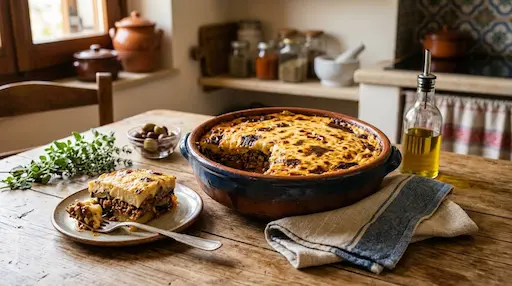
Mastering how to make greek moussaka akis petretzikis style transforms your ordinary kitchen into a sun-drenched Greek taverna. This ultimate comfort dish combines velvety layers of spiced meat, tender roasted vegetables, and a golden, creamy béchamel topping that melts in your mouth. Whether you are hosting a weekend dinner party or craving an authentic Mediterranean masterpiece, this celebrated recipe delivers incredible restaurant-quality depth. However, achieving perfection requires patience and a careful breakdown of each traditional component, from the seasoned potato and eggplant base to the fragrant cinnamon-infused meat sauce.
The Secrets Behind Akis Petretzikis’ Iconic Moussaka Recipe
Greek cuisine relies heavily on fresh, high-quality ingredients and precise technique. Celebrity chef Akis Petretzikis elevates the traditional moussaka by introducing smart tweaks, such as oven-roasting or lightly frying thinly sliced vegetables with aromatic thyme rather than relying on overly heavy cooking methods. In addition, incorporating a hint of cinnamon and cloves into the ground beef mixture creates an unmistakable warmth that defines authentic Greek comfort food.
To give you a better idea of how this dish compares to other Mediterranean casseroles, let us examine its core structural elements and flavor profiles.
| Recipe Component | Main Ingredients | Key Flavor Profile |
|---|---|---|
| Vegetable Base | Potatoes, Eggplants, Zucchini | Earthiness, herbs, light olive oil aroma |
| Meat Sauce | Ground Beef, Onions, Tomatoes, Spices | Savory, cinnamon, cloves, sweet tomato finish |
| Béchamel Topping | Butter, Flour, Whole Milk, Egg Yolks, Cheese | Velvety, rich, nutmeg, golden parmesan crust |
Essential Ingredients You Will Need
Before you preheat your oven, you must gather all the necessary components. Shopping for fresh produce and authentic dairy ensures your final casserole achieves that genuine Mediterranean balance. You can check out cooking resources like Akis Petretzikis Official Website for additional culinary inspirations and variations.
For the Vegetable Layers
- Potatoes: 3 medium-sized potatoes, peeled and sliced into thin rounds.
- Eggplants (Aubergines): 2 to 3 medium eggplants, sliced uniformly.
- Zucchini (Courgettes): 2 medium zucchinis, sliced.
- Seasoning: Olive oil, sea salt, freshly ground black pepper, and fresh thyme.
For the Ground Meat Sauce
- Ground Beef: 500g to 800g of high-quality ground beef (or a blend of beef and lamb).
- Aromatics: 1 finely chopped onion and 1 clove of minced garlic.
- Spices: 1 level teaspoon of ground cinnamon, half a teaspoon of ground cloves, and a pinch of sugar.
- Tomato Elements: 1 tablespoon of tomato paste and 1 jar (about 400g) of chopped or canned tomatoes.
For the Velvety Béchamel Sauce
- Roux Base: 100g butter and 100g all-purpose flour.
- Dairy & Binder: 750ml to 1 liter of whole milk at room temperature, plus 3 egg yolks.
- Finishing Touches: Grated parmesan or gruyere cheese, and a pinch of ground nutmeg.
“Akis Petretzikis’ version of moussaka is a masterclass in balancing individual textures, where each vegetable layer stands out on its own yet melds seamlessly with the spiced meat and velvety béchamel.” — Mediterranean Food Insider
Step 1: Preparing and Roasting the Vegetable Base
The foundation of any great moussaka lies in its vegetable layers. Unlike some recipes that submerge vegetables in heavy oil, this method focuses on achieving a tender, caramelized texture without excess greasiness.
First, preheat your oven to 200°C (390°F) on a fan setting. Brush a baking pan generously with olive oil. Slice your potatoes thinly, toss them with olive oil, salt, pepper, and fresh thyme, and create a neat bottom layer in your pan. Bake for about 20 minutes until they begin to soften.
Next, prepare your sliced eggplants and zucchini using the same seasoning mix. Layer them successively over the potatoes, baking between additions to ensure every vegetable component cooks evenly. This meticulous layering prevents a soggy casserole and provides structural integrity when cutting slices later.
Step 2: Crafting the Aromatic Ground Meat Sauce
While your vegetables bake, you can focus on building the rich meat filling. Place a deep saucepan over high heat and add a drizzle of olive oil. Sauté your minced onions and garlic until translucent and fragrant.
Add the ground beef, breaking it apart continuously with a wooden spoon until it browns nicely. Stir in the ground cinnamon, cloves, and a tiny pinch of sugar to cut the natural acidity of the tomatoes. Incorporate the tomato paste, letting it cook for a minute to lose its raw bitterness before pouring in your chopped tomatoes.
Simmer the mixture on low heat for 10 to 15 minutes until the excess liquid evaporates completely. Once finished, remove the pot from the heat and stir in fresh chopped herbs for a vibrant finish.
Step 3: Whipping Up the Ultimate Béchamel Sauce
A mediocre béchamel can ruin an otherwise perfect casserole. Therefore, mastering this step is crucial. Melt your butter in a small pot over medium heat, then whisk in the all-purpose flour to form a smooth roux.
Gradually pour in your whole milk in small batches, whisking constantly to prevent any lumps from forming. As soon as the mixture thickens and tiny bubbles surface, take the pot off the heat. Stir in your grated parmesan, a pinch of ground nutmeg, and your egg yolks to create an ultra-rich, glossy texture.
“The secret to a foolproof béchamel sauce is adding room-temperature milk in slow, controlled batches while whisking vigorously without interruption.” — Culinary Arts Quarterly
Step 4: Assembling and Baking Your Masterpiece
Now comes the satisfying assembly phase. Take a couple of tablespoons of your prepared béchamel sauce and mix it directly into the ground meat filling. This simple trick binds the meat together and enhances moisture.
Spread the spiced meat mixture evenly over your baked vegetable layers. Pour the remaining velvety béchamel over the top, smoothing it out with a spatula until it completely seals the edges. Sprinkle extra grated cheese and a light dusting of breadcrumbs over the surface to guarantee an irresistible golden crust.
Bake in the preheated oven for 30 to 35 minutes until the top turns a deep, bubbling golden brown.
Pro Tips for the Best Results
Patience is your greatest ally when cooking traditional Greek dishes. Although your kitchen will smell incredible, you must let the moussaka rest for at least 45 minutes to an hour after removing it from the oven. Cutting into it immediately will cause the layers to collapse; resting allows the hot béchamel and juices to set properly into clean, beautiful slices.
Furthermore, feel free to explore alternative food platforms like BBC Good Food to compare different regional variations of baked Mediterranean casseroles.
Conclusion and Next Steps
Learning how to make greek moussaka akis petretzikis style opens the door to authentic Mediterranean cooking right in your own kitchen. By combining tender roasted vegetables, aromatic spiced meat, and a silky homemade béchamel, you create a dish that honors rich cultural traditions. Therefore, gather your ingredients, follow these precise steps, and treat your family to an unforgettable culinary experience tonight!
Ready to start baking? Gather your fresh vegetables and share your thoughts or questions about this recipe in the comments below!
Frequently Asked Questions
Can I make moussaka ahead of time?
Yes, you can assemble the entire moussaka a day in advance, store it covered in the refrigerator, and bake it just before serving.
Why is my moussaka watery?
Moussaka becomes watery when excess moisture is not drawn out of the eggplants or if the meat sauce is not simmered until completely dry.
Can I substitute ground lamb for beef?
Traditionally, many authentic recipes use ground lamb or a 50/50 mix of beef and lamb for an even richer flavor profile.