

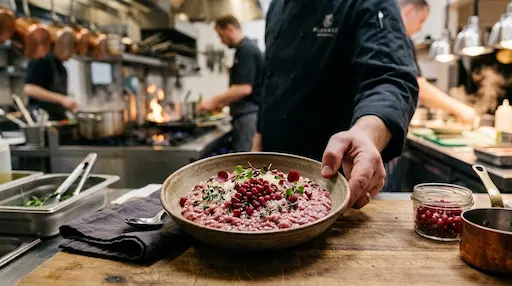
Few culinary mishaps on reality television capture the absolute confusion and comedic gold of gordon-ramsay-served-a-pomegranate-risotto-kitchen-nightmares. When Gordon Ramsay steps into a failing restaurant, he expects standard culinary mistakes like overcooked proteins, lazy pre-prepped vegetables, or poor hygiene. However, encountering bizarre, pretentious menu novelties that completely miss the mark takes the experience to an entirely different level. Among all the quirky creations featured throughout the history of the show, a certain eccentric pomegranate risotto stands out as a prime example of culinary overreach.
Reality television archives are filled with explosive shouting matches, but the episodes that focus on genuinely baffling menu concepts offer a unique window into kitchen ego. In this deep dive, we explore the origins of this peculiar dish, how the master chef reacted, and what the lasting legacy of that unforgettable episode teaches us about modern restaurant management. Whether you are a dedicated fan of the series or a hospitality professional looking to learn what not to do, understanding this dish uncovers critical lessons about menu engineering.
The Backstory of The Glass House Restaurant
To understand how a pomegranate risotto ended up on the chopping block, we have to look back at *Ramsay’s Kitchen Nightmare* UK Season 1, Episode 2, which featured a sleek yet struggling venue called The Glass House. Located in a scenic area, the establishment was plagued by soaring debts, poor communication, and a complete disconnect between front-of-house management and the kitchen staff. Head chef Richard Collins was proud of his upscale background, yet his execution suffered from a severe lack of consumer alignment.
Restaurateurs often make the fatal mistake of designing menus to stroke their own creative egos rather than satisfying their paying clientele. At The Glass House, the menu featured odd pairings like garlic popcorn, duck cakes with chilli jam, and a wildly experimental pomegranate risotto. Instead of comforting diners with approachable, high-quality bistro fare, the kitchen was serving dishes that left customers bewildered and critics entirely unimpressed.
“A successful restaurant menu does not need to reinvent the wheel with bizarre, unappealing combinations; it requires consistency, respect for core ingredients, and an acute understanding of what the local customer actually wants to eat.” — Global Culinary Operations Review
Gordon Ramsay’s Reaction to the Experimental Menu
When Gordon Ramsay sat down to taste the menu at The Glass House, his skepticism was immediate. The culinary icon is famous for demanding high standards, but he also values common sense above all else. When the infamous pomegranate risotto was brought to his table, his reaction was a mixture of utter disbelief and utter disdain. He openly blasted the concept, questioning why anyone would infuse a notoriously finicky Italian rice dish with tart, clashing pomegranate fruit elements.
As any trained chef knows, making a proper risotto requires absolute precision, careful starch release, high-grade stock, and a delicate balance of fat and acid. Introducing pomegranate—a fruit known for aggressive tartness and vibrant color bleeding—into a traditional rice base creates a chaotic flavor profile. Ramsay did not hesitate to tear the dish apart, categorizing it as a prime example of pretentious cooking gone terribly wrong.
Analyzing the Culinary Flaws of Fruit-Infused Risotto
Why did this specific recipe fail so spectacularly under expert scrutiny? To answer that question, we must break down the technical components of a classic risotto versus an experimental fruit-forward variation. The table below outlines why traditional risotto techniques work so well compared to overly complicated novelties:
| Risotto Element | Traditional Standard Approach | The Pomegranate Misstep | Impact on Diner Experience |
|---|---|---|---|
| Acid Balance | White wine or lemon juice used sparingly for a subtle brightness | Heavy, overpowering fruit juice altering the base starch balance | Creates an overly sharp, aggressive sour note that fatigues the palate |
| Color Integrity | Golden, creamy white, or infused with natural savory elements like saffron or mushrooms | Unpredictable pink or purplish grey staining from fruit pigments | Visually unappealing appearance that resembles uncoordinated food coloring |
| Flavor Synergy | Broths made from rich fish, vegetable, or meat reductions | Competing sweet and sour fruit sugars clashing with savory parmesan and butter | Confuses the taste buds and ruins the comforting mouthfeel of the dish |
| Customer Appeal | Universally recognized comfort food staple | Overly eccentric gimmick that alienates everyday diners | Low repeat order rates and negative word-of-mouth feedback |
Furthermore, culinary trends in the early 2000s often encouraged chefs to fuse international ingredients without mastering the foundational techniques first. This phenomenon is precisely what Ramsay fights against on Kitchen Nightmares Official Portal—the tendency of struggling cooks to hide behind gimmicks instead of perfecting the basics.
The Post-Show Twist: Survival and Public Demand
One of the most surprising twists in television history occurred long after the cameras stopped rolling. Typically, when Ramsay demolishes a signature menu item, the restaurant drops it immediately. However, in the case of The Glass House, head chef Richard Collins actually kept the controversial pomegranate risotto on the menu due to quirky local public demand.
When the production crew returned for a follow-up visit three months later, they discovered that the restaurant had experienced a massive surge in foot traffic—boasting a 30% increase in customers and a 20% boost in takings. While operational efficiency and communication inside the kitchen had drastically improved thanks to Ramsay’s firm guidance, the stubborn chef kept his signature fruit risotto alive as a talking point for curious fans who wanted to taste the televised spectacle for themselves.
“The publicity generated by reality television can create bizarre anomalies in the hospitality industry, where infamously criticized menu items accidentally turn into massive tourist attractions.” — Hospitality Business Journal
Key Lessons for Aspiring Chefs and Restaurant Owners
The legacy of this episode offers powerful takeaways for anyone operating in the food and beverage industry. Innovation is essential for culinary growth, but it must never come at the expense of flavor harmony and customer satisfaction. Here are several core principles to keep your kitchen on track:
- Master the Fundamentals First: Before attempting avant-garde flavor combinations, ensure your basic stocks, risottos, and sauces meet professional benchmarks.
- Listen to Your Target Audience: If everyday diners cannot understand or enjoy a dish, your creative ambition is missing its commercial mark.
- Avoid Gimmick Overload: Relying on shock-value ingredients like garlic popcorn or fruit-infused risottos usually signals a deeper lack of culinary discipline.
- Embrace Constructive Criticism: As demonstrated during the show, ego must be left at the kitchen door if a restaurant hopes to achieve long-term financial stability.
Frequently Asked Questions
What season and episode did The Glass House appear on?
The Glass House was featured in Season 1, Episode 2 of the original UK version of Ramsay’s Kitchen Nightmares, which aired in May 2004.
Did Gordon Ramsay actually like any food at The Glass House?
While Ramsay heavily criticized the overly pretentious menu items like the pomegranate risotto and duck cakes, he acknowledged that the kitchen staff had raw talent once they simplified their approach.
Why is pomegranate difficult to pair with traditional risotto?
Pomegranate juice contains intense fruit sugars and sharp acidity that clash directly with the rich, savory profile of parmesan, butter, and starchy Arborio rice.
Is The Glass House restaurant still open today?
No, after operating for nearly a decade following the show’s airing, the original Glass House location closed its doors in March 2014 and later transitioned through various other ownership groups.
Conclusion and Next Steps
The story behind the infamous gordon-ramsay-served-a-pomegranate-risotto-kitchen-nightmares episode remains a legendary piece of television history. It highlights the fine line between creative cooking and culinary disaster, proving that discipline and guest satisfaction must always guide menu design. By stripping away ego and focusing on well-executed fundamentals, restaurants can avoid becoming cautionary tales.
Are you ready to elevate your culinary standards and avoid costly kitchen mistakes? Explore our expert guides on restaurant management and professional cooking techniques today to take your skills to the next level!