

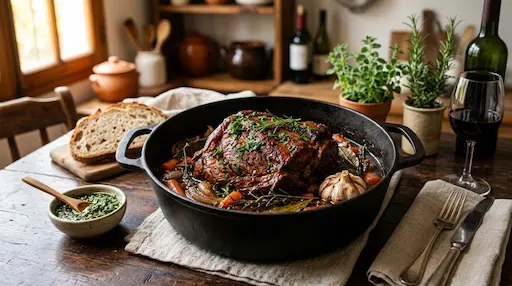
Imagine sliding a fork into a rich, succulent cut of pork shoulder that falls apart effortlessly, infused with a deep, caramelized glaze of black beer, sweet soy sauce, and sharp mustard. If you have been searching for a show-stopping weekend feast, the argentinian braised pork shoulder bondiola felicitas pizarro recipe is your ultimate culinary gateway. Hailing from the picturesque South American countryside and popularized globally through Jamie Oliver’s Food Tube, this traditional masterpiece takes humble pork cuts and transforms them into an unforgettable dining experience. Whether you are hosting an intimate dinner party or looking to elevate your comfort food rotation, understanding the magic of bondiola will change how you approach slow-cooking forever.
Traditional culinary science dictates that tougher cuts with rich marbling require low temperatures and long braising times to render connective tissues into silky gelatin. However, what sets the Argentinian approach apart is the brilliant interplay of bold umami and rich malty flavors. As renowned chef Felicitas Pizarro demonstrates, pairing pork shoulder with black beer and sweet soy creates a deeply layered reduction that coats every single fiber of the meat. Therefore, let us explore the exact technique, ingredients, and expert secrets behind this legendary dish.
The Cultural Significance of Bondiola in Argentinian Cuisine
In Argentina, beef often steals the spotlight during traditional asados, but pork—specifically bondiola—holds a revered place in regional home cooking. Bondiola refers to the pork shoulder or collar cut, prized by butchers for its exceptional fat distribution. This natural marbling acts as a self-basting mechanism during long cooking processes, ensuring the meat never dries out. According to insights from culinary archives on Jamie Oliver Inspiration, mastering this cut opens up doors to rustic, comforting South American gastronomy.
Furthermore, cooking with bondiola embodies the philosophy of slow living. Instead of rushing dinner, home cooks embrace the aromatic transformation that happens inside a heavy Dutch oven over several hours. In addition, the fusion of European immigrant influences and native ingredients creates a flavor profile that is both comforting and extraordinarily complex.
Essential Ingredients and Flavor Profiles
Every great recipe relies on a harmonious balance of flavors. The secret to Felicitas Pizarro’s signature braise lies in its unique combination of sweet, savory, and bitter notes. When these elements reduce together in the oven, they form a glossy, rich sauce that clings to the pork.
“Slow braising transforms tough, marbled cuts into silky, melt-in-the-mouth centerpieces through the power of patience and balanced reduction.” — Global Gastronomy Review
Comparison of Cooking Methods for Pork Shoulder
While slow-roasting and grilling are popular ways to prepare pork shoulder, braising offers distinct advantages for texture and moisture retention. The table below outlines how braising compares to other common cooking techniques.
| Cooking Method | Moisture Retention | Texture Outcome | Best Suited For |
|---|---|---|---|
| Braising (Bondiola Style) | Exceptional (liquid barrier) | Fork-tender, shreddable, glossy | Rich stews, Sunday roasts, creamy risottos |
| Dry Roasting | Moderate (risk of drying out) | Crispy exterior, firm center | Pulled pork sandwiches with dry rub |
| Direct Grilling | Low | Charred, chewy if not sliced thin | Quick-seared steaks and sausages |
To expand your culinary knowledge further, you can explore professional kitchen masterclasses for additional inspiration on flavor pairings and meat preparation.
Step-by-Step Execution of Felicitas Pizarro’s Recipe
Achieving restaurant-quality results at home requires a structured, mindful approach. If you rush the searing or skip the reduction phase, you miss out on the deep caramelization that makes this dish iconic. Therefore, following each step with precision guarantees success.
Furthermore, taking the time to let the meat rest after cooking allows the internal juices to redistribute evenly. By adhering to a proven routine, you ensure consistent flavor and texture every single time you cook.
“The magic of South American home cooking lives in the details—building depth through patient searing and thoughtful sauce reduction.” — Culinary Arts Quarterly
Frequently Asked Questions
What cut of meat should I use if bondiola is unavailable?
If traditional pork shoulder or collar (bondiola) is hard to find at your local butcher, a standard boneless pork shoulder roast serves as an excellent substitute.
Can I make this dish ahead of time?
Yes, braised pork shoulder often tastes even better the next day as the flavors continue to meld together in the refrigerator.
What side dish pairs best with this pork shoulder?
A creamy white risotto, velvety mashed potatoes, or polenta makes the perfect accompaniment to soak up the rich black beer reduction.
How long should I braise the pork in the oven?
Typically, a 2-kilogram pork shoulder requires about 2.5 to 3 hours at a moderate temperature of $160^\circ\text{C}$ to achieve fork-tender perfection.
Conclusion and Next Steps
Mastering Felicitas Pizarro’s Argentinian braised pork shoulder proves that incredible culinary creations do not require complicated ingredients. By combining rich marbling, malty black beer, and patient slow-cooking, you can elevate your home cooking to new heights and impress any dinner guest.
Are you ready to bring the vibrant flavors of the South American countryside to your kitchen table? Gather your Dutch oven, select a prime cut of pork bondiola, and start your unforgettable braising journey today!