

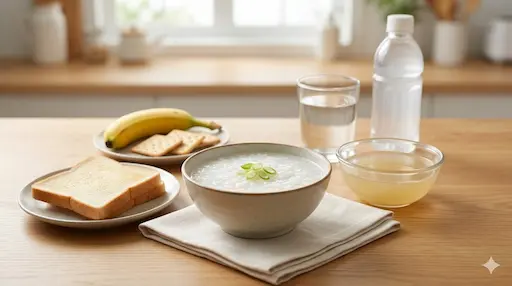
Recovering from stomach upset can feel overwhelming, especially when your body rejects even water. Knowing the best foods to eat after vomiting is essential for calming your stomach, restoring fluids, and preventing another episode. According to medical guidance from institutions like the Cleveland Clinic and Harvard Health, the key is to reintroduce food slowly, starting with hydration and moving toward bland, easy-to-digest meals.
Understanding the Best Foods to Eat After Vomiting
When vomiting occurs, your stomach lining becomes irritated, and your body loses fluids and electrolytes. Therefore, rushing into normal meals can worsen symptoms. Experts recommend a step-by-step approach: first hydration, then bland foods, and finally a gradual return to a normal diet. Best foods to eat after vomiting should always be gentle, low-fat, and easy on digestion.
“After vomiting, start with small sips of fluids and then slowly introduce bland foods like bananas, rice, and toast.” — Cleveland Clinic guidance Cleveland Clinic
In addition, Harvard Health notes that the traditional BRAT diet (bananas, rice, applesauce, toast) is helpful only for short-term relief, but it should not be followed for more than a couple of days due to limited nutrition.
“The BRAT diet is fine for a short time, but more nutritious bland foods should be added quickly.” — Harvard Health Harvard Health
Step 1: Start With Hydration First
Before thinking about solid food, focus on replacing lost fluids. Vomiting causes dehydration, which worsens nausea and fatigue. Medical experts strongly suggest starting with small sips of water, oral rehydration solutions, or electrolyte drinks.
- Small sips of water every 10–15 minutes
- Oral rehydration solutions (ORS)
- Clear broths for sodium replacement
- Ice chips if liquids trigger nausea
In addition, electrolyte-rich fluids help restore sodium and potassium levels, which are often depleted after repeated vomiting.
Step 2: Best Foods to Eat After Vomiting (Bland Diet Stage)
Once fluids stay down, you can slowly introduce the best foods to eat after vomiting. These foods are low in fat, low in fiber, and easy to digest, reducing the risk of triggering nausea again.
- Bananas
- White rice
- Applesauce
- Toast or crackers
- Plain oatmeal
- Boiled potatoes
- Clear soups and broths
These foods form the basis of what is often called the BRAT diet, which is widely recommended in early recovery stages. However, experts now suggest expanding beyond BRAT for better nutrition.
“Bland foods like toast and rice help calm the stomach but should be combined with nutrient-rich foods as recovery progresses.” — Cleveland Clinic Cleveland Clinic
Step 3: Add Nutrient-Rich Foods Gradually
After the initial 24–48 hours, your digestive system starts recovering. At this stage, it is important to add nutrient-rich foods while still avoiding heavy or greasy meals.
- Scrambled eggs
- Skinless chicken or turkey
- Steamed vegetables (carrots, squash)
- Low-fat yogurt (if tolerated)
- Soft fruits without skin
This step helps restore energy, protein, and essential nutrients that your body loses during vomiting episodes.
Foods to Avoid After Vomiting
Equally important as knowing the best foods to eat after vomiting is understanding what to avoid. Certain foods can irritate your stomach and delay recovery.
- Fried and greasy foods
- Spicy dishes
- Caffeine (coffee, tea, soda)
- Alcohol
- High-sugar foods and drinks
- Dairy (initially, if lactose sensitive)
These foods may slow digestion or trigger another episode of nausea, especially in the first 48 hours.
“Fatty, spicy, and acidic foods can irritate the stomach lining and worsen nausea.” — NHS-backed guidance NHS-backed source
Hydration vs Solid Food: What Comes First?
A key recovery principle is timing. You should always prioritize hydration before eating solid foods. Medical research shows that most people can begin eating again within a few hours if fluids stay down.
| Recovery Stage | What to Consume |
|---|---|
| 0–6 hours after vomiting | Water, ice chips, ORS |
| 6–12 hours | Clear broths, diluted juice |
| 12–24 hours | Toast, rice, bananas, crackers |
| 24–48 hours | Eggs, chicken, soft vegetables |
How to Eat Safely After Vomiting
Even when choosing the best foods to eat after vomiting, how you eat matters just as much as what you eat. Eating too quickly or in large portions can trigger nausea again.
- Eat small portions slowly
- Chew food thoroughly
- Avoid lying down immediately after eating
- Eat every 2–3 hours in small amounts
As a result, your stomach gets time to adjust without being overloaded.
Frequently Asked Questions
What are the best foods to eat after vomiting?
The best foods include bananas, rice, toast, applesauce, oatmeal, and clear broths. These foods are gentle and easy to digest.
How long should I wait to eat after vomiting?
Experts recommend waiting a few hours after vomiting before trying fluids. Once fluids stay down, you can slowly introduce bland foods.
Can I drink milk after vomiting?
It is best to avoid milk and dairy for the first 24–48 hours, as they may be harder to digest and can worsen symptoms.
Is the BRAT diet still recommended?
Yes, but only short-term. Doctors suggest expanding beyond BRAT to include protein and vegetables for better recovery nutrition.
What drinks help after vomiting?
Water, oral rehydration solutions, broth, and diluted electrolyte drinks are best for restoring hydration and minerals.
Conclusion
Recovering from vomiting is all about patience and gentle nutrition. Choosing the best foods to eat after vomiting helps your stomach heal without triggering further discomfort. Start with fluids, move to bland foods, and then gradually return to normal meals as your body recovers.
If symptoms persist beyond 48 hours or worsen, medical attention is recommended. Otherwise, listen to your body and progress slowly for a smooth recovery.
CTA: Want more expert nutrition and recovery guides? Explore our health blog for practical, science-backed tips that help you feel better faster.