

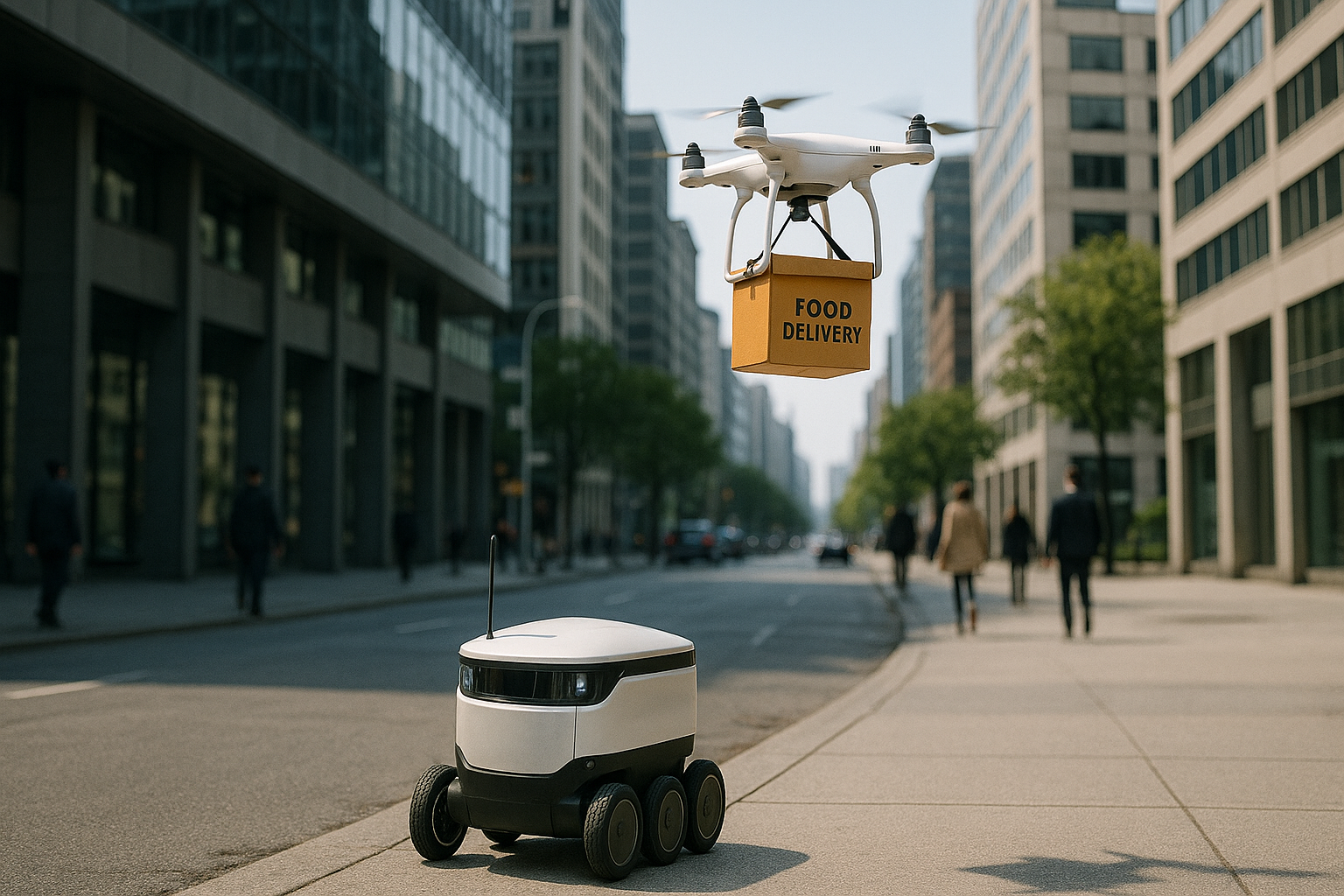
In the last decade, the food industry has undergone a technological revolution, and in 2025, the future of food delivery is no longer a distant dream. Food delivery robots and drone-operated kitchens are rapidly transforming the way people eat, order, and receive meals. These innovations are not just experimental concepts—they are operational in major cities and backed by major companies. As the demand for faster, contactless, and more efficient food delivery continues to rise, automation is taking center stage in kitchens and on the streets.
What Are Food Delivery Robots?
Food delivery robots are small, autonomous vehicles designed to deliver meals to customers without human drivers. These robots use GPS, artificial intelligence, and advanced sensors to navigate sidewalks and streets safely. Companies like Starship Technologies, Kiwibot, and Uber Eats have already begun deploying fleets of these robotic couriers in select cities around the world. The compact size and energy-efficient design make them ideal for urban deliveries within a short radius.
Drone Kitchens: A New Era of Meal Prep
Drone kitchens—or cloud kitchens that utilize drones for food delivery—take innovation a step further. In this model, food is prepared in centralized kitchens and then delivered via unmanned aerial vehicles (UAVs). These drone systems are capable of bypassing road traffic, reducing delivery time to mere minutes. In 2025, countries like the United States, UAE, and Singapore are leading the way with pilot projects and government-approved trials. Zipline, Flytrex, and Wing (owned by Alphabet) are a few major players investing in this aerial future of food logistics.
Benefits of Robotic and Drone Food Delivery
The shift towards automated food delivery systems comes with numerous benefits. First and foremost, speed is dramatically improved. Robots and drones can optimize routes and avoid traffic delays. Secondly, these solutions are highly scalable. A single kitchen can serve more customers across a wider radius without the need for additional human drivers. Third, they offer contactless delivery, which became a global priority during the COVID-19 pandemic and remains a customer expectation today.
Environmental impact is another advantage. Many of these devices are electric, reducing carbon emissions compared to traditional delivery vehicles. Moreover, drone delivery reduces road congestion and fuel consumption, contributing to sustainable urban development.
Challenges and Limitations
Despite the promise, there are still several hurdles to overcome. Regulatory issues are at the forefront. Many countries have strict rules about UAV flight paths, altitude restrictions, and delivery zones. Similarly, sidewalk robots may face challenges in densely populated or inaccessible areas. Weather conditions, security concerns, and device malfunctions also pose risks to consistent delivery quality.
There are also societal implications. The rise of autonomous delivery systems may reduce the demand for human delivery drivers, raising concerns about job displacement. Balancing innovation with social responsibility will be crucial as these technologies scale.
Global Adoption and Pilot Programs
Multiple countries have embraced robotic food delivery, especially in urban areas and university campuses. In the United States, Starship robots are a common sight at universities and suburban communities. In Estonia and the UK, delivery robots operate with local partnerships. In China, Meituan and JD.com have developed both sidewalk robots and autonomous vehicles for high-volume food delivery.
Drone delivery has gained traction in regions with open skies and government support. In Abu Dhabi, for example, drone delivery services are being tested in collaboration with smart city initiatives. In Australia, Wing has successfully integrated drone delivery into suburban neighborhoods. These pilots are not only proving the technology’s viability but also offering valuable data for regulatory frameworks and urban planning.
What It Means for Consumers
For the average consumer, robotic and drone delivery means faster service, improved convenience, and potentially lower delivery fees. As the technology matures and becomes more affordable, it is likely to become mainstream, especially in cities and tech-forward communities. Consumers may soon be able to track their orders in real-time through AI-powered apps that coordinate with robots and drones in motion.
These systems can also improve food quality upon arrival. Faster delivery times mean less cooling or sogginess, particularly for hot meals. With AI in the loop, preferences, allergies, and even dietary restrictions can be better managed through smart order systems linked to robotic kitchens.
The Future Outlook
Looking ahead, the integration of robotics, drones, and artificial intelligence into food delivery will continue to evolve rapidly. The coming years will likely see more smart cities adopting these solutions at scale. Restaurants may shift to delivery-only models with minimal staff and AI-controlled prep stations. Partnerships between tech companies and food brands will shape how and where meals are made and delivered.
Consumers, on the other hand, should expect a future where the gap between craving and satisfaction becomes shorter than ever. In the near future, ordering dinner may simply involve saying it aloud—and receiving it via air within minutes. The food delivery revolution is here, and robots and drones are leading the charge.
Conclusion
Food delivery robots and drone kitchens are no longer just a glimpse of the future—they are an active part of the present. With benefits ranging from speed and convenience to sustainability and innovation, these technologies are poised to reshape how we access meals worldwide. While challenges remain, the trajectory is clear: automation will play a defining role in the global food landscape in 2025 and beyond.