

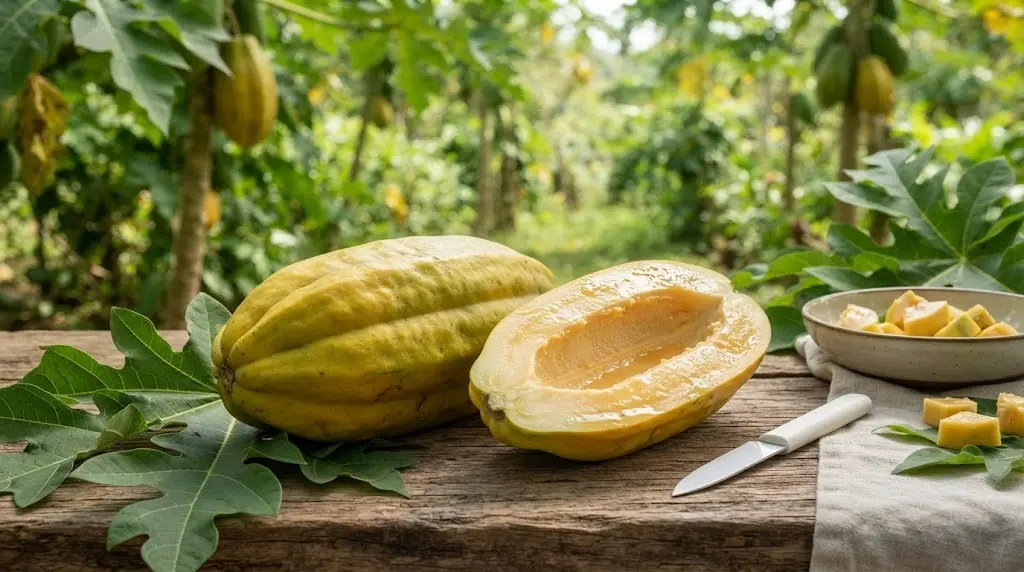
When you explore the world of exotic produce, few items offer the refreshing charm and health-boosting properties of the babaco. Often called the “mountain papaya,” this fruit is a true nutritional powerhouse that deserves a spotlight in your diet. Understanding the benefits of babaco fruit reveals why health enthusiasts and gourmet chefs alike are championing this seedless, pentagonal marvel.
If you have ever sought a low-calorie snack that simultaneously strengthens your immune system and aids digestion, the babaco might be your new favorite find. This article dives deep into why this Ecuadorian hybrid is rapidly gaining global attention. We will explore its unique nutrient density, its role in modern wellness, and how you can easily incorporate it into your daily culinary routine.
What Exactly is Babaco Fruit?
The babaco (Vasconcellea × heilbornii) is a naturally occurring hybrid of the papaya family, native to the high-altitude regions of Ecuador. Unlike traditional papayas, which are often large and seeded, the babaco is distinctively elongated, seedless, and features a unique pentagonal cross-section. It is a subtropical treasure that thrives in cooler climates compared to its tropical cousins.
Many people describe its flavor as a delightful fusion of pineapple, strawberry, and papaya. Some even refer to it as “champagne fruit” because of its effervescent, slightly tangy, and refreshing taste profile. Because it is seedless, it is incredibly convenient to process—you can simply slice it, skin and all, for immediate consumption.
The plant itself is a marvel of resilience. It grows quickly, often producing fruit within its first year. Because the fruits are seedless, propagation happens through cuttings, making it a sustainable and fascinating plant to cultivate in home gardens or greenhouse environments. Its growing popularity is a testament to its versatility and flavor.
The Nutritional Profile: Why It Matters
To truly appreciate the benefits of babaco fruit, we must look at the numbers. It is an incredibly nutrient-dense option for those watching their caloric intake. Because it is low in calories but rich in essential vitamins, it serves as an excellent dietary supplement for weight management and overall vitality.
The following table outlines the approximate nutritional composition of the edible flesh per 100 grams:
| Nutrient | Approximate Value |
|---|---|
| Energy (Calories) | 17 kcal |
| Vitamin C | 26 mg |
| Potassium | 140 mg |
| Protein | 1.1 g |
| Dietary Fiber | Significant |
| Magnesium | 6 mg |
As you can see, the mineral content is quite impressive for such a low-calorie food. Furthermore, its base-forming (alkaline) nature helps in balancing the body’s pH levels, which is a key component in modern nutritional science for reducing systemic inflammation.
Immune System Support and Antioxidant Power
The most celebrated of the benefits of babaco fruit is its remarkable Vitamin C content. Vitamin C is a critical antioxidant that protects your cells from oxidative stress. When your body faces environmental pollutants or internal stress, these antioxidants neutralize free radicals, thereby supporting long-term health.
“The high concentration of Vitamin C in babaco acts as a robust defense mechanism, shielding the body against oxidative damage and fostering a stronger immune response.” — Nutritional Wellness Insights
In addition to Vitamin C, the fruit provides a dose of Vitamin A and various carotenoids. These compounds are essential for maintaining healthy skin, promoting good vision, and supporting the integrity of mucous membranes. Including this fruit in your morning smoothie is an easy way to hit these daily micronutrient targets.
Digestive Health and the Role of Papain
One of the most fascinating aspects of the babaco, and its close relative the papaya, is the presence of an enzyme called papain. This natural enzyme is renowned for its ability to break down proteins, making it a fantastic digestive aid. If you often feel sluggish after a high-protein meal, the enzymes in babaco can help facilitate smoother digestion.
Because of its tenderizing properties, culinary experts often incorporate pureed babaco into marinades for meat dishes. Consequently, not only do you gain a flavor profile that adds tang to the meat, but you also aid your digestive tract in breaking down the meal more efficiently.
Furthermore, the fruit is high in dietary fiber. Fiber is non-negotiable when it comes to maintaining gut health, regulating blood sugar levels, and promoting satiety. By eating the skin—which is edible and thin—you maximize your intake of this essential roughage.
Heart Health and Mineral Density
Beyond digestion and immunity, the mineral content of the babaco contributes significantly to cardiovascular health. Potassium, found in decent amounts in this fruit, is vital for managing blood pressure. It helps counteract the negative effects of sodium, which is often consumed in excess in modern diets.
In addition to potassium, the presence of magnesium supports muscle function and heart rhythm regulation. While no single fruit can replace a balanced diet, adding mineral-rich options like the babaco creates a more robust defense against cardiovascular issues over time.
For more detailed information on heart-healthy fruits and their specific nutrient pathways, you can explore resources like [External Authority Link: Cardiovascular Nutrition Guidelines].
Culinary Versatility: More Than Just a Snack
If you are wondering how to integrate this fruit into your lifestyle, the options are virtually endless. Its texture, which is somewhat melon-like, holds up well in both raw and cooked preparations. For a simple start, try slicing it crosswise; the result is a beautiful star shape that elevates the presentation of any fruit salad.
“The beauty of babaco lies in its culinary adaptability. It bridges the gap between sweet desserts and savory sauces, making it an essential ingredient for the experimental home cook.” — Culinary Quarterly Review
Here are a few ways to enjoy the benefits of babaco fruit daily:
- Smoothies: Blend it with yogurt, honey, and a splash of almond milk for a refreshing breakfast.
- Desserts: Poach the slices in light syrup or use them as a topping for vanilla ice cream to balance the sweetness.
- Savory Sauces: Incorporate pureed babaco into spicy salsas or curries to introduce a tangy depth that cuts through the heat.
- Fresh Garnish: Use thin, star-shaped slices to decorate cocktails or mocktails for a touch of tropical flair.
Selecting and Storing Your Babaco
To enjoy the maximum benefits of babaco fruit, you must select the best specimens at the market. Look for fruit with bright, smooth, yellow skin. If the fruit is still green, it needs more time to ripen. You can safely leave it on your counter at room temperature until the color turns a uniform yellow and the fruit yields slightly to pressure.
Once ripe, the fruit becomes very soft and aromatic. At this stage, it should be consumed promptly, as its shelf life shortens significantly. If you aren’t ready to eat it, the refrigerator can extend its life by a few days, but be mindful that the flavor is best enjoyed when the fruit is at peak ripeness.
Always wash the skin thoroughly, even if you plan to eat it. While the skin is edible, treating it like any other produce—washing it to remove surface impurities—is a good practice to ensure you are getting the safest product possible.
Frequently Asked Questions
Is the skin of the babaco fruit edible?
Yes, the skin of the babaco is thin and entirely edible. You do not need to peel it, which makes the fruit extremely convenient to prepare. Simply wash it well and slice it as you would a cucumber or a melon.
What does babaco taste like?
Babaco has a unique, refreshing taste that is often compared to a blend of strawberry, papaya, and pineapple. It is slightly tangy, juicy, and possesses an effervescent quality that is very distinct from other tropical fruits.
Can babaco help with weight loss?
Because it is very low in calories (approximately 17 kcal per 100g) and rich in fiber, it is an excellent choice for a snack if you are trying to manage your weight. It provides volume and nutrition without a high caloric cost.
Why is it called the “champagne fruit”?
The nickname “champagne fruit” refers to its refreshing, slightly effervescent, and tangy flavor profile. The acidity and juiciness provide a palate-cleansing effect similar to a glass of sparkling wine.
Conclusion: Why You Should Try Babaco
The benefits of babaco fruit extend far beyond its delightful taste. Whether you are looking to boost your immune system with a heavy dose of Vitamin C, aid your digestion with natural papain enzymes, or simply add a low-calorie, nutrient-dense snack to your daily routine, the babaco is an exceptional choice. Its convenience, combined with its unique flavor, makes it an essential find for any food lover.
If you have not yet experienced the refreshing tang of this mountain papaya, make it a priority for your next shopping trip. Experiment with it in your kitchen, try it in your favorite smoothies, and see for yourself why this exotic fruit is gaining global recognition. Your body—and your taste buds—will surely thank you for the introduction.
Ready to transform your snack game? Visit your local specialty grocery store or check online farmers’ markets this week to find your first babaco fruit. Start experimenting with these recipes today and share your favorite creations with us in the comments below!