

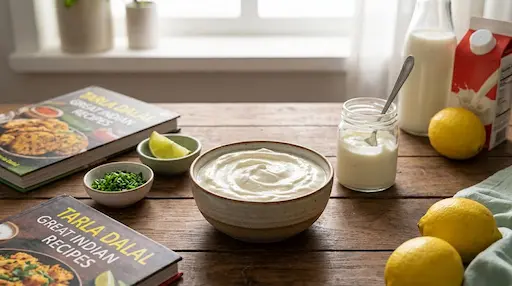
Making rich Mexican dishes or tangy salad dressings at home often comes down to one crucial element: perfectly balanced sour cream. If you have ever reached into your refrigerator while assembling tacos, burritos, or nachos only to find you are completely out, learning the quick sour cream by tarla dalal method is an absolute game-changer. Pioneered by legendary Indian culinary author and Padma Shri awardee Tarla Dalal, this instant technique yields smooth, velvety sour cream in just two minutes without requiring overnight fermentation or complex starter cultures.
Standard commercial options in supermarkets are frequently packed with artificial thickeners, stabilizers, and chemical preservatives. By contrast, adopting the quick homemade approach popularized by Tarla Dalal gives you total control over your ingredients while saving money. Consequently, this effortless two-ingredient kitchen trick has become a secret staple for home cooks seeking fresh, authentic flavors for Western delicacies, party dips, and fusion snacks alike.
The Science Behind the Quick Sour Cream Technique
Traditional commercial sour cream relies on lactic acid fermentation, where specific bacterial cultures ferment heavy dairy cream over a 12 to 24-hour period. In contrast, the instant method featured in the sour cream by tarla dalal recipe utilizes direct acidification. When fresh lemon juice—which contains natural citric acid—is whisked into cold dairy cream, it rapidly lowers the pH level of the mixture.
As the pH drops near the isoelectric point of milk proteins, the casein proteins begin to coagulate and cross-link. This structural shift instantly thickens the liquid cream into a velvety emulsion. Furthermore, chilling the mixture in the refrigerator for three to four hours allows the milk fats to solidify further, giving the condiment a rich, spoonable consistency and a delightfully tart bite.
“Direct acidification using fresh citrus juice instantaneously alters dairy protein structures, delivering a thick, tangy condiment without the wait required by microbial fermentation.” — Culinary Science Overview, Tarla Dalal Official Archives
Essential Ingredients and Preparation Ratios
The brilliance of this recipe lies in its minimalist profile. You do not need hard-to-find ingredients or special kitchen tools. To prepare a classic batch yielding approximately ½ cup of finished sour cream, gather the following exact proportions:
- Fresh Dairy Cream: ¾ cup of chilled fresh cream (preferably full-fat or whipping cream with 25% to 35% milk fat content).
- Lemon Juice: 1½ tablespoons of freshly squeezed, clear lemon juice.
- Seasoning: A small pinch of salt and freshly ground black pepper (kali mirch) to taste.
Why Milk Fat Content Dictates Success
Using full-fat dairy cream, such as Amul fresh cream or heavy whipping cream, is vital for achieving the desired viscosity. If you use low-fat or skimmed cream, the reduced fat-to-water ratio prevents proper emulsification. As a result, the mixture may turn runny or separate instead of forming a silky, cohesive condiment.
Step-by-Step Guide: How to Make Sour Cream by Tarla Dalal
You can prepare this effortless recipe in under two minutes of active prep time. Follow these simple steps for flawless results every single time:
Step 1: Combine the Ingredients
Take a deep glass or ceramic mixing bowl. Pour ¾ cup of chilled fresh dairy cream directly into the bowl, then add 1½ tablespoons of freshly squeezed lemon juice over the top.
Step 2: Whisk to Emulsify
Using a hand whisk, beat the mixture continuously for 45 to 60 seconds. You will observe the liquid quickly changing from a pourable consistency into a noticeably thicker, smooth cream.
Step 3: Season and Refrigerate
Add a pinch of salt and freshly ground black pepper according to your preference. Whisk gently to combine the seasonings. Cover the bowl securely with plastic wrap and place it in the refrigerator for 3 to 4 hours. Once thoroughly chilled, your homemade sour cream will be thick, firm, and ready to serve.
“Achieving optimal viscosity in instant dairy condiments depends on maintaining cold starting temperatures and precise acid-to-fat ratios.” — Dairy Research Insights, ScienceDirect Food Chemistry Journal
Comparison: Homemade Sour Cream vs. Cultured & Commercial Types
Understanding how instant sour cream differs from traditional fermented and store-bought varieties helps you choose the best option for your culinary needs:
| Attribute | Tarla Dalal Instant Method | Traditional Cultured Sour Cream | Store-Bought Commercial |
|---|---|---|---|
| Active Preparation Time | 2 minutes | 15 minutes + 24 hours rest | Zero (Ready to use) |
| Acidification Method | Direct citric acid (Lemon juice) | Lactic acid bacterial culture | Added lactic acid & microbial enzymes |
| Additive Content | 100% natural, zero additives | 100% natural | Gums, gelatins, modified starch, preservatives |
| Texture Profile | Silky, smooth, medium-thick | Dense, rich, spoonable | Stiff, highly gelatinous |
| Refrigerated Shelf Life | 3 to 4 days | 1 to 2 weeks | 3 to 4 weeks unopened |
Popular Culinary Applications for Homemade Sour Cream
Because the sour cream by tarla dalal formulation offers a clean acidity balanced by rich dairy fat, it functions exceptionally well across a wide variety of global recipes:
- Tex-Mex Staples: Dollop generously over loaded nachos, cheesy bean burritos, sizzling fajitas, or crispy tacos.
- Baked Potato Topping: Spoon over steaming hot baked potatoes along with chopped chives and melted cheddar.
- Salad Dressings: Whisk with olive oil, minced garlic, crushed herbs, and sea salt to construct a rich, tangy dressing.
- Party Dips: Blend with grated cucumber, roasted garlic, or olive tapenade to create instant appetizers for potato chips and pita triangles.
- Indo-Western Fusion: Use as a creamy base for chilled rolls, wraps, and spicy grilled kebabs.
Pro-Tips for Perfect Execution
To consistently produce smooth, delicious sour cream, keep these professional kitchen guidelines in mind during preparation:
- Keep Cream Ice-Cold: Always start with cream straight from the refrigerator. Cold dairy thickens faster and prevents butter fat separation during whisking.
- Avoid Over-Whisking: Whisk only until the mixture thickens into a velvety cream. Over-whisking heavy cream can cause fat solids to separate, turning your batch into lemon-flavored butter.
- Strain the Lemon Juice: Always strain fresh lemon juice through a fine sieve to remove seeds and pulp before adding it to the cream.
- Airtight Storage: Store the finished product in a clean, airtight glass jar placed in the main compartment of your refrigerator. Use within 3 to 4 days for optimal flavor.
“Freshly prepared condiments elevate home cooking by replacing synthetic preservatives with vibrant, real food flavors.” — Culinary Tips Digest
Conclusion
Mastering the quick 2-ingredient sour cream by tarla dalal recipe provides a fast, natural alternative to store-bought options. By combining cold dairy cream with fresh lemon juice, you can whip up a batch of creamy, tangy sour cream whenever you need it for taco nights, baked potatoes, or savory dips.
Are you ready to enhance your favorite recipes with fresh homemade flavor? Grab some cream and lemon juice, whisk up a batch today, and enjoy the difference that fresh cooking makes!
Frequently Asked Questions (FAQ)
How long does homemade sour cream stay fresh?
Stored in an airtight glass container in the refrigerator, instant sour cream remains fresh and flavorful for 3 to 4 days.
Can I substitute vinegar for lemon juice?
Yes, you can substitute white vinegar or apple cider vinegar in a 1:1 ratio. However, fresh lemon juice provides a cleaner and brighter citrus note.
Why did my sour cream fail to thicken?
If the mixture remains thin, the cream may have had insufficient fat content or was warm when whisked. Always use heavy dairy cream and chill the finished mixture for 3 to 4 hours.
Can you freeze homemade sour cream?
Freezing is not recommended. Thawing breaks the dairy emulsion, causing liquid and fat solids to separate into a watery consistency.