

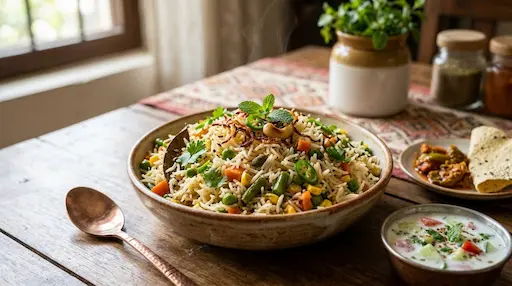
In this comprehensive guide, we unpack the culinary science and techniques behind Chef Kapoor’s iconic dish. You will learn the exact water-to-rice ratios required for fluffy grains, the secret behind tempering whole aromatics, and how to prevent your rice from turning mushy. Whether you prepare a quick weeknight dinner or host an elaborate family gathering, this step-by-step breakdown guarantees foolproof results every time.
The Science of Blooming Whole Spices in Ghee
Why does Chef Sanjeev Kapoor emphasize heating whole spices in ghee before adding any vegetables or water? According to food chemistry, whole spices like cumin, cardamom, cinnamon, and cloves contain essential oils that are primarily fat-soluble. Heating them gently in clarified butter (ghee) breaks open the plant cells, releasing rich aromatic compounds directly into the fat medium.
“Blooming whole spices in clarified butter extracts fat-soluble essential oils, embedding rich notes directly into the fat medium before liquid is introduced.”
When you toss the soaked basmati rice into this tempered ghee, every individual grain gets coated in a hydrophobic spice-infused layer. Consequently, this barrier protects the rice starch from releasing too quickly during the boiling phase, keeping the grains separate and distinct.
Furthermore, this technique avoids the heavy, overwhelming heat found in powdered spice blends. Instead, the whole spices impart a subtle background warmth that complements the natural sweetness of fresh farm vegetables.
Essential Ingredients for Sanjeev Kapoor Style Pulao
Achieving authentic flavor requires selected ingredients used in precise proportions. Chef Sanjeev Kapoor’s standard formula uses a balanced combination of aromatics, fresh produce, and long-grain basmati rice.
1. Aged Long-Grain Basmati Rice
Always opt for aged basmati rice when making a simple vegetable pulao sanjeev kapoor khazana style. Aged rice loses excess internal moisture over 12 to 24 months, allowing the grains to expand up to double their original length during cooking without breaking.
2. Whole Spice Tempering (Tadka)
The signature aroma relies on a blend of whole spices. You need cumin seeds (jeera), green cardamoms, black peppercorns, cloves, cinnamon stick, and bay leaf (tej patta). Fresh green chillies split down the middle add gentle heat without making the dish excessively spicy.
3. Fresh Seasonal Vegetables
A traditional mix features diced carrots, cauliflower florets, French beans cut diagonally, and sweet green peas. Cutting all vegetables into uniform 1-inch sizes ensures they cook evenly alongside the delicate rice.
Step-by-Step Cooking Instructions
Follow these standard steps adapted directly from Chef Sanjeev Kapoor’s signature approach to make perfect vegetable pulao at home:
- Rinse and Soak: Take 1.5 cups of premium basmati rice. Wash gently under cool water 2–3 times until the runoff is clear. Soak in clean water for 20 to 25 minutes, then drain completely.
- Bloom the Whole Spices: Heat 1 to 2 tablespoons of ghee in a deep non-stick pan or pot. Add 1 teaspoon cumin seeds, 4–5 cloves, 5–6 black peppercorns, 2–3 green cardamoms, 1 inch cinnamon stick, and 1 bay leaf. Sauté over medium heat for 30 seconds until fragrant.
- Sauté the Vegetables: Add 2 slit green chillies, 1 medium chopped carrot, 10–12 cauliflower florets, and 5–6 French beans. Sauté for 1 to 2 minutes. Add 1/4 cup green peas and mix gently.
- Coat the Rice: Add the drained basmati rice and salt to taste. Gently fold the rice for 1 minute to coat every grain with the spiced ghee. Avoid rough mixing to prevent breaking the delicate grains.
- Add Water and Simmer: Pour in 2.5 to 3 cups of hot water depending on pot depth. Bring the liquid to a rapid boil. Cover tightly with a lid, reduce heat to low, and cook for 8 to 10 minutes until liquid absorbs.
- Rest and Fluff: Turn off the heat. Keep the pot covered and rest undisturbed for 15 minutes. Uncover and fluff gently with a fork before serving.
Comparison: Sanjeev Kapoor Pulao vs. Vegetable Biryani
Many home cooks confuse vegetable pulao with biryani. However, their culinary philosophies, spice profiles, and preparation methods differ significantly. The table below highlights key distinctions:
| Feature | Simple Veg Pulao (Sanjeev Kapoor Style) | Classic Vegetable Biryani |
|---|---|---|
| Cooking Method | Single-pot absorption method | Layered dum cooking (steam-sealed) |
| Spice Profile | Mild, whole-spice aromatics | Heavy spice powders, curd, mint, & fried onions |
| Prep & Cook Time | 25 – 35 minutes total | 60 – 90 minutes total |
| Rice Preparation | Raw soaked rice cooked directly in pot | Parboiled rice layered with cooked curry |
| Caloric Density | Light to moderate (~300 kcal per serving) | Higher density (~450+ kcal per serving) |
As illustrated above, preparing a simple vegetable pulao sanjeev kapoor khazana style provides a lighter, quicker alternative without sacrificing depth of flavor. Therefore, it remains the preferred choice for daily family meals and quick entertaining.
Pro Tips for Fluffy, Non-Sticky Rice Grains
Even simple recipes require attention to detail. Follow these expert tips from professional test kitchens to guarantee separate, fluffy grains every single time:
- Rinse Until Clear: Rinsing removes excess surface starch generated during milling. Skipping this step leads to gummy, sticky rice.
- Respect the Resting Phase: Never skip the 15-minute rest period after turning off the stove. Residual steam firms up the outer starch wall of each grain.
- Use a Flat Fork: Never use a heavy spoon to dig into freshly cooked rice. Use a thin fork or rice paddle to gently release steam around the edges.
- Check Water Ratios: When cooking in an open pot, maintain a 1:1.75 or 1:2 rice-to-water ratio. For pressure cookers, reduce water to 1:1.25.
“Allowing cooked basmati rice to rest covered off the heat redistributes moisture, ensuring grains fluff easily without breaking.”
For official culinary inspirations and classic Indian recipes, explore the Sanjeev Kapoor Official Website. To learn more about dietary balance and grain nutrition, visit Nutrition.gov Official Resource.
Frequently Asked Questions
Can I make simple vegetable pulao in a pressure cooker?
Yes, you can cook pulao in a pressure cooker easily. Reduce the water ratio to 1.25 cups of water per 1 cup of soaked basmati rice. Cook over medium heat for 1 whistle, then allow the pressure to release naturally.
Why does my vegetable pulao turn out sticky or mushy?
Sticky pulao usually results from skipping the soaking phase, adding too much water, or stirring the rice while it simmers. Stirring breaks soft expanding starch walls and releases extra amylose into the liquid.
What side dishes pair best with Sanjeev Kapoor style pulao?
This mild pulao pairs wonderfully with refreshing cucumber mint raita, roasted papad, mixed mango pickle, or mild curry gravies like paneer butter masala and dal tadka.
Can I use frozen vegetables instead of fresh ones?
Yes, frozen vegetables like peas, carrots, and corn work well. Thaw them in warm water for 5 minutes and add them during the last minute of sautéing to prevent them from overcooking.
Conclusion
Mastering a simple vegetable pulao sanjeev kapoor khazana style brings authentic chef-level results right to your home table. By respecting the rice soaking times, blooming whole aromatics in ghee, and maintaining correct water ratios, you can enjoy perfectly separated, fragrant grains every time. Gather your ingredients tonight and experience the warm comfort of this classic Indian favorite!