

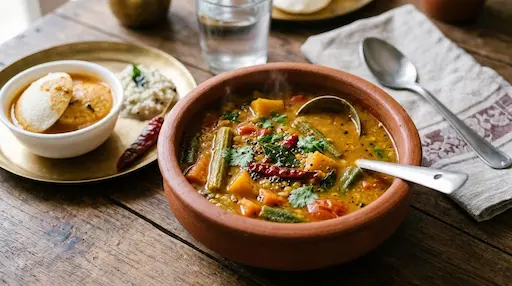
Mastering this classic recipe requires an understanding of spice proportions and boiling techniques. Fortunately, Tarla Dalal streamlined traditional cooking methods so home cooks can achieve restaurant-quality results easily. Therefore, you can prepare a rich, tangy, and deeply satisfying dish right in your home kitchen today.
Whether you pair it with fluffy idlis, crispy dosas, or steamed rice, this step-by-step guide covers every detail. Let us dive into the ingredients, culinary secrets, and precise steps that make this standard recipe timeless.
Understanding the Legend of Authentic South Indian Sambar
Sambar serves as the culinary backbone of South Indian breakfast and main course menus. Furthermore, historians trace its culinary origins to 17th-century royal kitchens before it spread across coastal states. Today, regional variations span from sweet Karnataka sambar to spicy Tamil Nadu preparations.
“Sambar is not just a dish; it represents a perfectly balanced dietary ecosystem rich in plant protein, dietary fiber, and essential minerals.” — Nutrition.gov Research Portal
However, the signature method pioneered by Tarla Dalal remains popular because it standardizes spice blends for consistent flavor. By combining cooked toor dal with fresh tamarind juice, the broth achieves an ideal balance of acidity and savoriness. Consequently, beginners can cook with confidence and achieve flawless taste every single time.
In addition, substituting ingredients allows flexibility based on your current pantry items. You can customize the vegetable mix while keeping the core spice profile intact.
Essential Ingredients for the Perfect Sambar
Achieving authentic taste demands fresh ingredients and accurate balance. Below is the precise breakdown of components required for this legendary recipe.
| Category | Key Ingredient | Primary Role / Flavor Contribution |
|---|---|---|
| Base Protein | Toor Dal (Split Pigeon Peas) | Provides creamy body, earthy flavor, and essential plant protein. |
| Tangy Base | Tamarind Pulp | Delivers the signature sour notes that balance rich spice powders. |
| Vegetables | Drumsticks, Pumpkin, Shallots | Adds natural sweetness, varied texture, and essential micronutrients. |
| Aromatic Tempering | Mustard Seeds, Curry Leaves, Hing | Infuses hot oil with fragrant oils that seal in traditional aromas. |
Quality spices create a noticeable difference in final aromatic power. Therefore, try sourcing fresh curry leaves and pure asafoetida powder whenever possible.
Step-by-Step Cooking Guide for the Recipe
Preparing this dish involves three main stages: boiling the lentils, simmering the vegetables in tamarind water, and applying aromatic tempering. Follow these straightforward steps to prepare your soup.
1. Pressure Cook the Lentils
Wash half a cup of toor dal thoroughly in clean water. Next, pressure cook the lentils with two cups of water and a pinch of turmeric for three to four whistles until soft. Once cooled down, whisk the lentils until completely smooth and set aside.
2. Simmer Vegetables and Tamarind
Soak a small lemon-sized ball of tamarind in warm water to extract fresh pulp. Meanwhile, boil chopped drumsticks, brinjal, and small onions in a separate pot with salt and tamarind extract. Simmer until the vegetables become tender yet hold their shape.
According to culinary scientists at FSSAI Standards, traditional tempering with mustard seeds and curry leaves significantly increases bioavailability of fat-soluble antioxidants in legume dishes.
3. Combine and Apply Tadka Tempering
Pour the whisked lentils into the vegetable mixture, then stir in two tablespoons of quality sambar powder. Heat coconut oil or ghee in a pan, pop mustard seeds, add dried red chillies, asafoetida, and fresh curry leaves. Pour this sizzling spice mixture directly into the simmering sambar and cover immediately.
Expert Tips for Enhancing Texture and Taste
Small adjustments during cooking yield huge improvements in overall depth. Consider these expert recommendations when following the recipe:
- Consistency Matters: Avoid making the dal overly thick; authentic sambar maintains a pourable, soup-like liquid texture.
- Jaggery Balance: Add a small pinch of raw jaggery at the end to round out harsh acidic notes smoothly.
- Fresh Herbs: Finish with fresh chopped coriander leaves right before serving for bright color and aroma.
As a result of these quick touches, your homemade meal will closely mirror authentic South Indian restaurant offerings.
Moreover, storing leftovers overnight actually enhances flavor as spices meld deeper into the lentils.
Frequently Asked Questions
What are good substitutes for drumsticks?
If drumsticks are unavailable, use yellow pumpkin, chayote squash, zucchini, or green beans without losing authentic taste.
Why does my sambar taste overly sour?
Excess tamarind creates harsh sourness. Neutralize the sharp flavor easily by stirring in additional cooked toor dal or a pinch of jaggery.
Is this sambar recipe gluten-free and vegan?
The recipe is naturally vegan when using vegetable oil instead of ghee. To ensure complete gluten-free compliance, verify that your asafoetida powder contains no added wheat flour.
Conclusion
Preparing an authentic South Indian lentil soup at home does not have to be complicated. By following the iconic sambhar famous sambar recipe south indian lentil recipe by tarla dalal, you can recreate genuine, aromatic flavors right in your kitchen. Enjoying wholesome culinary traditions has never been simpler.
Are you ready to elevate your weekend meals? Try out this recipe today, share it with your family, and subscribe to our newsletter for more authentic recipes and culinary guides delivered straight to your inbox!