

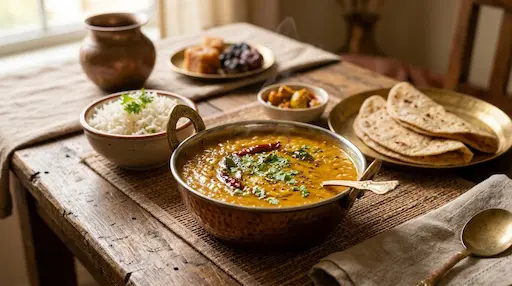
In traditional Gujarati culture, dal is not merely a side dish; it forms the central core of everyday meal thalis. According to culinary history documented on Tarla Dalal’s Official Platform, balancing the five taste profiles—sweet, sour, salty, spicy, and bitter—is crucial for proper digestion and daily vitality.
“Authentic Gujarati dal relies on the harmonious interplay between sweet jaggery and sour kokum, tied together with a hot tempering of mustard seeds, cinnamon, and cloves.”
In addition, using fresh ingredients like curry leaves and asafoetida ensures that the lentil soup remains lightweight and easily digestible. This balanced nutrition makes it ideal for everyday lunch menus.
| Ingredient Name | Exact Quantity | Culinary Role & Flavor Profile |
|---|---|---|
| Toovar Dal (Arhar Dal / Split Pigeon Peas) | 1 Cup (200g) | Provides protein base and rich, creamy body |
| Jaggery (Gud) | 1.5 Tablespoons | Adds natural sweetness and balances acidity |
| Dried Kokum or Fresh Lemon Juice | 2-3 Pieces / 1 Tbsp | Delivers signature tangy sourness |
| Skinless Peanuts | 2 Tablespoons | Adds nutty crunch and traditional texture |
| Ginger-Green Chili Paste | 1 Teaspoon | Provides natural heat and zesty sharpness |
| Tempering Spices (Tadka) | Mustard, Cumin, Cloves, Cinnamon | Infuses deep warm aromatics and earthiness |
Step 1: Pressure Cooking the Toovar Dal
First, rinse one cup of toovar dal thoroughly under cold water until the water runs clear. Next, place the rinsed dal into a pressure cooker with 2.5 cups of fresh water and a pinch of turmeric powder. Cook under medium-high heat for 3 to 4 whistles until the lentils are completely soft.
Step 2: Blending and Simmering the Base
Allow the steam to escape naturally before opening the cooker lid. Afterward, add one additional cup of warm water and whisk the lentils using a traditional hand blender or balloon whisk. The mixture should achieve a silky, uniform liquid consistency without lumps.
Step 3: Infusing Sweet and Sour Flavors
Transfer the smooth whisked dal into a broad non-stick saucepan over medium heat. Next, add the soaked kokum, jaggery, raw peanuts, chopped tomatoes, ginger-green chili paste, and salt. Simmer gently for 8 to 10 minutes so the peanuts soften slightly and absorb the surrounding flavors.
Step 4: Preparing the Signature Tarla Dalal Tadka
In a small skillet, heat one tablespoon of ghee or peanut oil. Once hot, add mustard seeds and cumin seeds, allowing them to crackle naturally. Immediately add whole cloves, a cinnamon stick, curry leaves, and a pinch of asafoetida (hing).
Pour the sizzling spice tempering directly over the boiling dal. Cover the pan immediately with a tight lid for two minutes to trap the volatile aromatic essential oils inside the broth.
“Trapping the steam immediately after pouring the hot tadka preserves the fragile aromatic spice oils, ensuring intense flavor throughout the entire dish.”
Furthermore, the inclusion of spices like cumin, mustard seeds, and asafoetida acts as a natural digestive aid. As a result, this preparation prevents bloating often associated with heavy legume consumption.
- Rich in Plant-Based Protein: Provides approximately 12 grams of protein per serving when paired with steamed basmati rice.
- High Dietary Fiber: Promotes healthy gut motility and regulates blood sugar spikes naturally.
- Antioxidant Properties: Turmeric, cloves, and cinnamon deliver potent anti-inflammatory compounds.
- Iron Absorption: Natural citrus or kokum acidity enhances non-heme iron uptake from yellow lentils.
- Refrigeration: Store leftover dal in an airtight glass container inside the refrigerator for up to 3 days.
- Adjusting Consistency: Dal thickens considerably as it cools. Therefore, add 1/4 cup of warm water while reheating on the stove.
- Freezing Guidelines: Freeze tempered dal without fresh cilantro garnishes for up to one month. Thaw completely overnight before boiling.
Can I make this recipe without kokum?
Yes, you can easily substitute kokum with fresh lemon juice or tamarind pulp. Simply add the lemon juice at the end after turning off the stove burner.
Why is my Gujarati dal turning too sweet?
Excessive sweetness occurs if you add jaggery before balancing it with equal parts acidic souring agents. Always match 1.5 tablespoons of jaggery with kokum or lemon juice.
Do I have to use peanuts in Gujarati dal?
While peanuts provide authentic texture, you can omit them entirely if you have peanut allergies without compromising the core flavor base.
What rice pairs best with this dish?
Steamed long-grain Basmati rice or traditional Gujarati Surti Kolam rice pairs exceptionally well with this fragrant, sweet-and-sour lentil soup.
Ready to try this iconic comfort food tonight? Gather your ingredients, prepare your tempering, and let us know in the comments below how your family enjoyed this classic Gujarati delight!