

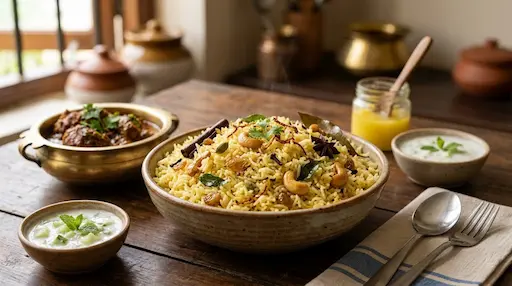
Few dishes in Indian cuisine capture the delicate balance of rich indulgence and comforting simplicity quite like aromatic ghee rice. When master chef Sanjeev Kapoor shared his signature version on his channel, home cooks across the globe discovered the true secret to making restaurant-quality ghee rice sanjeev kapoor khazana style right in their own kitchens. This fragrant South Indian staple, traditionally known as Neychoru in Kerala or Nei Choru in Tamil Nadu, transforms humble long-grain basmati rice into an exquisite culinary masterpiece through the strategic layering of pure clarified butter, aromatic whole spices, crispy fried onions, and toasted golden nuts.
In this comprehensive guide, we unpack every detail of the authentic ghee rice sanjeev kapoor khazana recipe. Whether you are hosting a festive dinner or seeking a quick weekend indulgence, learning this classic technique guarantees perfectly fluffy, non-sticky rice grains infused with rich, warm spices every single time.
Why the Sanjeev Kapoor Khazana Ghee Rice Technique Works
The magic of Chef Sanjeev Kapoor’s recipe lies in its balanced spice tempering and precise rice-to-water ratio. While many home recipes risk turning the rice mushy or overly greasy, this iconic method ensures that each grain remains separate, glossy, and deeply infused with whole aromatics. By light-roasting the soaked basmati rice in pure cow ghee alongside whole spices before boiling, the starch on the exterior of each grain cooks evenly and holds its structure.
Furthermore, the subtle addition of grated ginger, fennel seeds, and fresh curry leaves lends an unmistakable regional flavor profile that balances the natural richness of clarified butter. It is no wonder this video guide has amassed millions of views on YouTube and remains a benchmark for South Indian rice preparation worldwide.
“Sautéing soaked rice in hot ghee coats each individual grain with fat, preventing starch gelatinization and resulting in perfectly distinct, aromatic rice grains.” — Sanjeev Kapoor Official Culinary Insights
Essential Ingredients for Authentic Ghee Rice
To recreate the exact flavor profile from the iconic video recipe, you need fresh, high-quality ingredients. Each element plays a crucial role in building layers of aroma and flavor:
- Aged Basmati Rice: 1.5 cups of premium long-grain basmati rice. Aging reduces moisture content, ensuring long, separate grains after cooking.
- Pure Desi Ghee: 2 tablespoons of authentic clarified cow ghee for that distinct, nutty richness.
- Whole Spices: 2 bay leaves, 3 green cardamoms, 1 inch cinnamon stick, 1 star anise, and 4 to 5 whole cloves.
- Aromatic Seeds & Herbs: 1 teaspoon fennel seeds (saunf), 1 teaspoon freshly grated ginger, and fresh sprigs of curry leaves.
- Nuts & Dry Fruits: 8 to 10 raw cashews and 6 to 8 golden raisins for sweet, crunchy bite contrasts.
- Sliced Onions: 1 large onion, thinly sliced into uniform rings to achieve golden, caramelized fried onions (birista).
- Water & Seasoning: 3 cups of fresh water and salt to taste.
Step-by-Step Cooking Guide: Ghee Rice Sanjeev Kapoor Khazana Style
Follow these structured steps to execute the recipe flawlessly in under 30 minutes:
Step 1: Prep and Soak the Basmati Rice
Rinse 1.5 cups of long-grain basmati rice gently under cool running water until the water runs clear. This removes excess surface starch. Soak the rice in clean water for 25 to 30 minutes, then drain completely using a colander.
Step 2: Temper the Whole Spices in Pure Ghee
Heat 2 tablespoons of pure desi ghee in a heavy-bottomed, non-stick pan over medium heat. Once warm, add the bay leaves, green cardamoms, cinnamon stick, star anise, cloves, fennel seeds, and grated ginger. Sauté on low heat for 30 to 45 seconds until aromatic and popping.
Step 3: Fry the Nuts, Raisins, and Onions
Add the cashews, raisins, and thinly sliced onions directly into the pan with tempered spices. Sauté continuously on medium flame until the onions turn a rich, golden brown and the cashews take on a toasted hue. The raisins will swell into sweet, juicy nuggets during this step.
Step 4: Roast the Rice Grains
Add fresh curry leaves to the pan and toss briefly. Gently slide in the drained basmati rice. Mix carefully with a wooden spatula for 1 to 2 minutes, ensuring every grain gets coated with the spice-infused ghee without breaking the delicate rice kernels.
Step 5: Simmer and Steam to Perfection
Pour in 3 cups of water and add salt according to preference. Give it a gentle stir to integrate the ingredients. Cover the pan securely with a tight-fitting lid, lower the heat to minimum, and let it cook undisturbed for 10 to 12 minutes until all water is absorbed and the rice is tender. Turn off the flame and let it rest, covered, for an additional 5 minutes before gently fluffing with a fork.
Nutritional Profile and Comparison Table
Ghee rice is not only delicious but also provides immediate energy and beneficial short-chain fatty acids like butyric acid. The table below highlights how this aromatic dish compares to other classic Indian rice preparations per 200g serving:
| Rice Preparation | Calories (kcal) | Healthy Fats (g) | Protein (g) | Key Flavor Profile |
|---|---|---|---|---|
| Ghee Rice (Sanjeev Kapoor Style) | 320 | 12g | 6.5g | Nutty, fragrant, sweet & savory |
| Jeera Rice | 240 | 6g | 5.0g | Earthy, mild cumin notes |
| Vegetable Biryani | 380 | 14g | 8.0g | Robust, heavily spiced, herbal |
| Steamed Basmati Rice | 180 | 0.5g | 4.2g | Neutral, clean, airy grain |
“Pure ghee is rich in fat-soluble vitamins A, E, and K2, while its high smoke point makes it one of the safest traditional fats for high-heat spice tempering.” — YouTube Culinary Research & Media
Pro-Tips for Restaurant-Quality Ghee Rice
Even simple recipes benefit from professional secrets. Keep these points in mind when making your batch:
- Follow the 1:2 Water Ratio: For standard aged basmati rice cooked in a pan, use exactly 2 cups of water for every 1 cup of rice. Adjust slightly lower if using a pressure cooker (approx. 1:1.5 ratio).
- Never Skip Soaking: Soaking allows the grains to elongate during steam cooking, producing fluffy texture instead of dense rice.
- Use Freshly Clarified Ghee: High-grade cow ghee provides superior aroma compared to commercial vegetable fats or oil blends.
- Fluff with Care: Always let the cooked rice rest covered for 5 minutes before using a fork to fluff from the outer edges inward. Using a spoon immediately after cooking can crush hot rice grains.
Best Pairings for Sanjeev Kapoor Style Ghee Rice
Because ghee rice features a mild, fragrance-forward flavor profile, it serves as the ultimate canvas for rich, spicy gravies and curries. Excellent pairing options include:
- Kerala Chicken Roast or Mutton Curry: Spiced coastal gravies cut through the rich creaminess of buttered rice.
- Paneer Butter Masala: A smooth vegetarian favorite that complements sweet raisins and toasted nuts.
- Dal Tadka or Dal Makhani: Classic comfort food pairing for a wholesome weeknight meal.
- Vegetable Kurma or Malabar Veg Curry: Coconut-based gravies enhance the natural fennel and cardamom notes in the rice.
Conclusion
The ghee rice sanjeev kapoor khazana recipe stands as a testament to how simple whole ingredients can create an extraordinary dining experience. By combining aged basmati rice with pure ghee, whole spices, crispy onions, and crunchy cashews, you elevate simple steamed rice into a restaurant-grade dish fit for any celebration.
Ready to bring authentic South Indian flavors to your dinner table tonight? Grab your favorite heavy-bottomed pan, temper those fragrant spices in golden ghee, and savor the rich tradition of Chef Sanjeev Kapoor’s timeless recipe!
Frequently Asked Questions (FAQ)
Can I make ghee rice in a pressure cooker or instant pot?
Yes, you can easily prepare ghee rice in a pressure cooker. Follow the same tempering steps, reduce the water ratio to 1:1.5 cups of water per cup of rice, and cook on medium heat for 1 whistle or 4 minutes on Instant Pot high pressure.
What is the best type of rice for ghee rice?
Long-grain aged Basmati rice is the gold standard for this recipe due to its fragrance and slender grains. Alternatively, short-grain aromatic rice like Kaima (Jeerakasala) or Seeraga Samba is widely used in traditional South Indian variations.
Why did my ghee rice become sticky or mushy?
Rice turns sticky due to unwashed surface starch, skipping the pre-soaking step, or using too much water. Stick strictly to the 1:2 rice-to-water ratio for open pot cooking and fluff with a fork only after letting it rest.
Can I store leftover ghee rice for meal prep?
Absolutely! Store leftover ghee rice in an airtight container in the refrigerator for up to 3 days. Reheat gently in a microwave with a sprinkle of water covered, or warm it on a stovetop pan with half a teaspoon of fresh ghee.