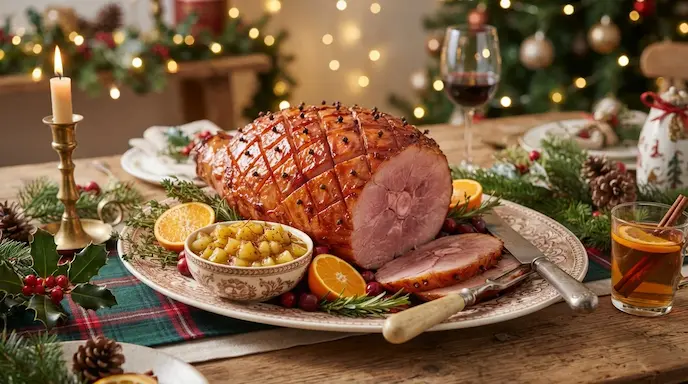
Have you ever wondered why a sweet glaze and a spiced fruit relish transform an ordinary holiday roast into an unforgettable centerpiece? Serving honey glazed ham with pear saffron chutney brings together rich, salty pork, warm floral honey, and bright, aromatic fruit. According to culinary traditions documented by Wikipedia, the winter ham tradition dates back centuries to Northern European Yule feasts. Today, home cooks elevate this classic dish with bold flavor contrasts. This guide walks you through choosing the right cut, mastering the glaze, simmering a golden saffron chutney, and hitting safe internal temperatures with confidence.
Why Honey Glazed Ham With Pear Saffron Chutney Works So Well
Great holiday meals rely on balance. Cured ham delivers deep savory saltiness and smoky richness. However, eating rich pork on its own can quickly overwhelm your palate. Adding a sticky honey glaze introduces caramelized sweetness and a glossy finish. Meanwhile, a spoonful of warm spiced chutney cuts straight through the fat with sharp vinegar and bright fruit.
Saffron plays a quiet yet vital role in this pairing. According to culinary guides from Chef Ramsay Recipes, saffron comes from the dried stigmas of the saffron crocus and is the world’s most expensive spice. Fortunately, you only need two small pinches to color the entire pot of pears a deep golden amber. Its subtle earthy aroma bridges the gap between sweet orchard fruit and savory cured meat.
Texture matters just as much as flavor. A properly scored ham develops crisp, caramelized edges around tender, juicy slices. In contrast, the chutney offers soft chunks of Williams pears, plump golden raisins, and a gentle kick of cayenne pepper. Because both components hold up well at room temperature, this dish also makes holiday hosting much easier.
“Once it’s thick, you’ll see an amber, saffron-tinted syrup clinging to soft pieces of pear and plump raisins, flecked red with tomato.” — Chef Ramsay Recipes
Selecting the Best Ham for Your Christmas Table
Walking up to the meat counter during December can feel overwhelming. You will see bone-in hams, boneless roasts, spiral-cut joints, and raw unsmoked legs. Understanding the labels ensures you buy the right cut for your schedule and oven space.
Bone-In vs. Boneless Cuts
Bone-in smoked hams offer superior flavor and an impressive presentation on a carving board. According to Acabonac Farms, the bone helps keep the meat juicy during roasting and adds richness to the pan drippings. However, bone-in cuts take longer to heat through and require more carving skill. Boneless hams carve into neat, uniform slices with zero waste, making them ideal for sandwiches the next day.
Pre-Cooked vs. Uncooked Gammon
Most supermarket holiday hams are fully cooked and smoked. You simply need to warm them through and apply your glaze. Conversely, traditional British recipes, such as the holiday roast demonstrated by Gordon Ramsay on YouTube, often start with raw or cured gammon. A raw gammon joint must be simmered in aromatic stock with carrots, leeks, peppercorns, and bay leaves before it ever enters the oven.
How much meat should you buy? According to The Honey Baked Ham Company, home cooks should plan on roughly one-third to one-half pound of ham per guest. If you want generous leftovers for holiday brunch, lean toward the half-pound mark per person.
| Ham Type | Preparation Method | USDA Minimum Internal Temp | Rest Time |
|---|---|---|---|
| Fully Cooked Ham (USDA-inspected plant) | Reheat in oven and glaze | 140°F (60°C) | 3 to 15 minutes |
| Other Precooked Ham | Reheat in oven and glaze | 165°F (73.9°C) | 3 to 15 minutes |
| Fresh or Smoked Ham (Cook-Before-Eating) | Simmer or roast fully | 145°F (62.8°C) | At least 3 minutes |
| Leftover Cooked Ham | Reheat thoroughly | 165°F (73.9°C) | None required |
Step-by-Step Guide to Making Pear Saffron Chutney
Making your condiment ahead of time saves precious stove space on Christmas Day. In fact, fruit chutneys taste even better after sitting in a cool cupboard for a few weeks. The vinegar mellows, and the spices blend deeply into the fruit.
Essential Ingredients for the Chutney
Based on classic British holiday recipes from Amsterdam Flavours and Chef Ramsay Recipes, gather these ingredients before you start chopping:
- Firm pears: Use about 1.5 to 2 pounds of Williams (Bartlett) pears, peeled, cored, and cut into rustic chunks so they hold their shape.
- Tart cooking apple: One Granny Smith or Bramley apple adds sharp acidity and natural pectin to thicken the mixture.
- Aromatics: One small diced onion and a thumb-sized piece of finely grated fresh ginger build a savory base.
- Dried fruit and citrus: Three-quarters of a cup of golden raisins (sultanas) plus the zest and juice of one or two oranges bring bright sweetness.
- Spices and heat: Two pinches of saffron threads, one teaspoon of ground cinnamon, a pinch of grated nutmeg, and half a teaspoon of cayenne pepper create warmth.
- Sugar and vinegar: One and a quarter cups of packed light brown sugar and one cup of white wine vinegar preserve the fruit and create a glossy syrup.
Simmering and Jarring the Chutney
Start by soaking your saffron threads in one tablespoon of warm water or orange juice for ten minutes. This simple step releases the vibrant golden color and floral aroma. Meanwhile, warm a splash of olive oil in a heavy-bottomed saucepan over medium heat and soften the diced onion and grated ginger for five minutes.
Next, add the chopped apple, vinegar, brown sugar, orange zest, and ground spices. Stir steadily until the sugar dissolves completely. Once the liquid bubbles, stir in the pear chunks, golden raisins, and the soaked saffron along with its soaking liquid. Lower the heat and let the mixture simmer gently uncovered for 60 to 90 minutes.
Stir the pot often during the final twenty minutes so the sugar does not scorch on the bottom. According to Amsterdam Flavours, your chutney is ready when you can draw a wooden spoon across the bottom of the pan and leave a clear path for a moment. Spoon the hot relish into clean, sterilized glass jars, seal the lids, and let them cool completely.
Crafting the Sticky Honey Glaze
A standout honey glazed ham with pear saffron chutney depends on a well-balanced glaze. If you brush pure honey onto a roast too early, the sugars will burn long before the center gets warm. According to food science notes from Raw Honey Guide, fructose caramelization begins at 230°F (110°C), while glucose and sucrose caramelize at 320°F (160°C).
To prevent scorching, combine three-quarters of a cup of mild clover or wildflower honey with three tablespoons of Dijon mustard, two tablespoons of dark brown sugar, and a splash of apple cider vinegar or Madeira wine. Simmer these ingredients in a small saucepan for three to four minutes until they form a smooth, dark syrup. The mustard emulsifies the mixture so it clings to the meat instead of sliding straight into the roasting pan.
Before applying the glaze, score the fat layer on top of your ham in a neat diamond pattern. Use a sharp knife and cut about a quarter-inch deep without slicing into the pink meat underneath. Scoring allows the sweet syrup to seep into the fat and helps render out excess grease. For a traditional look, press one whole clove into the center of each diamond.
“Brush the honey glaze on late enough that it colors without scorching while the ham warms through. Use a thermometer in the center: surface color cannot tell you whether the middle is hot.” — Raw Honey Guide
Roasting and Glazing Your Christmas Ham Safely
Proper temperature control guarantees moist meat and safe holiday dining. Always follow official food safety standards rather than guessing by the color of the crust. You can review the complete USDA Safe Minimum Internal Temperature Chart before preheating your oven.
Begin by preheating your oven to 325°F (165°C). Place your scored ham cut-side down in a sturdy roasting pan and cover it tightly with aluminum foil. Covering the joint traps steam and stops the exterior from drying out while the thick center warms up. Bake the covered ham for about 15 to 18 minutes per pound.
About 30 minutes before the ham reaches its target temperature, remove the roasting pan from the oven and discard the foil. Turn the oven temperature up slightly to 375°F (190°C) if you want deeper caramelization. Brush a thin, even coat of your warm honey glaze over the scored fat.
Return the uncovered ham to the oven and baste it every 10 to 15 minutes with the remaining glaze and pan juices. Rotate the pan each time you baste so the crust browns evenly on all sides. According to the USDA Hams and Food Safety guide, you must reheat cooked hams packaged in USDA-inspected plants to 140°F (60°C) and all other precooked hams to 165°F (73.9°C). Once your meat thermometer hits the exact mark, transfer the roast to a warm platter and let it rest for 15 minutes before carving.
Serving Ideas and Holiday Side Dishes
Presenting honey glazed ham with pear saffron chutney at the table creates an instant sense of celebration. Carve thin, even slices against the grain and arrange them slightly overlapping on a large warmed platter. Spoon a small bowl of the glossy golden chutney right beside the meat so guests can serve themselves.
Because the main dish offers rich sweetness and bright spice, choose side dishes that bring earthy or crisp contrast:
- Creamy potato bakes: Scalloped potatoes or garlic mashed potatoes soak up the savory honey pan juices wonderfully.
- Bitter winter greens: Roasted Brussels sprouts, braised red cabbage, or steamed green beans balance the sweetness of the glaze.
- Warm crusty bread: Freshly baked dinner rolls allow guests to build mini ham and chutney sliders right at the table.
Do not throw away your leftover ham bone or extra slices. According to The Honey Baked Ham Company, leftover holiday ham works well in breakfast omelets, split pea soup, winter salads, and toasted cheese sandwiches. Meanwhile, any remaining pear saffron chutney pairs effortlessly with sharp cheddar, aged Gouda, or creamy brie on a Boxing Day cheese board.
“The tradition of eating ham is thought to have evolved from the Germanic pagan ritual of sacrificing a wild boar known as a sonargöltr to the Norse god Freyr during harvest festivals.” — Wikipedia
Conclusion
Preparing honey glazed ham with pear saffron chutney gives your holiday menu a centerpiece that feels both timeless and fresh. By simmering the spiced fruit relish days in advance, you reduce kitchen stress on Christmas Day while letting the saffron and ginger flavors deepen. Pairing a gentle oven roast with thin layers of mustard-honey glaze guarantees tender slices and a crisp, amber crust.
Focus on exact internal temperatures with a reliable meat thermometer, give the roast time to rest before carving, and serve the chutney generously alongside your favorite winter vegetables. Your guests will remember the balance of smoky pork, floral honey, and bright spiced pears long after the plates are cleared.
Ready to plan the rest of your festive menu? Share this recipe with someone hosting dinner this year, or leave a comment below to tell us what side dishes you always serve with your holiday ham.