
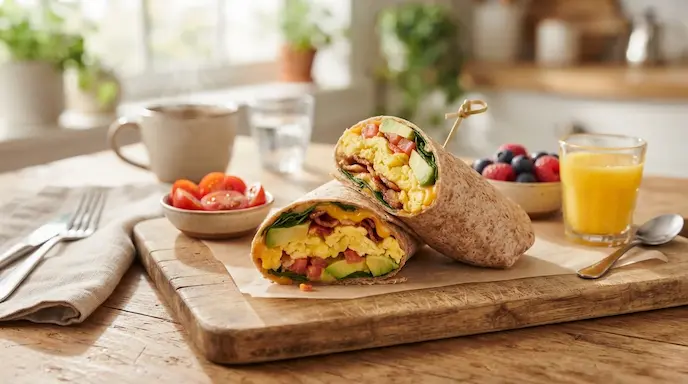
Can a simple meal take just ten minutes in the morning and still pack serious protein? Yes, because breakfast egg wraps combine eggs, greens, cheese, and flatbread into a handheld meal. Many cooks love them on busy weekdays. You can eat them warm at the table or roll them up for the commute. Better yet, you can shape the wrap out of eggs alone or fold cooked eggs inside a tortilla.
Food writers and dietitians often highlight how flexible these wraps can be. For example, Feel Good Foodie notes that a thin crepe-style egg wrap takes about five minutes to prep and five minutes to cook. Meanwhile, Real Food Dietitians shows that a batch of ten make-ahead wraps can help people get through hectic mornings without skipping food. As a result, home cooks across many kitchens rely on breakfast egg wraps when time feels tight.
What Makes Breakfast Egg Wraps So Popular?
People reach for breakfast egg wraps because they solve two common morning problems at once. First, they cook fast in a single pan or skillet. Second, they hold fillings neatly so you do not need a fork and knife. You can grab a warm wrap while packing a bag or walking out the door.
Variety also keeps this meal from feeling boring. One day you might fill a wrap with scrambled eggs, bell peppers, and cheddar cheese. Another day you might add black beans, salsa, or sliced avocado. Because the base stays simple, small changes in toppings create a completely fresh taste.
Tortilla Wraps Versus Egg-Only Wraps
Cooks generally choose between two main styles when making breakfast egg wraps. The classic style uses a flour, corn, or whole-grain tortilla wrapped around cooked eggs and fillings. According to Chapala Mexican Restaurant, people in the Sierra Madre Mountains of Mexico first developed corn tortillas around 10,000 B.C.E., and flour tortillas appeared later after wheat arrived from Spain. Today, that familiar flatbread makes rolling warm fillings simple and sturdy.
The second style turns the egg itself into the wrap. Feel Good Foodie explains that whisking eggs with a splash of water and a teaspoon of flour lets you cook a thin crepe-like sheet in a skillet. Once it sets and cools slightly, you spread fillings over the top and roll it up. This option suits people who want a grain-free or lower-carb morning meal.
Choosing Wraps and Fresh Ingredients
Reading the ingredient label on store-bought wraps helps you pick a wrap that fits your goals. Wholefood Warrior points out that many commercial wraps contain emulsifiers and additives to stay soft and bendy, which can cause bloating for some people. Choosing simpler wraps or toasting a flatbread in a pan can improve both texture and digestion.
Fresh vegetables and savory extras turn plain eggs into a balanced meal. Diced onions, sweet bell peppers, baby spinach, arugula, and tomatoes add color and crunch. You can also stir in herbs or spices to match your mood. Still, keeping the filling balanced prevents the wrap from tearing when you roll it.
“Let everything cool slightly before wrapping: This helps avoid steam buildup, which can make your wraps soggy when stored.”— Lindsay Pleskot, RD
Nutrition and Health Benefits of Eggs at Breakfast
Eggs bring a dense mix of protein and micronutrients to the first meal of the day. According to a review published on PubMed Central, a medium egg provides about 66 kcal and 6.4 g of protein along with key vitamins and minerals. Eating protein and nutrient-dense foods early in the day helps many people stay full until lunch.
The yolk plays a major role in that nutrient profile. The same PubMed Central review notes that egg yolk is one of the few natural food sources of vitamin D and also supplies choline, folate, and iodine. In addition, the fats in the yolk help the body absorb fat-soluble nutrients and carotenoids like lutein and zeaxanthin.
| Ingredient or Component | Key Role in the Wrap | Source Reference |
|---|---|---|
| Eggs | Provide protein (6.4 g per medium egg), vitamin D, and choline | PubMed Central |
| Tortillas or Flatbreads | Hold warm fillings together and add carbs or fiber | Chapala Mexican Restaurant |
| Bell Peppers and Onions | Add flavor, color, and plant texture to egg fillings | Real Food Dietitians |
| Spinach or Arugula | Bring leafy greens and extra vitamins to the wrap | Feel Good Foodie |
Smart Cooking Tips for Better Texture
Small cooking habits make a big difference in how breakfast egg wraps taste and hold together. Lindsay Pleskot, RD recommends cooking eggs over low-medium heat for a silky scramble and pulling them off the heat while still slightly wet. Residual heat finishes cooking them gently so they do not turn dry or rubbery.
Temperature control also matters when you assemble the wrap. Warming a tortilla in a skillet or under a damp paper towel in the microwave makes it flexible so it will not crack. Meanwhile, letting hot eggs and vegetables cool for a few minutes stops trapped steam from making the wrap soft or soggy.
Meal Prep and Freezer Storage for Busy Weeks
Making breakfast egg wraps ahead of time saves stress on weekday mornings. Real Food Dietitians describes prepping a batch of ten wraps so you have ready-to-eat meals waiting in the fridge or freezer. Setting up a small rolling station on your counter makes assembly faster and cleaner.
Good folding keeps every roll neat from the first bite to the last. Lindsay Pleskot, RD suggests folding the shorter top and bottom edges in first, then rolling one long side tightly over the filling. Labeling each wrapped meal with the date helps you track freshness, and you can browse Egglife Foods recipes for more wrap flavor ideas.
“Many are full of emulsifiers and various additives to keep them being the soft, bendy wraps that we are used to. Sadly these are the very same ingredients that are wreaking out gut health.”— Wholefood Warrior
Flavor Ideas Across Global Kitchens
Once you master the basic technique, you can build breakfast egg wraps around flavors from around the world. Feel Good Foodie notes that its low-carb egg wrap draws inspiration from ejjeh, a Lebanese-style egg dish made with herbs and spices. Adding crumbled feta, fresh greens, or a squeeze of lemon gives a bright Mediterranean lift.
Classic morning combinations stay reliable for good reason. Colorado State University Extension shares a breakfast burrito recipe using eggs, diced bell peppers, yellow onion, cheese, and cilantro inside flour tortillas. You can also try avocado mash, hot sauce, or roasted potatoes, and check the PubMed Central egg nutrition review for more details on egg nutrients.
Conclusion
Breakfast egg wraps offer a practical way to start the day with real food, steady energy, and plenty of room for personal taste. Whether you cook a single wrap in ten minutes or prep a batch for the week, simple steps like gentle heat and tight rolling improve the final bite. With just a few staple ingredients, you can adapt the meal to fit your schedule and diet.
Because the format is so forgiving, you rarely waste leftovers when you plan ahead. Cooked vegetables, greens, and cheese from dinner can easily find a new home inside a morning wrap. Over time, building a few go-to combinations makes busy mornings feel calm and well-fed.
Try making a batch of breakfast egg wraps this week, share this article with a friend who rushes out the door, and leave a comment with your favorite filling.