

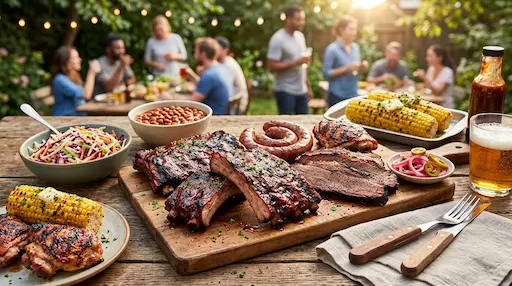
Are you ready to transform your backyard cookouts into legendary feasts that your guests will talk about for weeks? When home cooks attempt traditional smoking and grilling, they often struggle with tough cuts of meat, inconsistent heat management, or dry poultry. However, mastering a few core techniques and selecting the best cuts of meat turns an ordinary cookout into an extraordinary culinary experience. Therefore, understanding the delicate balance between smoke, time, and temperature unlocks a world of flavor that will impress any crowd.
Across regional culinary traditions from Texas smokehouses to backyard patios worldwide, iconic barbecue dishes represent the ultimate comfort food. In addition, exploring new cuts and global flavor pairings offers incredible depth and excitement. Let us explore essential preparation techniques, trending recipes, and a foolproof guide that guarantees perfection every single time.
Selecting the Best Cuts for Your Barbecue Menu
Choosing the correct cut of meat is the most critical step in making a successful barbecue meal. Lean cuts like chicken breasts tend to dry out quickly over direct heat. Consequently, culinary experts recommend selecting well-marbled cuts that maintain moisture and tenderness during long cooking cycles.
Popular choices include pork shoulder, beef brisket, chicken thighs, and budget-friendly alternatives like flank steak or tri-tip. According to recent pitmaster insights and grilling trends, versatile cuts absorb rich spice profiles exceptionally well while retaining a tender, juicy bite. Furthermore, affordable options make these meals accessible and budget-friendly for regular family gatherings.
“Brisket remains the crown jewel of smokehouse cooking, but smart pitmasters are also embracing value-forward alternatives like tri-tip and pork shoulder for weeknight success.” — Steven Raichlen, Barbecue Hall of Famer
Essential Ingredients and Spice Blends
The magic of great barbecue lies in its foundational rubs and wood smoke chemistry. Traditional recipes rely on a balanced base of coarse sea salt, black pepper, smoked paprika, and garlic powder. When these ingredients form a crust over the meat, they create a savory exterior known as bark.
Spices such as cumin, cayenne, and brown sugar add both vibrant color and complex flavor layers. In many modern kitchens, creative grillers are also incorporating umami boosters like fish sauce or gochujang paste to balance traditional smoke flavors with a tangy contrast.
| Meat Variety | Optimal Cooking Technique | Flavor Profile |
|---|---|---|
| Beef Brisket | Low and slow smoking ($225^\circ\text{F}$) | Rich, beefy, and deeply smoky |
| Pork Shoulder | Long braise or smoke until pull-apart | Savory, tender, and succulent |
| Chicken Thighs | Direct grill with glaze or marinade | Juicy, flavorful, and charred |
As illustrated in the comparison above, selecting the proper cut pairs seamlessly with specific cooking temperatures. For comprehensive guidelines on sustainable farming and ethical meat sourcing, you can explore resources provided by Marine Stewardship Council to ensure your meal supports responsible practices.
Step-by-Step Cooking Technique for Flawless Results
Mastering these barbecue dishes requires strict attention to timing and heat control. Many home cooks make the mistake of rushing the cooking process, which results in tough and chewy meat. Instead, maintaining a steady temperature ensures the collagen breaks down into melt-in-your-mouth tenderness.
- Prepare and trim the meat: Always trim excess hard fat and apply your dry rub evenly across all surfaces to build a wonderful flavor crust.
- Manage your fire: Maintain consistent airflow and clean wood smoke to prevent a bitter taste from overtaking your food.
- Rest before slicing: Let your large cuts rest for at least thirty minutes before serving so the natural juices redistribute evenly.
“Rushing the stall is the number one mistake pitmasters make; let the internal temperature rise naturally for the most tender results.” — Hey Grill Hey Pitmaster Guide
Frequently Asked Questions
Can I cook traditional barbecue dishes in an oven if it rains?
Yes, you can use your oven to finish items like ribs or pulled pork by wrapping them tightly in foil and baking low and slow at $275^\circ\text{F}$.
How do I know when a large cut of meat is fully done?
You can test large cuts by inserting a digital meat thermometer into the thickest part; brisket is typically tender around $203^\circ\text{F}$, while pork shoulder reaches a similar pull-apart stage.
What are the best side dishes to serve alongside grilled meats?
Classic barbecue dishes pair wonderfully with creamy coleslaw, baked beans, cornbread, and fresh potato salad to balance the rich smoke flavors.
Conclusion
Creating restaurant-quality barbecue dishes at home is entirely achievable when you follow the right techniques and temperature controls. From selecting well-marbled cuts like pork shoulder and brisket to building a fragrant spice rub, every step elevates your backyard cooking repertoire. Therefore, embrace these expert tips and bring vibrant, smoky flavors to your dinner table tonight.
Ready to elevate your outdoor cooking game? Gather your favorite spices, fire up your smoker today, and share your delicious culinary creations with us in the comments below!