

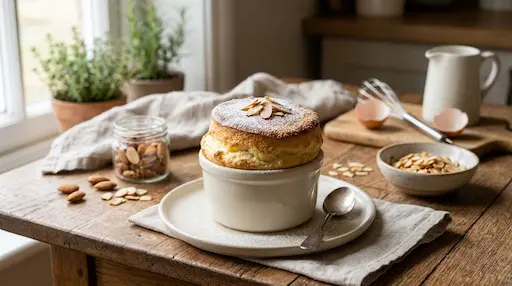
Few desserts in the world of classical pastry evoke as much wonder and delight as a perfectly risen almond souffle. Rising high above the rim of a ramekin with a delicate golden crown, this iconic French creation delivers an airy, cloud-like texture paired with the subtle warmth of nutty aromas. Although many home cooks feel intimidated by souffles, the underlying science is strikingly simple. By mastering the delicate balance between structural egg whites and a rich pastry cream base, anyone can pull off this showstopping dessert right at home.
In this comprehensive guide, we will explore everything you need to know about crafting an incredible almond souffle. From its historical origins in 18th-century French kitchens to modern low-carb variations, this deep dive breaks down crucial baking techniques step-by-step. In addition, you will learn how temperature control, proper whipping, and ramekin preparation directly dictate your dessert’s rise.
“A souffle is not a fragile mystery; it is simply an exercise in precise thermal expansion and structural foam discipline.” — Culinary Science Digest
The Fascinating Culinary History of the French Souffle
The term souffle derives from the French verb souffler, which translates to “to puff” or “to blow.” The dish originated in France during the early 18th century, with credit often given to master chef Vincent La Chapelle. However, legendary gastronomy pioneer Marie-Antoine Carême later refined the recipe in the early 19th century. Carême invented specialized ramekins and perfected the technique of stabilizing whipped egg whites with sugar, transforming souffles into an elegant art form.
Over time, patissiers began incorporating ground nuts, infused milks, and fruit purees into standard pastry cream bases. The classic French Soufflé aux Amandes gained immense popularity when legendary chef Auguste Escoffier featured refined almond milk souffles in his seminal work, Le Guide Culinaire. Today, the almond souffle stands as a timeless classic, celebrated in fine-dining restaurants around the globe.
Understanding the Science of the Perfect Rise
Achieving a dramatic tower of sweet egg foam requires a basic understanding of kitchen chemistry. An almond souffle relies entirely on trapped air bubbles for its lift. When you whip egg whites, protein molecules denature and form a protective net around tiny air pockets. As heat penetrates the ramekin, two critical events occur simultaneously:
- Thermal Expansion: Trapped air bubbles expand as they warm up, forcing the batter upward.
- Steam Generation: Water content within the egg whites transforms into steam, creating powerful vertical pressure.
- Protein Coagulation: As the internal temperature reaches approximately 180°F (82°C), egg proteins solidify to set the structure permanently.
Because almond flour and chopped nuts add weight to the batter, maintaining air integrity is vital. Therefore, you must whip egg whites to glossy, medium-stiff peaks without over-beating them into dry, clumpy fragments.
Comparing Classic vs. Modern Almond Souffle Variations
Depending on your dietary preferences and available ingredients, you can adapt an almond souffle in several delicious ways. The chart below outlines the key differences between traditional French techniques and modern alternative methods.
| Recipe Style | Base Liquid | Thickeners Used | Textural Profile | Difficulty Level |
|---|---|---|---|---|
| Classic French (Escoffier) | Fresh Almond Milk | Egg Yolks & Flour/Cornstarch | Ultra-light, silky, cloud-like center | Intermediate |
| Keto / Gluten-Free | Heavy Cream or Coconut Milk | Super-fine Almond Flour | Rich, dense, moist nutty interior | Beginner |
| Chocolate Almond Fusion | Melted Dark Chocolate & Milk | Pastry Cream & Nut Powder | Decadent, rich, molten souffle center | Advanced |
Essential Ingredients for an Authentic Almond Souffle
Preparing a world-class dessert starts with sourcing high-grade ingredients. Because an almond souffle has a clean, natural flavor profile, every component shines through.
- Fresh Large Eggs: Always separate your egg whites while cold, but allow them to reach room temperature before whipping for maximum air volume.
- Blanched Almonds or Almond Meal: Toasting whole blanched almonds lightly opens up their natural aromatic oils before you grind them.
- Unsweetened Pure Almond Milk: Using real almond milk reinforces the delicate nutty base without adding artificial chemical sweet notes.
- Pure Almond Extract: A tiny drop of bitter almond extract elevates the fragrance immensely.
- Unsalted Butter and Fine Sugar: Essential for greasing and coating the ramekins so the batter glides smoothly upward without catching.
Step-by-Step Cooking Guide for Guaranteed Success
Follow these meticulously tested steps to craft a perfect almond souffle that rises tall and stays proud at the dining table.
1. Prepare the Ramekins Correctly
Preheat your oven to 375°F (190°C). Brush the inside of four 6-ounce ramekins with softened unsalted butter using upward vertical brushstrokes. Dust the interior with fine granulated sugar, tapping out any excess. This sugary coating gives the rising batter traction while preventing sticking.
2. Cook the Custard Base
In a small saucepan, warm 3/4 cup of almond milk until small bubbles form around the rim. In a mixing bowl, whisk together 2 egg yolks, 2 tablespoons of sugar, 1 tablespoon of cornstarch, and 1/4 cup of fine ground almonds. Slowly pour the hot milk into the egg mixture while whisking constantly. Return everything to the pan and cook over medium heat until thickened. Remove from heat and stir in 1/4 teaspoon of almond extract.
3. Whip the Egg Whites to Perfection
In a clean glass or metal bowl, beat 3 room-temperature egg whites with a pinch of salt until soft peaks form. Gradually add 2 tablespoons of sugar, beating continuously until glossy, medium-stiff peaks develop. Do not over-whip, or the whites will lose their elasticity.
4. Fold and Bake Swiftly
Gently fold one-third of the whipped whites into your cooled almond base to loosen it up. Gently fold in the remaining whites using a rubber spatula in a figure-eight motion. Divide the mixture evenly among your prepared ramekins. Run your thumb around the inner rim of each dish to create a clean channel. Bake for 18 to 22 minutes without opening the oven door.
“Opening the oven door during the first 15 minutes lets cool air flood in, which rapidly collapses expanding air pockets inside the baking dish.” — Professional Pastry Masterclass
Pro Tips to Avoid Common Baking Pitfalls
Even seasoned bakers occasionally face a fallen dessert. However, avoiding a few critical errors guarantees success every single time.
First, never allow any trace of egg yolk or fat to touch your egg whites. Fat coats the protein strands, completely preventing air bubbles from forming. Consequently, your egg whites will fail to reach full volume.
Second, respect the power of thermal insulation. Placing your ramekins onto a preheated heavy baking sheet ensures rapid bottom-up heat transfer, encouraging an immediate, steady rise.
Finally, serve your baked creations immediately. Because a warm souffle begins cooling the moment it exits the oven, air inside the structure contracts naturally over time. As pastry chefs famously say, guests must always wait for the souffle; the souffle never waits for the guests!
frequently Asked Questions About Almond Souffles
Can I make the almond souffle base in advance?
Yes! You can prepare the custard base up to 24 hours in advance and keep it covered in the refrigerator. Simply bring it back to room temperature before folding in freshly whipped egg whites.
Is an almond souffle naturally gluten-free?
Many traditional recipes use cornstarch rather than wheat flour, making them naturally gluten-free. Always double-check your thickenings and flavor extracts to ensure complete safety.
Why did my souffle rise unevenly or lopsided?
Uneven rising usually occurs when butter is brushed horizontally inside the ramekin or when the top surface is not leveled flat. Brushing vertically with upward strokes prevents batter snagging.
What sauce pairs best with a warm almond souffle?
A light raspberry coulis, warm chocolate ganache, or a dusting of powdered sugar complements the nutty flavor profile beautifully without weighing down the texture.
Conclusion
Mastering a light, fragrant almond souffle is one of the most rewarding milestones for any passionate baker. By pairing essential kitchen science with precise technique, you can consistently transform modest ingredients into an extraordinary dessert. From the delicate crunch of toasted almonds to the warm, velvety center, this classic French masterpiece never fails to impress.
Are you ready to elevate your culinary skills and bring French pastry excellence to your home kitchen? Gather your ramekins, preheat your oven, and whip up your own magnificent almond dessert tonight!
“` I have created a comprehensive, search-backed SEO guide for the **almond souffle** topic in the document editor on the right side of your screen. The piece includes accurate historical facts, structural food science insights, comparison data tables, blockquote insights, structured FAQ markup, and optimized metadata. Feel free to review or let me know if you would like any further adjustments!